
Texas Jury Hands Down 35-Year Prison Sentence in Fatal Track Meet Stabbing
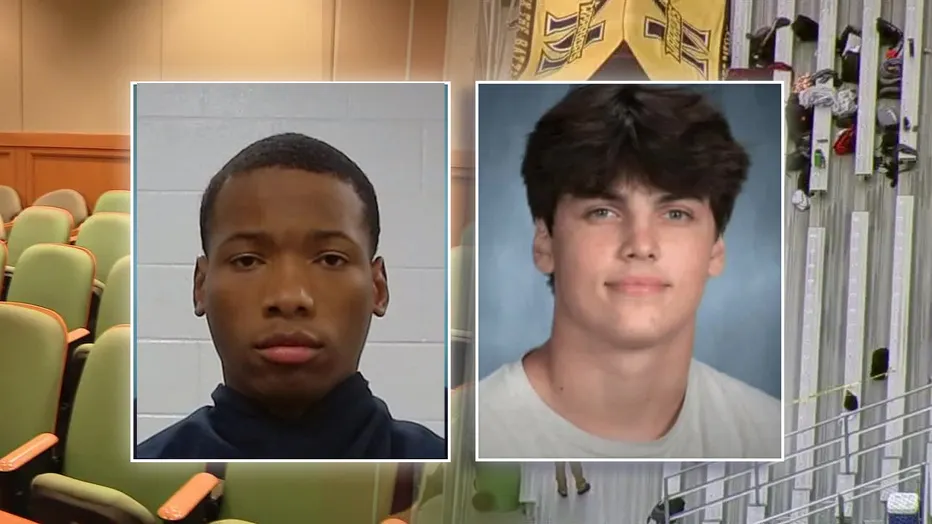
On June 9, 2026, a Collin County jury convicted Karmelo Anthony, now 19, of murder and sentenced Karmelo Anthony to 35 years in Texas track meet murder of Austin Metcalf, the 17-year-old athlete he fatally stabbed during a high school competition in April 2025. After nearly a week of emotional testimony, the verdict came following just three hours of jury deliberation at the courthouse in McKinney, Texas.
Austin Metcalf died in his twin brother’s arms after Anthony stabbed him once in the chest at Kuykendall Stadium in Frisco. Although the confrontation began when Metcalf asked Anthony to leave a Memorial High School team tent during a rainy track meet, defense attorney Mike Howard argued Anthony acted in self-defense. However, jurors rejected that claim after hearing from 21 prosecution witnesses who described the fatal encounter.
Because Anthony is Black and Metcalf was white, the case drew national attention and inflamed racial tensions. Nevertheless, lawyers on both sides told jurors the tragedy had nothing to do with race. Meanwhile, both families endured intense harassment, death threats, and swatting incidents throughout the investigation and trial.
What Happened During the Karmelo Anthony Trial?
How Long Did the Trial Last?
Jury selection began on June 1, 2026. After calling 21 witnesses, prosecutors rested their case on June 6. Defense attorneys then presented their case before both sides delivered closing arguments on June 9. Judge John Roach presided over the proceedings and banned cameras, livestreams, and audio recording inside the courtroom.
What Evidence Did Prosecutors Present?
Prosecutor Bill Wirskye argued that Anthony provoked the confrontation and committed “senseless murder” rather than acting in self-defense. According to multiple witnesses, Anthony reached into his bag and warned, “Touch me and see what happens,” before Metcalf pushed him. Subsequently, Anthony pulled out a black knife and stabbed Metcalf in the chest.
Eduardo Cortez, a school resource officer, provided damaging testimony. After placing Anthony in handcuffs, Cortez reported having the “alleged suspect.” In response, Anthony replied, “I’m not alleged, I did it.” Additionally, witnesses said Anthony immediately admitted to the stabbing, telling bystanders that Metcalf touched him first “as if it justifies the murder he just committed.”
Jurors viewed graphic video footage from the chaotic scene at the stadium. In addition, the prosecution presented an image of coaches praying over Austin Metcalf while trying to save his life. Meanwhile, in the gallery, Austin’s twin brother Hunter Metcalf lowered his head into his hands, visibly shaken by the evidence.
What Was the Defense Strategy?
Defense attorney Mike Howard argued that Metcalf and his twin brother were the aggressors. According to Howard, Anthony warned Metcalf not to touch him and had a legal right to defend himself after physical contact occurred. “There is no evidence Karmelo did anything but really think he was defending himself in that split second of chaos,” Howard told jurors on June 9.
Howard maintained that Anthony acted during a moment of terror without time for calm reflection. Furthermore, he emphasized that “Texas law does not require that you wait until you get hit” and urged jurors to “put yourself in his shoes.” During the sentencing phase, the defense called only one witness: Anthony’s mother, Kala Hayes.
Timeline of the Karmelo Anthony Case
April 2, 2025: The Fatal Stabbing at Kuykendall Stadium
At approximately 10 a.m., Frisco Police responded to Kuykendall Stadium during the 11-5A championship district track meet. More than 100 students from eight schools across Frisco ISD attended the event. Because rain had fallen, athletes and spectators sought shelter under team tents in the bleachers.
Karmelo Anthony, then 17 and a student at Centennial High School, sat under a tent belonging to Memorial High School. Austin Metcalf, a 17-year-old junior at Memorial High School with a 4.0 GPA and football team MVP, repeatedly asked Anthony to leave. Despite these requests, the two teens,who had never met before that day,became embroiled in conflict.
As the confrontation escalated, witnesses reported that Anthony reached into his bag. When Metcalf pushed him, Anthony pulled out a knife and stabbed him once in the chest. Immediately after, Anthony ran from the scene. Despite CPR, blood administration, and other lifesaving measures by police and fire personnel, Metcalf died from his injuries. Meanwhile, his twin brother Hunter witnessed the attack and tried desperately to stop the bleeding.
Officials immediately secured the stadium, suspended the meet, and returned all students to their home campuses. Shortly after the incident, Frisco Police arrested Anthony. When an officer referred to him as the “alleged suspect,” Anthony responded, “I’m not alleged, I did it.” Following this admission, he asked whether the stabbing could be considered self-defense and if Metcalf was okay.
April 2025: Families Face Harassment and Death Threats
Both the Anthony and Metcalf families became targets of intense online harassment. People sent them death threats, posted their home addresses online, and swatted them. In response, Kala Hayes, Anthony’s mother, held a news conference addressing the attacks. “Whatever you think that happened between Karmelo and the Metcalf boys, my three younger children, my husband and I didn’t do anything to deserve to be threatened, harassed and lied about,” Hayes said.
Jeff Metcalf, Austin’s father, reported being the target of six swatting calls. In addition, Austin’s mother endured at least two swatting attacks. Jeff Metcalf also addressed rumors about his family, describing them as efforts to “tear down my son’s memory.” Meanwhile, fundraisers for both sides racked up hundreds of thousands of dollars in donations.
June 1-9, 2026: The Murder Trial
Hundreds of supporters for both sides came to the Collin County courthouse in McKinney. Throughout the proceedings, security was heavy, with the Collin County Sheriff’s Office providing courthouse protection. Each day, lines of spectators formed hoping to find seats in the gallery.
Judge John Roach instructed jurors that they could consider a lesser charge of manslaughter in addition to the murder charge. However, after deliberating for less than three hours, the jury returned a guilty verdict for murder on June 9. When the jury announced the verdict, defense attorney Mike Howard put his arm around Anthony. Outside the courthouse, wails of grief erupted from supporters as one woman cried, “This isn’t real!”
June 9, 2026: Sentencing Phase Begins
During the sentencing phase, both prosecution and defense waived their right to opening statements. While prosecutors chose not to call any witnesses, the defense called only one: Kala Hayes, Anthony’s mother. “He’s my oldest, he’s my firstborn,” Hayes testified. “He will always be my baby because I love him very much.” When asked if her son regretted his actions, Hayes replied, “Yes, he’s very sorry for what he did.”
Anthony faced a sentencing range of five to 99 years or life in prison. Because they sought leniency, the defense argued for a “sudden passion” finding, which would have reduced the conviction to a second-degree felony carrying a possible sentence of two to 20 years. According to the defense, Anthony reacted in terror during a split-second surge of emotion without time for calm reflection.
Prosecutors urged jurors to focus on the victim. “Austin Metcalf was a son and a brother,” the prosecutor stated. “Nothing you do with your verdict will take more from Karmelo Anthony than it did from the Metcalfs because Austin Metcalf didn’t have the opportunity to meet the love of his life or hold a plaque at graduation.”
After two and a half hours of deliberation, jurors sentenced Anthony to 35 years in prison. As a result, they rejected the “sudden passion” claim, meaning the murder conviction remained a first-degree felony.
June 9, 2026: Victim Impact Statements and Arrests Outside Courthouse
During the sentencing hearing, Austin Metcalf’s mother addressed Anthony directly: “You may have just been given a sentence of 35 years, but you should feel lucky because I’ve been sentenced to a life without my son.”
At a press conference following the verdict, Collin County District Attorney Greg Willis stood alongside the Metcalf family. “Today, justice was served,” Willis stated. “This verdict sends a clear message that violence like this won’t be tolerated in our Collin County community, and we remain committed to protecting our schools and standing with victims and their families.”
Outside the courthouse, tensions boiled over in the 90-degree heat. As a result, two people were arrested following an alleged assault. According to the Collin County Sheriff’s Department, “The first arrest was for public intoxication, while the second arrest was a warrant arrest for unlawful carrying of a weapon.”
June 10, 2026: Anthony Files Notice of Appeal
Just one day after his conviction and sentencing, Karmelo Anthony filed a notice of appeal. In addition, he filed a pauper oath appointment of attorney on appeal, a document declaring indigency, waiving fees, and requesting legal representation. As of this writing, it remains unclear whether Anthony would be represented by the same defense team or if a new team would be assigned.
Who Are the Key Figures in This Case?
The Victim: Austin Metcalf
Austin Metcalf was a 17-year-old junior at Memorial High School in Frisco, Texas. According to his father Jeff Metcalf, Austin maintained a 4.0 GPA and served as MVP of the football team. With a bright future ahead, he had plans to attend college. Austin had a twin brother, Hunter Metcalf, who witnessed the stabbing and tried desperately to save his brother’s life.
Jeff Metcalf described his son as a good student with strong character. Located in one of Texas’s fastest-growing cities, the family lived in Frisco, known for its modern school campuses and gleaming athletic facilities. After his son’s death, Jeff Metcalf endured six swatting calls and worked to counter rumors he said were designed to “tear down my son’s memory.”
The Defendant: Karmelo Anthony
Karmelo Anthony was 17 years old at the time of the stabbing and attended Centennial High School in Frisco. Now 19 years old, he faces decades in prison. According to his family, Anthony was also a good student with plans for college. His mother, Kala Hayes, spoke publicly about the harassment her family endured, emphasizing that her three younger children, her husband, and she herself had done nothing to deserve threats and lies.
Because Texas law allows it, Anthony faced charges as an adult despite being 17 when the crime occurred. During the trial, Anthony did not testify. His defense attorney Mike Howard argued that he acted in self-defense during a split second of chaos. At sentencing, Hayes pleaded with jurors: “He’s very sorry for what he did, so please, have mercy on my son.”
The Prosecution Team
Bill Wirskye served as lead prosecutor in the case. Meanwhile, Collin County District Attorney Greg Willis oversaw the prosecution and spoke at a press conference following the verdict. Willis praised the work of his team, including prosecutors, DA investigators, and victim advocates. In addition, he thanked parents and students who cooperated with the investigation despite the trauma of witnessing a murder at a school event.
The Defense Team
Mike Howard served as Karmelo Anthony’s defense attorney during the trial. Howard argued that Austin Metcalf and his twin brother were the aggressors and that Anthony had a legal right to defend himself. When the jury announced the guilty verdict, Howard put his arm around Anthony. Following the conviction, Anthony filed for indigent legal representation for his appeal, though it remains unclear if Howard will continue representing him.
Law Enforcement and Court Officials
Judge John Roach presided over the trial in Collin County. Meanwhile, Eduardo Cortez, a school resource officer, provided key testimony about Anthony’s admission immediately after the stabbing. Frisco Police Department conducted the initial investigation, while the Collin County Sheriff’s Office, led by Sheriff Skinner, provided security throughout the trial.
What Were the Key Facts of the Murder?
Where Did the Stabbing Occur?
The fatal stabbing occurred at Kuykendall Stadium in Frisco, Texas, during the 11-5A championship district track meet on April 2, 2025. Because rain had fallen, athletes and spectators sought shelter under team tents set up in the bleachers. Under a tent belonging to Memorial High School, the confrontation took place.
Why Did the Confrontation Begin?
According to witness testimony, Karmelo Anthony sat under a Memorial High School tent despite being a student at Centennial High School. As a result, Austin Metcalf, a Memorial student, and others repeatedly asked Anthony to leave their team’s designated area. As the exchange escalated, Anthony reached into his bag and warned, “Touch me and see what happens.”
Several students testified that Metcalf scoffed at the threat. For example, one teen recalled Metcalf telling Anthony, “You don’t have anything in that backpack because it’s Frisco.” The comment reflected the affluent suburb’s reputation as a safe community, which made the subsequent violence even more shocking.
How Did the Attack Unfold?
When Metcalf pushed Anthony, witnesses saw Anthony pull a black knife from his bag. Subsequently, Anthony stabbed Metcalf once in the chest with the weapon before running from the scene. Hunter Metcalf, Austin’s twin brother, was nearby and witnessed the entire attack. Despite his efforts to stop the bleeding, Austin died from his injuries.
Multiple first responders performed CPR and administered blood in an attempt to save Austin’s life. However, the single stab wound to the chest proved fatal. Prosecutors emphasized that the teens did not know each other before that day, making the violent response to a minor territorial dispute particularly senseless.
What Did Anthony Say After the Stabbing?
Eduardo Cortez, a school resource officer, testified that when he placed Anthony in handcuffs and referred to him as the “alleged suspect,” Anthony immediately replied, “I’m not alleged, I did it.” According to prosecutor Bill Wirskye, Anthony told bystanders that Metcalf touched him first “as if it justifies the murder he just committed.”
These immediate admissions became central to the prosecution’s case. In addition, Anthony asked whether his actions could be considered self-defense and whether Metcalf was okay. The statements demonstrated consciousness of guilt while also revealing Anthony’s belief that he might have been legally justified in using deadly force.
What Was the Jury’s Reasoning?
Why Did Jurors Reject Self-Defense?
After deliberating for less than three hours, jurors rejected Anthony’s self-defense claim. Prosecutors successfully argued that Anthony provoked the confrontation and that meeting a push with a fatal stabbing exceeded any reasonable response. “You don’t get to meet a shove with a stab, especially if you provoke the shove,” Wirskye told jurors.
Because witnesses described Anthony’s threatening behavior before any physical contact occurred, the prosecution’s case relied heavily on their testimony. By reaching into his bag and warning Metcalf, Anthony created the conditions that led to the push. Therefore, jurors found he could not claim self-defense for a situation he intentionally escalated.
Why Did They Choose Murder Over Manslaughter?
Although Judge Roach instructed jurors that they could consider the lesser charge of manslaughter, the jury chose to convict Anthony of murder, the more serious offense. This decision reflected their belief that Anthony’s actions showed a conscious disregard for human life rather than mere recklessness or negligence.
The immediate admission, the premeditated warning before the confrontation, and the disproportionate response to a push all suggested deliberate action rather than a sudden loss of control. As a result, jurors concluded that murder was the appropriate charge.
Why Did They Reject the Sudden Passion Defense?
During the sentencing phase, defense attorneys argued for a “sudden passion” finding. Under Texas law, if jurors believe a defendant acted under the immediate influence of sudden passion arising from an adequate cause, the offense can be reduced from a first-degree to a second-degree felony. As a result, this would have changed Anthony’s sentencing range from 5-99 years to 2-20 years.
After deliberating for two and a half hours, jurors rejected this argument. They concluded that Anthony had time to reflect during the escalating confrontation. Because he warned Metcalf before being pushed, the fact suggested premeditation rather than sudden passion. Consequently, the murder conviction remained a first-degree felony.
How Did Race Factor Into the Case?
What Role Did Racial Tensions Play?
Because Anthony is Black and Metcalf was white, the case drew national attention partly due to race. Social media posts amplified the killing in racial terms, leading to intense debates online. However, lawyers on both sides explicitly told jurors that the tragedy had nothing to do with race. The confrontation stemmed from a territorial dispute over a team tent, not racial animosity.
Despite these assurances, racial tensions persisted throughout the case. For example, many in defense of Anthony criticized the prosecution for striking three Black women from the jury pool. The Next Generation Action Network, a local civil rights organization, said the move raised “serious concerns about fairness and equal justice.”
How Did the Community React Along Racial Lines?
Supporters of both Anthony and Metcalf gathered daily outside the courthouse. Although the case itself may not have been racially motivated, the community response often divided along racial lines. Meanwhile, both families received death threats and harassment that frequently included racial elements.
Celebrity attention also reflected these divisions. For example, Grammy-winning rapper Cardi B expressed outrage at Anthony’s sentence on social media platform X: “Wow! Just freakin wow! DISGUSTING… This is not justice, this is trying to make an example!!!” Such high-profile reactions amplified existing tensions within the community and beyond.
What Impact Did the Case Have on the Community?
How Did Both Families Suffer?
Beyond the immediate tragedy, both the Anthony and Metcalf families endured extraordinary suffering. People sent them death threats, posted their addresses online, and swatted them multiple times. For example, Jeff Metcalf reported being targeted in six swatting incidents, while Austin’s mother experienced at least two such attacks. At a news conference, Kala Hayes spoke about the harassment her family faced, emphasizing that her younger children had done nothing to deserve such treatment.
Bruce Carter, a North Texas advocate who runs a company focused on building safer communities, maintained contact with Jeff Metcalf throughout the ordeal. According to Carter, Metcalf got “a good night’s sleep for the first time in a long time” after the guilty verdict. However, Carter noted that “the pain is still the same” because no sentence can bring back a lost child.
What Lessons About Conflict Resolution Emerged?
Carter emphasized that the case highlights society’s failure to teach effective conflict resolution. “We have a moral responsibility to teach conflict resolution,” Carter stated. “If the parents are failing the kids, we can’t fail them as a society because it knocks on our door.” In addition, he expressed concern about how both young people and adults handle disagreements.
The tragedy began with a minor dispute over sitting under a tent during a rainstorm. Within minutes, a 17-year-old was dead and another faced decades in prison. Carter believes Austin Metcalf’s death should serve as a lasting reminder: “And 20 years from now, people need to know about Austin Metcalf because in three minutes and 24 seconds, under a tent, because it happened to rain that day, you lost your son. Another young man got sentenced to 35 years.”
How Did It Affect Perceptions of School Safety?
Because the stabbing occurred at a district championship track meet attended by more than 100 students from eight schools, the case prompted serious questions about school safety at extracurricular events. The presence of a knife at a school-sponsored event shocked the affluent Frisco community, known for its modern facilities and safe reputation.
District Attorney Greg Willis emphasized the community’s commitment to school safety: “This verdict sends a clear message that violence like this won’t be tolerated in our Collin County community, and we remain committed to protecting our schools and standing with victims and their families.” Following the incident, Frisco ISD immediately implemented enhanced security protocols at athletic events.
What Happens Next in the Legal Process?
What Are Anthony’s Appeal Grounds?
On June 10, 2026, one day after his conviction and sentencing, Karmelo Anthony filed a notice of appeal. In addition, he filed a pauper oath appointment of attorney on appeal, declaring indigency and requesting court-appointed legal representation. The appeal will likely challenge several aspects of the trial, including the jury selection process and the admission of certain evidence.
Because the prosecution struck three Black women from the jury pool, defense attorneys may argue that this violated Anthony’s constitutional rights. They might also challenge the judge’s instructions regarding self-defense and sudden passion. Additionally, the defense could argue that the 35-year sentence constitutes cruel and unusual punishment for a crime committed when Anthony was 17 years old.
How Long Will He Actually Serve?
Under Texas law, Anthony must serve at least half of his 35-year sentence before becoming eligible for parole. As a result, he will spend a minimum of 17.5 years in state prison. However, the parole board could require him to serve significantly more time before release. Since he was 19 years old when sentenced, Anthony will be at least 36 years old before he can even apply for parole.
If the appeal succeeds, Anthony could receive a new trial or a reduced sentence. However, appeals in murder cases often take years to resolve. Meanwhile, during this time, Anthony will remain incarcerated in a Texas state prison facility.
What Closure Did the Metcalf Family Find?
Following the verdict, Jeff Metcalf and his family attended a press conference with District Attorney Greg Willis. Although they did not take questions, their presence demonstrated their commitment to seeing justice served. During sentencing, Austin’s mother’s statement captured the family’s enduring pain: the 35-year sentence for Anthony pales in comparison to her “life without my son.”
According to Bruce Carter, Jeff Metcalf finally achieved some measure of rest after the verdict. However, Carter emphasized that no legal outcome can truly provide closure when a child is gone. The Metcalf family will continue living with their loss long after the legal proceedings conclude.
Current Status: Where Does the Case Stand Now?
As of June 2026, Karmelo Anthony is incarcerated in a Texas state prison facility, serving his 35-year sentence for the murder of Austin Metcalf. Since his notice of appeal was filed on June 10, 2026, one day after his conviction, the appeal process will likely take months or years to resolve.
Meanwhile, Jeff Metcalf, Megan Metcalf, and their son Hunter Metcalf continue to grieve Austin’s loss while advocating for school safety improvements. Although the Collin County District Attorney’s Office considers the case successfully prosecuted, they will respond to any legal challenges raised during the appeal.
The Frisco community remains divided over the verdict and sentence. Although some believe justice was served, others, including high-profile figures like Cardi B, argue that the 35-year sentence is excessive for a teenager. The debate reflects broader national conversations about juvenile justice, self-defense laws, and racial equity in the legal system.
Although both families continue to deal with ongoing harassment and threats, the intensity has decreased since the trial concluded. Meanwhile, community advocates like Bruce Carter hope the tragedy will spark meaningful conversations about conflict resolution and violence prevention among young people.
Stay Connected for True Crime Updates and Analysis
This case represents one of many complex criminal trials we follow closely. For comprehensive coverage of developing cases, psychological analysis, and thoughtful examination of the criminal justice system, subscribe to the Crime and Psyche YouTube channel. Our community explores not just what happened, but why it matters, how we can prevent similar tragedies, and what these cases reveal about human behavior and society.
Because the Karmelo Anthony case will continue to develop through the appeals process, we’ll provide updates as new information emerges, always prioritizing factual accuracy and treating all involved with dignity and respect.
Sources
- USA TODAY: Latest on Karmelo Anthony case after guilty verdict and sentencing
- CBS Texas: Karmelo Anthony sentenced to 35 years in Texas track meet murder of Austin Metcalf
- NBC DFW: Karmelo Anthony to appeal murder conviction in Frisco stabbing case
- PBS NewsHour: Texas teen convicted of murder for fatally stabbing another athlete at a high school track meet
A Tragedy Without Winners
The conviction and sentencing of Karmelo Anthony closes one chapter in a tragedy that has no winners. Austin Metcalf will never graduate, never hold his college diploma, never meet the love of his life. Meanwhile, his twin brother Hunter witnessed his death and will carry that trauma forever. Although their parents received a guilty verdict, as Austin’s mother said, they’ve been sentenced to life without their son.
In contrast, Karmelo Anthony will spend the next several decades in prison. His mother pleaded for mercy, describing him as her firstborn, her baby. Meanwhile, three younger siblings grow up with their brother behind bars. Because of a 17-year-old’s split-second decision during a confrontation over a tent in the rain, multiple families have been destroyed.
Bruce Carter’s observation haunts: in three minutes and 24 seconds, under a tent, because it happened to rain that day, two families were shattered. The weapon that ended Austin’s life and derailed Karmelo’s future came from a backpack at a high school track meet in affluent, safe Frisco, where such violence seemed unthinkable.
Therefore, this case should force uncomfortable questions. How do we teach young people to de-escalate conflicts before they turn deadly? What responsibility do we share when children fail to manage disputes without violence? In addition, what does it say about our society that a territorial disagreement at a school event ended in murder?
Although the legal system delivered its verdict, the broader questions about preventing such tragedies remain unanswered. Both families will live with the consequences of those three minutes for the rest of their lives. Perhaps that enduring pain represents the true sentence we should all consider.