
Three Convicted Killers Murder Fellow Inmate in Brutal Prison Attack
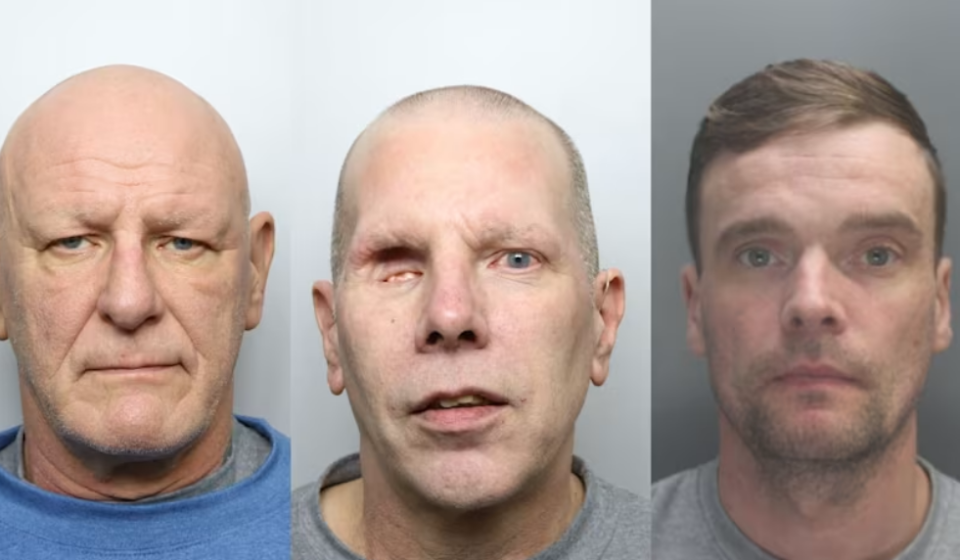
In a premeditated attack that lasted less than five minutes, 3 inmates stab child killer Kyle Bevan to death in cell at HMP Wakefield on November 4, 2025. Mark Fellows, 45, Lee Newell, 57, and David Taylor, 64, followed Kyle Bevan into his fourth-floor cell at approximately 5:30 p.m. before cornering him and stabbing him 25 times with makeshift weapons. After the brutal assault, the trio placed Bevan’s body in bed to make it appear he was sleeping. As a result, his death went undetected until the following morning’s roll call.
Bevan, 33, was serving a life sentence with a minimum tariff of 28 years for murdering his partner’s two-year-old daughter, Lola James, in Haverfordwest, Pembrokeshire, in 2020. However, the little girl suffered 101 injuries in a brutal attack that doctors compared to a high-speed car crash. Prosecutors revealed that Bevan’s crime made him a target within the prison’s twisted moral hierarchy. Meanwhile, all three attackers were found guilty of murder on June 19, 2026, at Leeds Crown Court. They will never be released from prison.
What Happened at HMP Wakefield on November 4, 2025?
CCTV footage captured the three inmates plotting together shortly before the attack. According to prosecutor Jason Pitter KC, Fellows, Newell, and Taylor were seen following Bevan into his cell one after another. In fact, they emerged just four minutes and 39 seconds later displaying “something of a satisfied, job-done mood.”
Inside the cell, the attackers stabbed Bevan more than 25 times with at least two weapons. For example, one makeshift weapon was constructed from a folded piece of metal taken from the back of a television. During the assault, the attackers slashed Bevan’s heart and major blood vessels, with at least one wound cutting through bone. However, investigators never recovered the weapon that caused the fatal injury.
After killing Bevan, the three men carefully placed him in bed to create the illusion he was asleep. Because of this deliberate staging, prison staff didn’t discover his death until they conducted roll call the next morning. Meanwhile, Fellows was spotted on CCTV near Bevan’s cell twice that evening, likely checking to confirm he was dead.
Who Were the Three Killers?
Mark Fellows: The Contract Killer Known as “The Iceman”
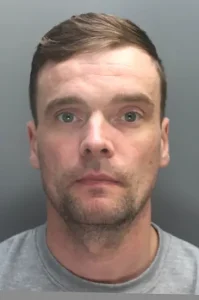
Mark Fellows, nicknamed “The Iceman” and “the Wakefield Dexter,” was already serving a whole life order for two gangland murders. In 2015, he shot notorious crime figure Paul Massey, 55, with an Uzi sub-machine gun outside his Salford home. However, three years later, Fellows murdered mob “fixer” John Kinsella, 53, from Liverpool. As a result, he received his whole life term in 2019.
Fellows was the only one of the three defendants to attend court in person for the sentencing hearing. In fact, he had formally applied to transfer out of Wakefield prison shortly before Bevan’s killing because of his dissatisfaction with the regime there. After the murder, Fellows attempted to dispose of his bloodstained trousers. In addition, all three attackers had blood on their shoes when they emerged from Bevan’s cell.
Lee Newell: A Repeat Killer of Child Murderers
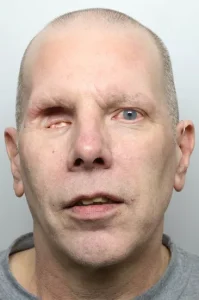
Lee Newell had killed before under chillingly similar circumstances. Initially, he was first jailed for murder in 1989 after strangling his female neighbor, who was in her 50s, when she refused to give him money. Then, in 2013, Newell was given a whole life order after strangling a prisoner who had murdered a child and leaving him in his bed.
Prosecutor Pitter noted the “chilling similarity” between that 2013 killing and the circumstances of Bevan’s death. For instance, both victims were child killers. In addition, both were strangled or stabbed before being left in their beds. Meanwhile, Newell lost an eye in a prison yard attack in 2014, for which he was later awarded £85,000 in damages. Despite this brutal assault on him, Newell remained willing to commit extreme violence against others.
David Taylor: The Man Who Boasted About Making Weapons
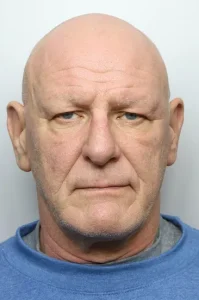
David Taylor, 64, had recently been transferred to HMP Wakefield when he participated in Bevan’s murder. At the time, Taylor was on remand, awaiting trial for the murder of Alisha Apostoloff-Boyarin, a vulnerable 24-year-old woman he had been in a relationship with but had grown tired of. Although Taylor was the last known person in contact with her when she vanished in February 2022, her body has never been recovered.
While in custody awaiting trial for Apostoloff-Boyarin’s murder, Taylor requested a police visit, claiming he had fresh information about her whereabouts. However, when Detective Constable Darren Bratby arrived at HMP Frankland in Durham for the meeting, Taylor stabbed him in the chest with an improvised weapon in the prison interview room. Fortunately, the blade narrowly missed the officer’s heart, leaving him with serious injuries. Since then, Bratby has made a full physical recovery.
Taylor boasted about his ability to make makeshift weapons “out of all sorts.” After Bevan’s death, investigators found some weapons hidden in a bottle of chili sauce in his cell, although they could not be matched to the fatal attack. During hearings before the jury was sworn in, Taylor appeared via video link escorted by officers in full riot gear. Before he was allowed to sit, prison authorities removed two sets of handcuffs from him. In addition, there were concerns that Taylor had somehow secreted a weapon inside his body for several weeks, but it could not be found.
Timeline of Events Leading to the Murder

2020: Kyle Bevan Murders Lola James
In 2020, Kyle Bevan brutally murdered his partner’s two-year-old daughter, Lola James, in Haverfordwest, Pembrokeshire. As a result of the attack, the toddler suffered 101 injuries in an assault that medical experts compared to those sustained in a high-speed car crash. Tragically, there was not one part of Lola’s body that wasn’t bruised following the campaign of torture.
After attacking Lola, Bevan failed to call an ambulance. Instead, he recorded a “disturbing” 22-second video of the stricken child as he attempted to prop her up. Ultimately, the little girl died from her injuries.
2023: Bevan Sentenced to Life in Prison
In 2023, courts sentenced Bevan to life in prison with a minimum term of 28 years for Lola’s murder. Subsequently, authorities transferred him to HMP Wakefield, a high-security facility in West Yorkshire that houses some of Britain’s most dangerous offenders.
October 2025: Tensions Rise at HMP Wakefield
In the weeks leading up to Bevan’s murder, there was “a lot of tension in the prison at the time,” according to testimony heard at Leeds Crown Court. During this period, there had been two other serious attacks at Wakefield, including the fatal stabbing of disgraced Lostprophets singer Ian Watkins, a convicted pedophile, who was killed at the same prison.
Unlike other jails, vulnerable prisoners were not separated from other inmates at Wakefield. As a result, this meant “main prisoners” such as Fellows, Newell, and Taylor “had to mix with, in a distorted moral hierarchy, other criminals that were beneath them,” including child killers like Bevan.
November 4, 2025: The Murder of Kyle Bevan
At approximately 5:30 p.m., CCTV cameras captured Fellows, Newell, and Taylor plotting together before following Bevan into his cell. Less than five minutes later, the three men emerged, appearing satisfied with their work. Afterward, they shook hands and congratulated each other while blood remained on their shoes and clothing.
November 5, 2025: Bevan’s Body Discovered
Prison staff discovered Bevan’s body during the morning roll call. Tragically, he had bled to death overnight from multiple stab wounds to his chest and abdomen. Because of the placement of his body in bed, the discovery had been successfully delayed.
June 19, 2026: All Three Men Found Guilty
A jury at Leeds Crown Court found Fellows, Newell, and Taylor guilty of murder. Subsequently, Mrs. Justice Maura McGowan sentenced all three to whole life orders, meaning they will never be released from prison.
What Sentences Did the Killers Receive?
Mark Fellows and Lee Newell
Fellows and Newell were already serving whole life orders when they killed Bevan, meaning they would never have been released in any case. However, Mrs. Justice McGowan imposed “new and separate” whole life orders on both of them specifically for Bevan’s murder. As a result, this sends a clear message that crimes committed within prison will be prosecuted with the full weight of the law.
David Taylor’s Multiple Convictions
Taylor received the most complex set of sentences. In February 2026, he pleaded guilty to murdering Alisha Apostoloff-Boyarin just one week before he was due to go on trial. When entering his plea at Manchester Crown Court, Taylor simply said, “Yeah, I’m guilty.”
Mrs. Justice McGowan sentenced Taylor to life with a minimum term of 20 years for Apostoloff-Boyarin’s murder. In addition, she handed him a separate 30-year sentence for the attempted murder of Detective Constable Bratby. Because Bevan’s murder was Taylor’s second killing, the judge imposed a whole life order. Therefore, Taylor will die in prison.
During the sentencing hearing, Mrs. Justice McGowan remarked, “I’ve never had to sentence someone for a third murder, and in two of these defendants’ cases that’s what just happened.” After thanking the trial jurors who attended, she told the three killers, “You chose him as your target as he had been convicted of the murder of a child. Acting together you wounded him more than 25 times, several of those wounds were fatal.”
Why Was Kyle Bevan Targeted?
Prosecutor Jason Pitter explained that Bevan “kept himself to himself” at HMP Wakefield and had no known associations with his three murderers. Nevertheless, his crime made him a target. As the judge told the defendants, “You chose him as your target as he had been convicted of the murder of a child.”
Within the prison’s distorted moral hierarchy, child killers occupy the lowest position. In fact, even murderers and violent offenders view crimes against children as unforgivable. As a result, this twisted code creates extreme danger for anyone convicted of harming a child once they enter the prison system.
The fact that Newell had previously killed another child murderer in prison demonstrates a pattern of vigilante violence. For example, his 2013 murder involved strangling an inmate who had killed a child and leaving him in bed, an almost identical scenario to Bevan’s death. Therefore, this suggests Newell specifically sought out child killers as targets for his violence.
How Did Prison Authorities Respond?
Chief Inspector James Entwistle, the senior investigating officer, addressed the murder in a public statement. “This was a premeditated brutal attack carried out inside a prison by three long-term inmates,” he said. “Fellows, Taylor, and Newell’s actions showed a complete disregard for life and for the rules designed to keep people safe in custody.”
Entwistle continued, “By their very nature, prisons are designed to deny offenders of their liberty, but they also need to be environments that are kept safe from unlawful violence. Today’s verdicts ensure the continued safety of others by holding these dangerous individuals to account and ensuring they face the full weight of the law.”
Questions About Prison Safety
The murder raises serious questions about prison safety protocols at HMP Wakefield. For instance, how did three known violent offenders gain access to makeshift weapons? In addition, why were vulnerable prisoners not separated from the general population? Furthermore, what security measures failed to prevent or interrupt a five-minute attack in a cell?
These questions become even more pressing when considering that Bevan’s murder occurred less than a month after Ian Watkins was fatally stabbed at the same facility. As a result, the pattern of violence at Wakefield suggests systemic issues that require urgent attention.
What Security Measures Were in Place?
The trial revealed concerning details about security at HMP Wakefield. For example, Taylor had boasted about his ability to make weapons “out of all sorts.” After Bevan’s death, investigators discovered weapons hidden in a bottle of chili sauce in Taylor’s cell, although these specific weapons could not be matched to the fatal attack.
One weapon used in the murder was constructed from a folded piece of metal taken from the back of a television. Subsequently, investigators found this makeshift blade on the ground outside Bevan’s cell with his blood on it. Therefore, the fact that inmates could dismantle television sets to create weapons raises questions about property inspections and cell searches.
When Taylor appeared at hearings before the jury was sworn in, he required two sets of handcuffs to be removed before he could sit down. In addition, prison authorities expressed concerns that he had somehow secreted a weapon inside his body for several weeks. Although no weapon was found, these fears illustrate the extreme security risks Taylor posed.
Prison authorities wanted all three defendants handcuffed if they gave evidence in the witness box. However, none of them took the stand during the trial. Meanwhile, Fellows was the only one who attended court in person for sentencing. In contrast, Newell and Taylor joined via video link from their respective prisons.
What Was Said as Taylor Was Being Transferred?
As authorities moved Taylor out of HMP Wakefield following the murder, he shouted in the vicinity of Newell, “Nice working with you and the Iceman.” Because prison staff overheard this comment, it provided further evidence of the collaborative nature of the attack. In fact, it demonstrated that the three men viewed the murder as a successful joint operation.
Current Status: Where Are the Killers Now?
All three men are serving whole life orders in high-security prisons. As a result, Fellows, Newell, and Taylor will never be released. Ultimately, they will die behind bars.
Fellows had previously requested a transfer from HMP Wakefield before Bevan’s murder because of his dissatisfaction with the regime there. However, whether that transfer request was granted following his conviction for Bevan’s murder is not publicly known.
Taylor was being held at HMP Full Sutton, near York, when he appeared via video link for pre-trial hearings. Therefore, he may remain at that facility or could be transferred to another high-security prison.
The locations of specific high-risk prisoners are not always disclosed for security reasons. Nevertheless, all three men are confined to Category A facilities designed for inmates who pose the highest security risks.
Understanding Prison Violence and Vigilante Justice
This case illustrates the dangerous dynamics that exist within prison walls. When violent offenders take it upon themselves to punish others they deem morally inferior, they create additional victims and perpetuate cycles of violence.
While Kyle Bevan committed a horrific crime against an innocent child, he was serving his sentence under the authority of the justice system. However, Fellows, Newell, and Taylor had no legal or moral right to become his executioners. In fact, their actions represent a complete breakdown of the rule of law within the prison environment.
The fact that Newell had previously killed another child murderer and received a whole life order demonstrates that even the harshest punishment failed to deter him from committing the same crime again. As a result, this raises difficult questions about how to manage inmates who have already received the maximum possible sentence and therefore have nothing left to lose.
For families like Lola James’s loved ones, this case adds another layer of trauma. Although Bevan’s death might seem like justice to some, it denies the legal process and creates additional violence. Instead, Lola’s family deserved to see Bevan serve his full sentence under the law, not become the victim of a prison murder.
Stay Updated on True Crime Cases and Psychology
For more in-depth analysis of high-profile criminal cases and the psychology behind them, subscribe to the Crime and Psyche YouTube channel. We examine the motivations, warning signs, and systemic issues behind the most compelling true crime stories. In addition, our community values factual accuracy, psychological insight, and respect for victims while exploring what these cases reveal about human behavior and justice.
Sources
- ITV News Calendar: Inmates who murdered child killer Kyle Bevan at HMP Wakefield will die in prison
- BBC News: Three given whole-life orders for inmate murder
- Sky News: Three prisoners given whole life orders for murder of child-killer inmate
- Leeds Crown Court proceedings, June 2026
Justice Behind Bars: A System Under Scrutiny
The murder of Kyle Bevan by three inmates who will now die in prison represents a profound failure of the correctional system. Although Bevan himself was a convicted child killer serving a justified life sentence, his death at the hands of fellow inmates undermines the fundamental principle that justice is administered by courts, not by criminals.
This case forces us to confront uncomfortable truths about prison safety, the limits of punishment, and what happens when individuals with nothing left to lose encounter those they view as morally inferior. For example, the chilling efficiency of the attack, the careful staging of Bevan’s body, and the congratulatory mood of the killers afterward reveal a level of planning and ruthlessness that should never occur within a supposedly secure facility.
As we remember two-year-old Lola James and the unimaginable suffering she endured, we must also recognize that additional violence does not heal the wounds created by the original crime. In fact, three more families now live with the knowledge that their relatives have committed additional murders. Despite the justice system’s efforts, the cycle of violence continues, contained within prison walls but no less devastating for those affected.
The whole life orders imposed on Mark Fellows, Lee Newell, and David Taylor ensure they will never again walk free. In a system designed to protect society, they have proven themselves to be among the most dangerous individuals Britain has ever imprisoned. Therefore, their story serves as a sobering reminder that even maximum-security facilities struggle to contain the violence of those who have long since abandoned any hope of redemption.