
When a Serial Killer Won America’s Heart on National Television
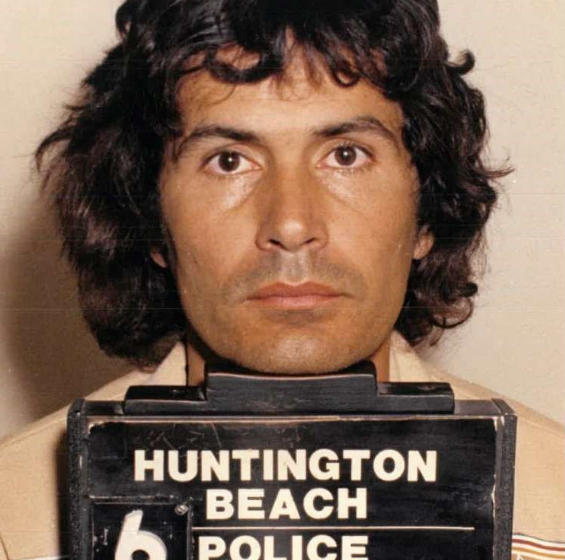
In September 1978, the dating game serial killer Rodney James Alcala charmed a studio audience and won a date with bachelorette Cheryl Bradshaw on the popular television show The Dating Game. America watched him smile, laugh, and flirt his way to victory. However, what viewers didn’t know was that Alcala had already murdered multiple women and would kill again before his arrest. Host Jim Lange introduced him as “a successful photographer who enjoys skydiving and motorcycling.” In response, the audience applauded enthusiastically.
Backstage, however, Bradshaw made a decision that likely saved her life. Despite his charming television persona, she refused to go on the date, telling producers Alcala felt “creepy.” Her instincts proved devastatingly accurate. While Alcala was winning over television audiences, he was simultaneously hunting, photographing, torturing, and killing women across multiple states. Meanwhile, his camera became his weapon of choice for gaining trust.
The case of Rodney Alcala represents one of the most chilling examples of how a predator can hide in plain sight. Between 1968 and 1979, authorities convicted him of eight murders, although investigators believe the true number could exceed 130 victims. In addition, his story reveals systemic failures, missed warnings, and the terrifying reality that evil often wears a charming smile.
Who Was Rodney James Alcala?
Rodney James Alcala was born Rodrigo Jacques Alcala Buquor on August 23, 1943, in San Antonio, Texas. His father abandoned the family when Rodney was young, and his mother eventually relocated the family to Los Angeles in 1954. By all outward appearances, Alcala seemed intelligent and academically gifted during his youth.
At 17, Alcala enlisted in the United States Army, becoming a paratrooper. However, his military service revealed early warning signs. Fellow soldiers reported that he was manipulative, vindictive, and insubordinate. Additionally, the Army disciplined him multiple times for assaulting young women. In 1964, Alcala went AWOL, hitchhiking from Fort Bragg, North Carolina, to his mother’s California home after what authorities described as a nervous breakdown.
A military psychiatrist diagnosed him with antisocial personality disorder and estimated his IQ at 135. As a result, the Army discharged him on medical grounds. This diagnosis represented the first formal red flag in what would become a pattern of ignored warnings. After his discharge, Alcala reinvented himself, eventually graduating from the UCLA School of the Arts and Architecture and later studying at New York University.
Meanwhile, Alcala discovered that posing as a professional fashion photographer gave him something invaluable: access to vulnerable women and a reason for them to trust him. Consequently, his camera became the tool through which he identified, isolated, and ultimately victimized his targets.
What Crimes Did Rodney Alcala Commit? A Timeline of Terror
1968: The First Known Attack on Tali Shapiro
On September 25, 1968, eight-year-old Tali Shapiro was walking to school along Sunset Boulevard in Los Angeles when Alcala pulled up beside her. He told her he was a friend of her parents and offered a ride. However, a passing motorist named Donald Haines witnessed the interaction and sensed something was wrong. Haines followed Alcala’s beige car to his Hollywood apartment and immediately called police.
When Los Angeles Police Officer Chris Camacho arrived and kicked in the door, he found Tali unconscious in a pool of blood. Investigators later determined that Alcala had raped and beaten her with a steel bar. Officers discovered extensive photography equipment and numerous pictures of young girls throughout the apartment. Despite this evidence, Alcala had escaped through the back door during the commotion.
Tali spent 32 days in a coma and months recovering from her injuries. Meanwhile, Alcala vanished across the country, beginning a pattern of fleeing prosecution that would define his criminal career.
1971: The Murder of Cornelia Crilley in Manhattan
To evade the arrest warrant from the Shapiro assault, Alcala fled to New York and enrolled at NYU’s film program under the alias “John Berger.” On June 12, 1971, Cornelia Crilley, a 23-year-old TWA flight attendant, was found murdered in her Manhattan apartment at 427 East 83rd Street. She had recently moved into the apartment and was excited about her new life in the city.
Alcala strangled Cornelia with her own nylon stockings and left a distinctive bite mark on her breast. Investigators believe she encountered Alcala as she moved furniture into her new apartment and accepted his offer to help. However, her murder remained unsolved for 40 years because no one connected the crime to the man hiding under an assumed name.
1971: Alcala’s First Arrest and Astonishing Release
The FBI added Alcala to its Most Wanted Fugitives list in early 1971. That August, he obtained a job as a counselor at Camp New Beginnings, an arts camp for children in Georges Mills, New Hampshire, using the alias “John Burger.” However, two campers recognized his photograph on an FBI poster at the local post office and reported him to authorities.
Police arrested and extradited Alcala to California. Unfortunately, Tali Shapiro’s family had relocated to Mexico and refused to allow their daughter to testify, fearing the psychological impact. Without their primary witness, prosecutors offered Alcala a plea deal for the lesser charge of child molestation. Shockingly, he served only 34 months in prison before his 1974 release.
1974-1977: Re-Arrest, Release, and Permission to Kill
Less than two months after his release, Alcala attacked another child. In 1974, authorities arrested him after he abducted and assaulted a 13-year-old girl known in court records as “Julie J.” as she walked to school. Despite his prior conviction, he served just two years before his 1977 release as a registered sex offender.
Even though Alcala was a known flight risk and repeat offender, his parole officer made the unusual decision to grant him permission to travel to New York City. Tragically, this decision would prove fatal for his next victim.
1977: Ellen Hover’s Disappearance
Within one week of arriving in Manhattan, Ellen Jane Hover, a 23-year-old musician and artist, vanished from her apartment on July 15, 1977. Ellen came from a prominent entertainment family. Her father, Herman Hover, had owned the famous Hollywood nightclub Ciro’s. In addition, her godfathers were Dean Martin and Sammy Davis Jr.
Ellen’s datebook showed an appointment to meet with a photographer named “John Berger” on the day she disappeared. In response, her family hired private investigators and even took out an ad in the New York Times seeking information about the mysterious photographer. Despite these efforts, the investigation stalled.
Hikers discovered Ellen’s remains in 1978, buried under heavy rocks on a wooded hillside overlooking the Hudson River on the Rockefeller Estate in Westchester County. Although the FBI connected “John Berger” to Rodney Alcala and questioned him, he admitted knowing Ellen but denied any involvement in her disappearance. Without DNA technology and with poor communication between jurisdictions, the case went cold for 34 years.
1977: Christine Ruth Thornton’s Murder
During his 1977 cross-country travels, Alcala encountered Christine Ruth Thornton, a 29-year-old woman from Texas who was traveling to Montana with her boyfriend to pan for gold. Christine had recently told her family she was pregnant, making her disappearance even more heartbreaking.
Christine’s younger sister, Kathy Thornton, spent nearly 40 years searching for answers. Throughout this time, she systematically contacted police departments, federal agencies, hospitals, and social services, keeping meticulous records of every inquiry. Her dedication never wavered, although every lead seemed to reach a dead end.
Authorities had actually found Christine’s remains in a Wyoming field in 1982, but they couldn’t identify the body. Decades later, when the FBI released photographs from Alcala’s storage locker, Kathy recognized her sister’s face in one of the images. Subsequently, DNA testing confirmed that Christine had been one of Alcala’s victims.
1977-1979: California Murder Spree
After returning to Los Angeles in 1977, Alcala worked as a typesetter at the Los Angeles Times. Despite being a registered sex offender, no one conducted background checks. During this period, he convinced hundreds of young men and women that he was a professional fashion photographer. Later, co-workers recalled that Alcala shared his photographs at work, including disturbing images of naked teenage girls and boys.
On November 9, 1977, Alcala murdered Jill Terry Barcomb, an 18-year-old from Oneida, New York. Authorities found her body on a dirt path near Mulholland Drive in Los Angeles. Investigators determined that Alcala had sexually assaulted, strangled her with blue rope ties, beaten, and left her with three bite marks on her right breast. Initially, investigators believed she was a victim of the Hillside Strangler, but later evidence proved Alcala was responsible.
On December 16, 1977, Georgia Marie Wixted, a 27-year-old nurse, was discovered dead in her Malibu apartment. Investigators determined that Alcala had sexually assaulted, strangled her with her own nylons, and bashed in her skull. Prosecutors later used DNA evidence and a handprint found at the scene to convict Alcala.
On June 24, 1978, Charlotte Lee Lamb, a 32-year-old legal secretary and mother of two from Santa Monica, was found dead in the laundry room of her El Segundo apartment complex. Alcala had sexually assaulted, beaten, and strangled her with a shoelace. In addition, her body was carefully posed with her hands behind her back.
February 1979: Monique Hoyt’s Miraculous Escape
On February 14, 1979, Alcala picked up 15-year-old hitchhiker Monique Hoyt in Riverside County. He drove her to his apartment, where he raped her. Subsequently, they traveled to a secluded mountainous area in Joshua Tree, California, where Alcala photographed her in her underwear while repeatedly sexually assaulting her.
He bound and gagged Hoyt, then began a sustained assault that included bludgeoning her head with a rock. However, when Alcala stopped at a gas station bathroom on the drive back, Hoyt seized her opportunity and escaped. She immediately filed a police report, and authorities arrested Alcala. Disturbingly, his mother posted his bail, allowing him to remain free.
June 1979: Jill Marie Parenteau’s Murder
On June 13, 1979, Jill Marie Parenteau, a 21-year-old computer keypunch operator, left work early to attend a baseball game. When she didn’t arrive at work the following morning, police went to her Burbank apartment and discovered signs of forced entry. Officers found Parenteau’s body on her bathroom floor, posed with pillows under her shoulders. Investigators determined that Alcala had sexually assaulted, beaten, and strangled her.
Alcala had cut himself crawling through a window, leaving blood evidence that would later identify him as the killer. In addition, a friend testified that she and Parenteau had encountered Alcala at a club several times before the murder.
June 1979: Robin Samsoe’s Murder and Alcala’s Final Arrest
On June 20, 1979, 12-year-old Robin Christine Samsoe disappeared while riding a borrowed bicycle from her Huntington Beach home to her ballet class. The day before, Robin and her friend Bridget Wilvurt had been approached on the beach by a man with a camera who asked to photograph them. However, a neighbor interrupted the encounter, and the man quickly left.
Robin’s decomposing body was discovered 12 days later in the Los Angeles foothills, dumped off Santa Anita Canyon Road. Investigators determined that Alcala had beaten, raped, and stabbed her. Detectives circulated a sketch of the photographer based on descriptions from Robin’s friends. Fortunately, Alcala’s parole officer recognized him and contacted investigators.
Police arrested Alcala in July 1979 and searched his storage locker. Inside, they found jewelry belonging to multiple women and hundreds of photographs of young women, teenage girls, and boys, many in sexually explicit poses. This discovery would eventually link Alcala to numerous other crimes.
Who Were the Key Figures in This Case?
The Confirmed Victims
Tali Shapiro was eight years old when Alcala attacked her in 1968. Despite surviving 32 days in a coma and months of recovery, her family’s relocation to Mexico and refusal to have her testify allowed Alcala to receive a minimal sentence that enabled his continued killing.
Cornelia Crilley, 23, was a TWA flight attendant described by friends as graceful and sophisticated. Alcala murdered her on June 12, 1971, just as she was settling into her new Manhattan apartment and building her future.
Ellen Jane Hover, 23, was a creative and gentle musician and artist from a prominent entertainment family. She disappeared on July 15, 1977, after scheduling a meeting with someone calling himself “John Berger.”
Christine Ruth Thornton, 29, was a free-spirited traveler who was pregnant when she disappeared in 1977. Remarkably, her sister Kathy spent nearly 40 years searching for answers.
Jill Terry Barcomb, 18, had recently moved from Oneida, New York, seeking a new life in Los Angeles when Alcala murdered her on November 9, 1977.
Georgia Marie Wixted, 27, was a dedicated nurse whom Alcala murdered in her Malibu apartment on December 16, 1977.
Charlotte Lee Lamb, 32, was a legal secretary and mother of two whom Alcala killed on June 24, 1978, in El Segundo.
Jill Marie Parenteau, 21, was a computer keypunch operator who loved baseball and was murdered on June 13, 1979, in Burbank.
Robin Christine Samsoe, 12, was an energetic girl who loved ballet. Alcala murdered her on June 20, 1979, while she was riding her bicycle to dance class.
Monique Hoyt was 15 when she escaped from Alcala’s car in February 1979. Courageously, her survival and willingness to testify provided crucial evidence.
The Investigators
Chris Camacho, a Los Angeles Police Officer, was the first responder who kicked in Alcala’s door in 1968 and found Tali Shapiro clinging to life. He never forgot the “evil face” at the door.
Steve Hodel, an LAPD detective, worked the early investigation and witnessed how Alcala’s charm fooled even his UCLA professors.
Steve Braccini, an NYPD cold case detective, helped connect Alcala to the New York murders decades after they occurred.
Matt Murphy, an Orange County Deputy District Attorney, prosecuted Alcala’s 2010 trial and described him as “a killing machine.”
Melissa Mourges and Martha Bashford, Manhattan prosecutors, worked to bring Alcala to justice for the New York murders after 40 years.
The Woman Who Got Away
Cheryl Bradshaw was the bachelorette who selected Alcala on The Dating Game in September 1978. After meeting him backstage, however, she refused to go on the date, telling producers he made her uncomfortable. Fortunately, her intuition saved her life.
How Did Rodney Alcala Finally Face Justice?
The First Trial and Conviction
In May 1980, a jury found Alcala guilty of Robin Samsoe’s murder and sentenced him to death in June. However, the California Supreme Court overturned the verdict in 1984 because jurors had been improperly informed about his prior sex crimes.
The Second Trial
In May 1986, the state retried Alcala for Robin’s murder. The second trial was virtually identical to the first, except prosecutors omitted testimony about his prior criminal record. Once again, the jury convicted him and sentenced him to death in August. Subsequently, the California Supreme Court upheld this verdict in 1992.
Nevertheless, Alcala filed a federal habeas corpus petition. In 2001, a United States district court judge granted it, overturning his second conviction. A Ninth Circuit Court of Appeals panel upheld this decision in 2003, partly because a witness wasn’t allowed to support Alcala’s claim that investigators had hypnotized a park ranger who found Robin’s body.
DNA Changes Everything
While preparing for a third prosecution in 2003, Orange County investigators learned that Alcala’s DNA, sampled under a new state law, matched semen found at the rape-murder scenes of two Los Angeles women. In addition, additional evidence, including another cold case DNA match in 2004, led prosecutors to indict Alcala for four additional murders.
The Third Trial and Final Conviction
In 2010, Alcala stood trial for five murders: Robin Samsoe, Jill Barcomb, Georgia Wixted, Charlotte Lamb, and Jill Parenteau. Disturbingly, he chose to represent himself, cross-examining witnesses in a voice altered to sound different from his own. A jury convicted him on all five counts of first-degree murder and sentenced him to death for the third time.
New York Prosecution
In 2012, authorities extradited Alcala to New York, where he pleaded guilty to the murders of Cornelia Crilley and Ellen Hover. As a result, he received two sentences of 25 years to life for these crimes, which had remained unsolved for more than 40 years.
Christine Thornton Identified
In 2016, investigators identified Christine Ruth Thornton as a victim after her sister Kathy recognized her photograph among the hundreds released from Alcala’s storage locker. Subsequently, DNA confirmed the identification. Although prosecutors charged Alcala with her murder, they later dropped the charges.
Death Before Execution
On July 24, 2021, Rodney Alcala died of natural causes at a hospital near California State Prison, Corcoran. He was 77 years old. Despite three death sentences, authorities never executed him. Instead, his decades of legal appeals outlasted the system’s ability to carry out the sentence.
What Do We Know About the Photographs?
When police searched Alcala’s Seattle storage locker in 1979, they discovered more than 1,000 photographs of women, teenage girls, and boys. Many subjects appeared in sexually explicit positions. In addition, some appeared unconscious or dead.
In 2010, the Huntington Beach Police Department released 120 of these photographs to the public, hoping to identify potential victims. As a result, the release led to Christine Thornton’s identification after her sister recognized her. Additionally, investigators confirmed that Liane Leedom, who was 17 when Alcala photographed her in 1979, had narrowly escaped becoming a victim.
Many subjects in the photographs have never been identified. Investigators believe some may have been additional murder victims, while others survived their encounters with Alcala without realizing the danger they faced. The photographs served multiple purposes for Alcala: they were tools for gaining trust, trophies of his conquests, and evidence of his complete control over his victims.
To this day, the Huntington Beach Police Department continues seeking information about unidentified individuals in these photographs. Anyone with information can contact Sergeant Sam Shepherd at (714) 536-5947.
The Psychology Behind the Monster: Understanding Rodney Alcala
What Made Rodney Alcala So Dangerous?
Rodney Alcala represents a particularly dangerous type of sexual serial killer: one who combined high intelligence with complete emotional detachment from his victims’ suffering. Various psychiatric experts who evaluated him proposed multiple diagnoses, including antisocial personality disorder, narcissistic personality disorder, borderline personality disorder, and malignant narcissism with comorbid psychopathy and sexual sadism.
Former FBI profiler Mary Ellen O’Toole explained that Alcala was “constantly in predatory mode.” According to O’Toole, this behavior involves hunting human beings, and for serial sexual killers, the hunt itself is often as exciting as the actual homicide and sexual assault. In addition, Alcala’s extensive travels, his camera equipment, and his systematic approach to identifying and isolating victims demonstrate this predatory pattern.
The Performance of Normalcy
What distinguished Alcala from many serial killers was his exceptional ability to perform normalcy. He wasn’t a loner living in isolation. Instead, he maintained jobs, attended prestigious universities, made friends, and even appeared on national television. His UCLA professor told investigators that “Rod Alcala wouldn’t hurt anybody” because he “truly believed that.”
This ability to compartmentalize is characteristic of psychopathy. Alcala could engage in seemingly normal social interactions while simultaneously planning his next attack. In fact, his appearance on The Dating Game wasn’t an aberration. Rather, it was the most visible example of something he did constantly: performing for an audience while using that performance as cover for his true nature.
The Role of Photography in His Pathology
Alcala’s camera served multiple psychological functions. Practically, it provided him with credibility and a reason for strangers to trust him. Psychologically, however, it served darker purposes. For instance, the act of photographing his victims allowed him to extend his control beyond the physical assault. Meanwhile, the photographs became trophies, permanent records of his dominance.
Survivors reported that Alcala would encourage them to reveal personal information during photo sessions, creating a false sense of intimacy. This process allowed him to assess their vulnerability while simultaneously building their trust. However, once isolated with his victims, his demeanor would shift dramatically from charming photographer to violent predator.
The Pattern of Strangulation and Revival
Prosecutors noted that Alcala “toyed” with his victims, strangling them until they lost consciousness, waiting for them to revive, then repeating the process before finally killing them. This behavior reveals the core of his sexual sadism: the need to maintain complete control while maximizing his victims’ terror and suffering.
This pattern, known as “non-fatal strangulation” or “choking games” in forensic psychology, provides the perpetrator with a sense of godlike power over life and death. For Alcala, the repeated cycle of near-death and revival likely intensified his sexual gratification while feeding his narcissistic need for absolute dominance.
Why Did the System Keep Releasing Him?
Perhaps the most disturbing psychological aspect of this case isn’t Alcala’s pathology but society’s repeated failure to recognize it. After his 1968 attack on Tali Shapiro, military records documenting his discharge for antisocial personality disorder should have informed sentencing. Instead, he served only 34 months.
After his second arrest for assaulting a 13-year-old, his pattern of targeting children should have triggered maximum sentences and restrictions. However, he served two years and was granted permission to travel to New York, where he immediately killed again.
This pattern reflects a broader societal blind spot: our tendency to trust appearances over evidence. Because Alcala was handsome, educated, and articulate, authority figures repeatedly gave him the benefit of the doubt. Consequently, his charm functioned as camouflage, allowing him to move freely through society while accumulating victims.
What Warning Signs Did People Miss?
In retrospect, the warning signs were abundant. For example, fellow soldiers reported his inappropriate behavior with women and his vindictive nature. Similarly, co-workers at the Los Angeles Times noticed the disturbing nature of his photographs but dismissed their concerns. Meanwhile, television producers never conducted background checks before putting him on national television.
Most significantly, the justice system’s own records documented his escalating pattern: military discharge for sexual deviance, brutal assault of an eight-year-old, flight to avoid prosecution, use of aliases, and repeated attacks on children immediately after release. Therefore, each intervention point represented an opportunity to prevent future murders. Each time, the system chose leniency.
Frequently Asked Questions
How many people did the dating game serial killer actually murder?
Authorities convicted Rodney Alcala of eight murders across California, New York, and Wyoming. However, investigators believe the true number could be as high as 130 victims. In addition, the hundreds of unidentified photographs found in his storage locker suggest many potential victims remain unknown. Some subjects in these photographs have never been identified, and investigators believe some may be additional murder victims. The exact number will likely never be known because Alcala died without providing a full confession.
Did Cheryl Bradshaw know Rodney Alcala was dangerous when she refused the date?
Cheryl Bradshaw didn’t have specific knowledge of Alcala’s crimes when she refused to go on the date after The Dating Game taping. Instead, she later told producers that Alcala made her feel uncomfortable and that something about him was “creepy.” Despite his charming television persona, her instincts detected something genuinely dangerous about him. This intuition likely saved her life, as Alcala was actively killing during this period. Therefore, her experience demonstrates the importance of trusting gut feelings about potentially dangerous individuals, even when they seem outwardly normal or charming.
Why did it take so long to connect Rodney Alcala to all his murders?
Several factors delayed connecting Alcala to his crimes. First, he committed murders across multiple states (California, New York, Wyoming), and police departments in the 1970s had limited ability to share information across jurisdictions. Second, forensic technology like DNA analysis didn’t exist during his active killing period. Third, Alcala used aliases like “John Berger” and “John Burger,” making it difficult to track his movements. Finally, investigators often found his victims in different counties or states from where they disappeared, further complicating investigations. Only when DNA technology advanced and cold case units began re-examining evidence did the connections become clear.
How did Rodney Alcala choose his victims?
Alcala used his camera as his primary tool for identifying and isolating victims. Typically, he would approach women and young people in public spaces like beaches, streets, and campuses, compliment them, and offer to photograph them for his “portfolio.” Because he presented himself as a professional fashion photographer, he gained credibility. His targets ranged from children to women in their thirties, though he seemed to prefer younger victims. In addition, he looked for individuals who were alone or vulnerable, and he excelled at creating situations where he could isolate them from potential help. Meanwhile, his charm and articulate manner allowed him to gain trust quickly before revealing his true nature.
Stay Informed: Join Our Community
The story of the dating game serial killer Rodney Alcala serves as a sobering reminder that evil doesn’t always announce itself. Sometimes it smiles for the camera and wins the audience’s applause. If you found this deep dive into criminal psychology insightful, please subscribe to the Crime and Psyche YouTube channel for more in-depth explorations of true crime cases through a psychological lens. We honor victims by telling their stories with the depth and respect they deserve, while examining the warning signs that might help prevent future tragedies. As a result, your subscription helps us continue this important work.
Sources and Further Reading
This article was researched using multiple credible sources to ensure accuracy:
- Wikipedia: Rodney Alcala – Comprehensive overview of Alcala’s crimes and trials
- CBS News 48 Hours: Serial Killer Rodney Alcala’s Trail of Murder – Detailed investigative reporting on the case
- BBC News: Anna Kendrick’s Woman of the Hour – Context about Alcala’s television appearance
- ABC News: Serial Killer Rodney Alcala’s Photographs – Information about unidentified victims
- Britannica: Homicide – Legal and criminological context
A Final Reflection on Hidden Monsters
The case of Rodney Alcala forces us to confront uncomfortable truths about how predators operate and how society enables them. Authorities didn’t catch him because he made obvious mistakes. Instead, they caught him because one brave girl escaped and testified, because a parole officer recognized a police sketch, and because advancing technology finally connected decades-old evidence.
Before that final arrest, the system gave him chance after chance. Judges handed down minimal sentences. Meanwhile, parole boards released him early. Officials granted travel permissions to a known sex offender and flight risk. Therefore, each decision reflected a choice to believe in redemption over recognizing a pattern of escalating violence.
The victims whose names we know represent lives that burned brightly before Alcala extinguished them. For example, Cornelia Crilley was building her career as a flight attendant. Ellen Hover was pursuing her passion for music and art. Similarly, Robin Samsoe was excited about starting ballet lessons. Each had families who loved them, friends who missed them, and futures that Alcala stole.
The women in those hundreds of unidentified photographs deserve recognition too. Some survived without knowing how close they came to becoming victims. However, others may not have survived at all. Their families might still be searching for answers, just as Kathy Thornton searched for her sister Christine for nearly 40 years.
Perhaps the most important lesson from this case is that we must trust evidence over appearances. When someone’s actions consistently reveal danger, we cannot allow charm to override that pattern. Similarly, when systems designed to protect people repeatedly fail, we must examine why and demand accountability.
Rodney Alcala died in prison at 77, never having faced execution, never having provided a full accounting of his crimes. The dating game serial killer took his secrets to the grave. However, those who survived him, those who loved his victims, and those who worked tirelessly to bring him to justice deserved better. They deserved a system that recognized the monster before he could appear on television, smiling and joking while bodies lay hidden across the country.
We owe it to his victims to remember not just the monster who killed them, but the vibrant lives he destroyed and the systemic failures that enabled him. Only by examining these failures honestly can we hope to prevent the next charming predator from hiding in plain sight, camera in hand, smile ready for the audience.