Michael Johnson Charged Then Cleared of Phylicia Barnes’ Killing, Sentenced to Life in New Attack

From Acquittal to Life Behind Bars: The Michael Johnson Cases
Michael Maurice Johnson, 42, will spend the rest of his life in prison after receiving two consecutive life sentences plus 25 years for the brutal 2024 rape and assault of a young woman in Baltimore County. This sentencing comes after Michael Johnson charged then cleared of Phylicia Barnes killing sentenced to life in new attack became a reality that brought painful closure to two families. Previously, Johnson was tried three times for the 2010 murder of 16-year-old Phylicia Simone Barnes in Baltimore City before being acquitted in 2018. On June 22, 2026, the Barnes family attended his sentencing, finally witnessing Johnson held accountable for violence against another victim.
The contrast between the two cases is striking. While Baltimore City prosecutors struggled to prove Johnson murdered Phylicia Barnes, Baltimore County prosecutors presented overwhelming evidence in the 2024 case. For example, body-worn camera footage showed a victim so severely injured she could barely speak. In addition, medical experts documented strangulation injuries consistent with a six-hour assault. After sentencing, Baltimore County State’s Attorney Scott Shellenberger declared that Johnson “will not hurt another person again.”
The tragedy connects two young women separated by more than a decade. However, their stories reveal a pattern of alleged violence that authorities believe spans years.
Who Was Phylicia Barnes?
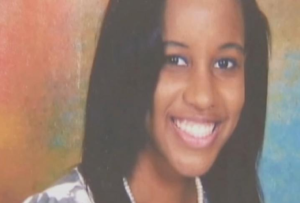
Phylicia Simone Barnes was born on January 12, 1994, in North Carolina. At just 16 years old, she exemplified academic excellence and ambition. The honor student from Monroe, North Carolina, was on track to graduate early from high school. Moreover, she had already chosen her college destination: Towson University in Maryland.
During Christmas break in December 2010, Phylicia traveled to Baltimore to visit her half-sister Deena Barnes. Consequently, she stayed at Deena’s apartment in Northwest Baltimore. At the time, Michael Johnson was Deena’s boyfriend. According to later court testimony, Johnson made Phylicia uncomfortable during her visit.
The straight-A student was last seen on December 28, 2010. Unfortunately, she never returned home to North Carolina. As a result, her disappearance launched one of Baltimore’s most vexing missing person cases, which police compared to the Natalee Holloway case due to the national attention it received.
What Happened to Phylicia Barnes?
The Disappearance and Massive Search
Phylicia Barnes vanished on December 28, 2010, from her sister’s apartment complex near Reisterstown Road Plaza in Baltimore. Her last known communication was a Facebook post that same day stating she was at her sister’s apartment with her sister’s boyfriend, Michael Johnson. After that moment, she never used her cell phone, credit cards, or updated her social media accounts again.
By January 3, 2011, Baltimore police declared themselves “enormously concerned” about the missing teenager. Meanwhile, the case quickly garnered national media attention. For example, America’s Most Wanted featured the case during commercial breaks on January 22, 2011. In addition, billboards appeared along major highways offering a $36,000 reward for information.
On April 9, 2011, Maryland State Police conducted a massive search of Patapsco Valley State Park. More than 100 law enforcement officers and volunteers combed through the area. Although they discovered another unrelated body, they did not find Phylicia. As a result, investigators declared themselves “back at square one.”
Discovery of Her Body
On April 20, 2011, workers spotted a body floating in the Susquehanna River near the Conowingo Dam, approximately 45 miles from where Phylicia disappeared. The next day, police confirmed through dental records and a tattoo that the body was Phylicia Barnes. Another body found nearby that same day was identified as an unrelated adult male victim.
On May 4, 2011, following an autopsy conducted by the Office of the Chief Medical Examiner in Maryland, authorities officially ruled Phylicia’s death a homicide. However, investigators determined the cause of death but withheld that information to protect the integrity of their investigation. Subsequently, Baltimore City officially added Phylicia to their 2010 homicide count on May 8, 2012, raising that year’s total from 196 to 197.
More than 700 people gathered at Phylicia’s former school on April 28, 2011, to remember her. Later, her private funeral took place in Georgia on May 7, 2011.
The Three Trials of Michael Johnson for Phylicia Barnes’ Murder
Initial Investigation and Arrest
For over a year following Phylicia’s death, the investigation continued without an arrest. In September 2011, court documents revealed that Deena Barnes had attempted to obtain a restraining order against Michael Johnson just two months after Phylicia’s disappearance. Notably, Johnson was reportedly the last person to see Phylicia alive. Throughout the investigation, police questioned him eight times.
On April 25, 2012, Baltimore City police arrested Michael Johnson after he fled from officers. At a hearing on April 27, 2012, Assistant State’s Attorney Lisa Goldberg presented the first public details of the alleged murder. According to prosecutors, Johnson asphyxiated Phylicia at her sister’s apartment, then carried her body out in a 35-gallon plastic tub. Furthermore, a neighbor testified he saw Johnson sweating and struggling to move the container. Despite extensive searches, the tub was never recovered.
During trial testimony, prosecutors established that Johnson had exchanged 500 phone calls and text messages with Phylicia. Reportedly, he considered her his “little sister.” However, according to Deena’s testimony, Johnson allowed Phylicia to consume alcohol and made sexual advances toward her, making the teenager uncomfortable.
First Trial: Conviction Overturned
On February 6, 2013, a Baltimore City jury acquitted Johnson of first-degree murder but convicted him of second-degree murder. The prosecution’s case relied heavily on circumstantial evidence. For instance, a neighbor testified about seeing Johnson carry a suspicious container from the apartment. In addition, a petty criminal testified that he helped Johnson dispose of the body.
Defense attorneys argued that no physical evidence directly linked Johnson to the killing. Moreover, they contended he lacked sufficient time to kill Phylicia, clean the apartment of forensic evidence, and dispose of her body within the established timeframe. Additionally, they argued prosecutors failed to establish a clear motive.
Sentencing was scheduled for March 20, 2013, when Johnson faced up to 30 years in prison. However, Johnson’s attorneys filed a motion for a new trial, alleging prosecutorial misconduct. Specifically, they claimed the prosecution improperly bolstered the credibility of the petty criminal who testified. At the March 20 sentencing hearing, Judge John Addison Howard granted the defense motion, threw out the murder conviction, and ordered a new trial.
Second and Third Trials: Acquittals
Johnson’s second trial was originally scheduled for February 21, 2014, but was postponed until April 28, 2014, at the request of his new attorneys. Then, on January 20, 2015, Judge Howard dropped all charges against Johnson, stating insufficient evidence existed to continue the trial.
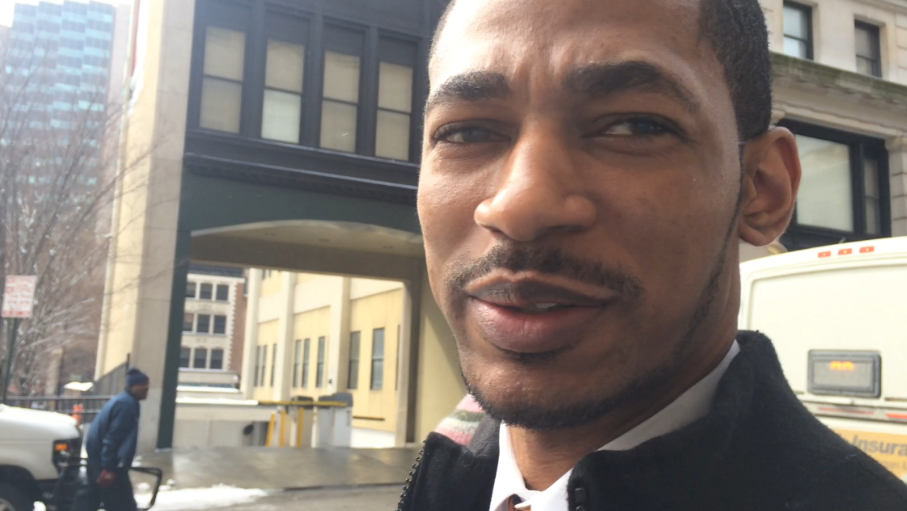
Baltimore City prosecutors refiled charges. Eventually, on March 30, 2018, after a third trial, Johnson was acquitted of all charges related to Phylicia Barnes’ murder. Video from that day shows Johnson walking out of the Baltimore City courthouse as a free man. When FOX45’s Keith Daniels asked how it felt, Johnson responded, “No comment.”
Russell Barnes, Phylicia’s father, traveled from Atlanta to attend each proceeding. After the final acquittal, he remained convinced of Johnson’s guilt but felt Baltimore City had “botched” the case.
Who Is Michael Johnson?
Michael Maurice Johnson was 26 years old when Phylicia Barnes disappeared in 2010. At that time, he was dating Phylicia’s half-sister Deena and living in Baltimore. Furthermore, court records from the Barnes case indicated Johnson had just broken up with Deena when Phylicia vanished. According to testimony, he was allegedly using the plastic tub to remove his belongings from Deena’s apartment when neighbors saw him struggling with the container.
After his 2018 acquittal in the Barnes case, Johnson relocated to York, Pennsylvania. In June 2023, at age 40, he met the teenager who would later become his rape victim. By 2024, he was 42 and living in Baltimore County when police arrested him for the brutal assault.
Johnson is now listed in a national registry of exonerations for his overturned conviction in the Barnes case. During his trial for rape and assault, his defense attorney in the 2024 case, Amy Stone, raised this fact.
The 2024 Baltimore County Case: A Six-Hour Nightmare
How Michael Johnson Met His Victim
In June 2023, an 18-year-old woman was living in foster care in West Baltimore. While waiting for a ride on Fulton Avenue, she mistakenly climbed into Johnson’s red Tesla Model 3, thinking he was her Lyft driver. Instead of correcting the misunderstanding, Johnson drove her home. Before leaving, he gave her $40 and his phone number.
Despite the 22-year age gap between the 18-year-old and the 40-year-old Johnson, they began dating. Later, the young woman described him as a “sugar daddy.” Before she entered foster care permanently, she had been living with Johnson in York, Pennsylvania. Over the next year, Johnson took her on trips to Miami, the Bahamas, and Puerto Rico.
The relationship appeared controlling from the start. According to the victim’s later testimony, Johnson became increasingly possessive and jealous. Because the young woman had experienced challenges in her life and was looking for companionship, she was particularly vulnerable to manipulation.
The July 1, 2024 Attack
On the evening of July 1, 2024, the victim, now 19 years old, was at Johnson’s Baltimore County apartment. According to her testimony at trial, Johnson became enraged after overhearing her speak with her sister on the phone about another man. Earlier that evening, she had kicked him out of the apartment after discovering he was texting other women while sitting on her sofa. At the time, he had been drinking alcohol and consuming psychedelic mushrooms. Meanwhile, she smoked marijuana to calm her nerves.
What happened next, according to prosecutors, was a brutal six-hour assault. Initially, Johnson burst into the bedroom and jumped on the victim’s back. Over the next several hours, they struggled repeatedly. Johnson allegedly strangled her multiple times using his hands and a fan cord, causing her to lose consciousness again and again. During the attack, he also raped her.
Assistant State’s Attorney John Magee told the court during sentencing that the victim reported Johnson made chilling references to Phylicia Barnes during the assault. Specifically, according to the victim, Johnson told her he was going to “send me right to her” and “you’re going to die quick like I did her.”
The victim testified that exhaustion eventually overtook her. “I got tired. I let my body go numb, and I let him choke me,” she told jurors. “I let him do whatever he could just so he would stop hurting me.”
After the assault ended, Johnson allegedly asked the victim, “Did you think I was going to kill you?” In response, she said that she did. However, he insisted he wasn’t going to kill her.
The Investigation and Arrest
After Johnson finally stopped the attack, the victim managed to cross the street to a convenience store. There, she used a phone to contact her social worker. In addition, she sent text messages describing the assault: “Please help me. Michael strangled me over and over again for six hours. He’s still here.”
When Baltimore County police arrived at the apartment, they found Johnson asleep in the bedroom. Body-worn camera footage presented at trial showed the victim’s severe injuries. For example, her face was bruised, her eyes were bloodshot with popped blood vessels, and her mouth and tongue were so severely swollen she could barely speak. As a result, officers had to communicate with her through written notes on their notebooks and text messages on her cell phone.
A forensic nurse examined the victim and documented extensive injuries consistent with prolonged strangulation. Subsequently, an emergency room doctor evaluated her condition. Later, a neurologist reviewed the forensic evidence and testified at trial about the medical findings.
Police arrested Johnson on July 1, 2024, and he remained in jail throughout the legal proceedings.
The Baltimore County Trial and Conviction
April 2026 Trial
The trial began on Tuesday, April 21, 2026, in Baltimore County Circuit Court before Judge Jan Alexander. Although jurors were not told about Johnson’s previous murder charge in the Phylicia Barnes case, prosecutors raised it during the sentencing hearing over defense objections.
The victim testified in detail about the attack, her relationship with Johnson, and his alleged references to Phylicia Barnes during the assault. In addition, a forensic nurse, the emergency room doctor who treated her, and a neurologist who reviewed the forensic evidence all testified for the prosecution. Their testimony established the severity and consistency of her injuries with prolonged strangulation.
Defense attorney Amy Stone conceded that Johnson had committed second-degree assault. However, she argued the victim’s injuries were consistent with being struck with hands, not with the six hours of strangling and rape the victim described. Furthermore, Stone called the victim “unreliable” and described the rape allegations as “inconsistent.”
Stone also argued that Johnson should have been allowed to testify. According to Stone, he had insisted on taking the stand, but she advised against it because prosecutors would be able to invoke the Barnes case if he did.
As their final witness, the defense called Dr. Maureen Canellas, an expert in emergency medicine. Canellas disputed some physical signs of strangulation noted in medical records.
Verdict and Sentencing
On April 25, 2026, the jury acquitted Johnson of attempted murder but found him guilty of first-degree rape and first-degree assault. Subsequently, the judge granted a defense motion to dismiss two of the six rape charges.
On June 22, 2026, Judge Alexander sentenced Johnson to two consecutive life terms plus 25 years. Before delivering the sentence, Alexander addressed Johnson directly: “You showed her no mercy.”
Johnson showed no apparent reaction to the sentence. When given the chance to address the judge, he declined to speak. Earlier in the hearing, he briefly argued he should receive a new trial, describing the victim’s testimony as “all over the place.”
The courtroom was filled with the victim’s family, Phylicia Barnes’ family members, and law enforcement officials who had worked both cases. When the sentence was announced, Barnes’ family members became emotional.
How Did Phylicia Barnes’ Family React?
Russell Barnes and other Barnes family members attended every day of the Baltimore County trial. After the sentencing, Russell embraced Michael Dunty, chief of the Baltimore Office of the State’s Attorney’s homicide unit, who had been the prosecutor on the final Barnes case.
“I know you did your part. I know you guys tried,” Russell Barnes said through tears to Dunty outside the courtroom.
Barnes told reporters that knowing Johnson will be locked up felt like a belated Father’s Day present. “It’s a new day,” he said. Although he remained convinced Johnson killed his daughter, he found solace in the life sentence. “We know that he will not hurt another person in Baltimore County again,” he said.
Russell Barnes drew a stark contrast between how Baltimore City and Baltimore County handled their respective cases. “In my case, the city just botched it,” Barnes said. “This right here, we can see is coming right. This right here is something that’s a real court system, that’s getting this predator off our streets.”
State’s Attorney Shellenberger acknowledged the Barnes family’s presence at sentencing. “Ms. Barnes’s family was here today,” he said. “They were also pleased that they know that he will not hurt another person again either in the city or in the county because it’s the intention for him to stay in jail for the rest of his life and so I think there was a sense of relief for that.”
Shellenberger addressed the earlier Baltimore City case compassionately: “I think Baltimore City was trying very hard and they worked diligently in trying to convict. Criminal cases have to be proven beyond a reasonable doubt. That can be very challenging. And we’re very sorry that the Barnes family had to go through what they did. I hope they can take a little solace in what happened today.”
What Did the 2024 Victim Say?
In a statement read by her cousin during the sentencing hearing, the 2024 victim described the lasting impact of Johnson’s violence. Because of challenges in her life, she explained, she was particularly vulnerable and looking for companionship when she met Johnson.
“It has changed how I interact with people and view the world around me,” she said in her statement.
Prosecutor John Magee praised the victim’s courage in coming forward and testifying. “She is remarkable,” he said. “She is truly a survivor.”
The victim, who was 18 when she met Johnson and 19 at the time of the attack, demonstrated extraordinary strength throughout the trial process. Despite her severe injuries and trauma, she provided detailed testimony that proved crucial to the prosecution’s case.
What Is the Legacy of the Phylicia Barnes Case?
Phylicia’s Law
The Phylicia Barnes case resulted in lasting changes to Maryland law. In 2012, the Maryland General Assembly passed “Phylicia’s Law,” sponsored by Maryland State Delegate Jill P. Carter of legislative district 41. Subsequently, Governor Martin O’Malley signed the bill into law on May 1, 2012.
Phylicia’s Law requires Maryland to publish a list of missing children along with statistics. In addition, the law mandates a registry of volunteers who can aid law enforcement in searching for missing children. While similar laws existed in other states, Phylicia’s Law became the first such legislation named after a minority-race child.
The Phylicia Barnes Foundation
Russell Barnes and other family members established the Phylicia Barnes Foundation in Phylicia’s memory. Since then, the foundation has conducted fundraising events, including at Chick-fil-A locations, to support advocacy for missing children.
The case also inspired Phylicia’s half-brother Bryan Barnes to join the Baltimore Police Department in 2012. Specifically, he cited the dedication of detectives who worked on his sister’s case as his motivation to enter law enforcement.
Increased Advocacy for the Missing
The extensive media coverage of Phylicia’s disappearance and death created increased advocacy for missing persons, particularly missing children. Moreover, the case demonstrated both the power of sustained public attention and the devastating impact on families when cases remain unsolved.
Russell Barnes has become an advocate for other families of missing persons. Despite never receiving legal justice for his daughter, he has used his experience to support others facing similar tragedies.
Current Status: Where Is Michael Johnson Now?
Michael Maurice Johnson, 42, is currently incarcerated in Maryland state prison serving two consecutive life sentences plus 25 years. He will not be eligible for parole. During sentencing, Judge Alexander made clear that her intention was for Johnson to remain imprisoned for the rest of his natural life.
State’s Attorney Shellenberger confirmed outside the courthouse that the sentence ensures Johnson “will not be released” and “will never be a free man in the state of Maryland.”
Johnson’s conviction and sentencing bring his violent history to a definitive end. While he was acquitted three times in Phylicia Barnes’ murder, the Baltimore County conviction ensures he will face consequences for his actions against another young victim.
The case remains technically unsolved regarding Phylicia Barnes’ murder. Although prosecutors and the Barnes family believe Johnson killed Phylicia, he was legally acquitted and cannot be tried again for that crime due to double jeopardy protections.
Why This Case Matters: Pattern Evidence and Justice Delayed
The Michael Johnson cases reveal troubling patterns that emerge in domestic and sexual violence. For example, Johnson allegedly targeted young, vulnerable women. Both Phylicia Barnes and the 2024 victim were teenagers when they encountered Johnson. Moreover, both were in situations that made them particularly susceptible to manipulation.
The 2024 victim’s testimony about Johnson’s alleged statements during the assault is particularly chilling. If accurate, his references to Phylicia Barnes suggest he was aware of what happened to her and may have been threatening his current victim with the same fate.
The cases also demonstrate the challenges of prosecuting circumstantial cases. Although Baltimore City prosecutors tried three times to convict Johnson for Phylicia’s murder, judges found the evidence insufficient. In contrast, the Baltimore County case featured direct victim testimony, immediate medical evidence, body-worn camera footage, and expert witnesses who could establish a clear timeline and pattern of injuries.
State’s Attorney Shellenberger identified the prosecutors on the Baltimore County case as John Magee and Diana Abramowski. Their thorough preparation and presentation of evidence resulted in a conviction that three Baltimore City trials could not achieve.
For Russell Barnes and his family, the June 2026 sentencing provided closure they had sought for 16 years. While it was not the trial verdict they wanted most, it ensured that the man they believe killed Phylicia will never harm anyone again.
Stay informed about true crime cases that reveal important lessons about justice, victim advocacy, and the legal system. Subscribe to the Crime and Psyche YouTube channel for in-depth analysis of cases like this one, where understanding the full context helps us recognize warning signs and support survivors.
Sources
- FOX Baltimore: Man once charged in Phylicia Barnes killing, sentenced to life in prison on rape & assault
- The Baltimore Banner: Man cleared in 2010 Phylicia Barnes killing gets 2 life terms in rape case
- ABC News: Child Porn Link Sought in Teen Phylicia Barnes’ Murder
- CBS Baltimore: Michael Johnson, man acquitted in Phylicia Barnes murder, convicted in Baltimore County
- Wikipedia: Murder of Phylicia Barnes
Conclusion: When Justice Takes an Unexpected Path
The story of Michael Johnson, Phylicia Barnes, and the 2024 survivor illustrates how justice sometimes arrives through unexpected channels. For 16 years, the Barnes family waited for accountability. Although three trials failed to convict Johnson of killing their daughter, legal protections meant prosecutors could never try again.
Then another young woman crossed paths with Michael Johnson. Her courage in reporting the assault, testifying in court, and facing her attacker gave prosecutors the evidence they needed for a conviction. While the charge was not murder, the sentence ensures Johnson will spend his remaining years behind bars.
This outcome offers both closure and frustration. Russell Barnes will never see a murder conviction in his daughter’s case. However, he witnessed Johnson receive a sentence that guarantees he cannot harm another young woman. Sometimes that must be enough.
The cases also underscore the importance of believing survivors and thoroughly investigating domestic violence. For example, the 2024 victim’s injuries were so severe she could not speak. Despite overwhelming evidence, defense attorneys still argued she was unreliable. Imagine how many other victims face similar skepticism with less dramatic physical evidence.
Phylicia Barnes was a straight-A student with her whole life ahead of her. Moreover, she wanted to attend college, pursue her dreams, and make her family proud. Instead, she became a tragedy, a cautionary tale, and ultimately a catalyst for legal reform. Her legacy lives on through Phylicia’s Law and through her family’s tireless advocacy for other missing persons.
The survivor of the 2024 attack faces a long journey of healing. Trauma from such violence does not disappear with a guilty verdict. However, she demonstrated remarkable strength in seeking help immediately, cooperating with investigators, and testifying. As a result, her actions likely saved other potential victims from encountering Michael Johnson.
Justice delayed is justice denied, the saying goes. In this case, justice took 16 years and required another victim before Michael Johnson faced consequences. That reality is both a failure and a testament to persistence. Because the Barnes family never stopped believing and prosecutors never stopped investigating, when the opportunity arose, they were ready.
Michael Maurice Johnson will die in prison. That is the only certainty this case offers.