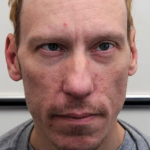

It was a beautiful Monday afternoon in Toronto. After a long Canadian winter, the sun was shining and temperatures were perfect, while Yonge Street was buzzing with life. Alek Minassian, a 25-year-old software development student, had just posted a chilling message to Facebook declaring an “Incel Rebellion.” Moments later, at 1:25 p.m. on April 23, 2018, he drove a rented white Chevrolet Express van onto the sidewalk and began accelerating. What followed would become the deadliest mass murder in Toronto’s history. Before police stopped him 10 minutes later, 11 people killed in Toronto’s 2018 van attack would shock Canada and the world.
The victims ranged from 22-year-old So He Chung, who had decided to walk instead of taking the subway because the weather was too nice, to 94-year-old Betty Forsyth, who was simply out enjoying the spring day. Nine of the eleven people killed were women. In addition, another 16 people suffered injuries, some catastrophic. However, this wasn’t a random act of violence. According to Minassian’s own statements, it was ideologically motivated by years spent in toxic online forums devoted to misogyny and hatred.
The case raised uncomfortable questions about online radicalization, the so-called incel movement, and whether autism spectrum disorder could ever excuse premeditated mass murder. After a lengthy trial, Justice Anne Molloy delivered a verdict that would resonate far beyond the courtroom.
What Happened During the Toronto Van Attack?
The Morning Before the Attack
On the morning of April 23, 2018, Alek Minassian appeared to be running errands. His father, Vahe Minassian, dropped him off at 11:38 a.m. in front of a Chapters bookstore in Woodbridge, where Minassian claimed he was meeting a friend. However, it was a lie.
After his father drove away, Minassian walked alone for 4 kilometres to a Ryder truck rental location in Concord. Three weeks earlier, on April 4, he had reserved the vehicle. This wasn’t impulsive. In fact, he had been planning this attack meticulously.
Renting the Vehicle
At 12:40 p.m., he arrived at the Ryder location and picked up a white Chevrolet Express cargo van. When he spoke to staff, he told them he would use it to move furniture. Employees later recalled that he seemed confused about operating the vehicle and asked for help. Nevertheless, nothing about his demeanour raised alarms. Although awkward, he didn’t appear dangerous.
After receiving instructions, Minassian drove toward Toronto along Highway 7, eventually turning south onto Yonge Street.
The Facebook Post
At 1:24 p.m., while stopped at a red light at Yonge Street and Finch Avenue, Minassian looked out at the crowd of pedestrians near a Korean barbecue restaurant. He then picked up his phone and posted to Facebook:
“Private (Recruit) Minassian Infantry 00010, wishing to speak to Sgt 4chan please. C23249161. The Incel Rebellion has already begun! We will overthrow all the Chads and Stacys! All hail the Supreme Gentleman Elliot Rodger!”
The military identification number matched his brief, failed enlistment in the Canadian Armed Forces months earlier. The post referenced Elliot Rodger, the 22-year-old who killed six people in Isla Vista, California in 2014 after posting a manifesto about his hatred of women. In incel forums, Rodger was worshipped as a martyr.
Then the light turned green.
1:25 p.m.: The Attack Begins
Minassian drove the van onto the southwest sidewalk at Yonge and Finch. He then accelerated.
At the Korean barbecue restaurant, he struck seven people in seconds. Ji Hun Kim, 22, and So He Chung, 22, died instantly. So He had convinced her best friend to walk instead of taking the subway because the weather was beautiful. Although her friend survived, So He did not.
The van continued south. Near a Shoppers Drug Mart, Geraldine Brady, 83, was struck and killed. Further south, Chul Min “Eddie” Kang, 45, was hit and dragged for several metres. Eventually, his body dislodged in front of a vape shop.
Bystanders began screaming. Meanwhile, motorists laid on their horns, desperately trying to warn pedestrians. Some people on foot chased the van, trying to pull open the driver’s door. However, it was locked.
The Terror Continues Down Yonge Street
Near a nail salon, Mary Elizabeth “Betty” Forsyth, 94, was hit from behind. She had lived nearly a century. Unfortunately, that Monday afternoon would be her last.
Between Horsham and Churchill Avenues, five more people suffered injuries. Minassian briefly drove into oncoming traffic before mounting the east sidewalk. At Parkview Avenue, he fatally struck Munir Abdo Habib Najjar, 85, a Jordanian national.
At Park Home Avenue, the van returned to the west sidewalk. As a result, two more women were killed: Beutis Renuka Amarasingha, 45, a single mother, and Dorothy Sewell, 80.
Mel Lastman Square
When Minassian reached Mel Lastman Square, a public civic plaza, he struck three more women. Andrea Bradden, 33, was walking with a Starbucks drink. Her friend saw the van and jumped out of the way. Unfortunately, Andrea couldn’t. When the van hit her, her drink splashed across the windshield, obscuring Minassian’s vision.
In his later police interview, Minassian admitted this was the only reason he stopped. “The only reason I stopped my attack was because someone’s drink got splashed on my windshield, and I was worried that I would crash the van anyway,” he said.
Not because of remorse. Not because of the carnage. Instead, it was simply because he couldn’t see.
Anne Marie D’Amico, 30, was also killed at Mel Lastman Square. The third woman struck there, Amaresh Tesfamariam, 65, was paralyzed from the neck down. After more than three years in hospital, she would eventually die from her injuries in October 2021.
1:32 p.m.: The Arrest
Minassian steered the damaged van onto Beecroft Road, then back to Yonge Street via Bogert Avenue. Finally, he drove onto the north sidewalk of Poyntz Avenue and stopped.
Toronto Police Constable Ken Lam, a traffic control officer who happened to be nearby, intercepted him in an unmarked cruiser. Video captured what happened next, and the world watched.
Minassian exited the van and walked toward Lam, pointing his wallet like a weapon. “Shoot me in the head!” he yelled. “Kill me!”
This is known as suicide by cop. Clearly, Minassian wanted to die. In other words, he wanted to force the officer to kill him.
However, Constable Lam kept his firearm drawn but did not fire. He recognized that the object in Minassian’s hand wasn’t a gun. As a result, he holstered his pistol and drew his baton instead. Then he ordered Minassian to the ground. Despite the tension, his voice was calm but commanding.
Minassian dropped the wallet. He then lay down on the pavement. Lam placed him in handcuffs without firing a single shot.
Seven minutes had passed since the first 911 call. The attack had covered 1.4 kilometres. Meanwhile, ten people were dead or dying. In addition, sixteen others suffered injuries.
Who Were the Victims of the Toronto Van Attack?
The Eleven Lives Lost
Before we discuss the attacker further, we must honour the victims. These were real people with families, dreams, and futures.
Ji Hun Kim, 22, was an international student from South Korea.
So He Chung, 22, had convinced her best friend to walk that day because the weather was too beautiful. Her friend, So Ra, later said: “We connected on the soul level, and that is how well we got along. When I heard about her death, I felt empty inside like I had a huge hole in my heart, which could not be filled.”
Geraldine Brady, 83, was a beloved grandmother.
Chul Min “Eddie” Kang, 45.
Mary Elizabeth “Betty” Forsyth, 94, was the oldest victim. She had lived through a world war, raised a family, and witnessed nearly a century of history. She deserved to enjoy that spring afternoon.
Munir Abdo Habib Najjar, 85, was a Jordanian national visiting Toronto.
Beutis Renuka Amarasingha, 45, was a single mother.
Dorothy Sewell, 80.
Andrea Bradden, 33, was walking with a coffee when she was struck.
Anne Marie D’Amico, 30.
Amaresh Tesfamariam, 65, was paralyzed from the neck down. Unfortunately, she never left the hospital. After more than three years of suffering, she died in October 2021. Justice Anne Molloy later recognized her as the eleventh victim.
Nine of the eleven killed were women. Clearly, this was not coincidental.
The Survivors
Fifteen others suffered injuries, ranging in age from 21 to 90. Among them were citizens of South Korea, Iran, and Russia. Many suffered catastrophic injuries. Even now, some still live with PTSD, chronic pain, and survivor’s guilt.
First responder Charlene Mackay testified at sentencing that she still has panic attacks and night terrors. Similarly, Janet Zhang described performing CPR on a victim who didn’t survive. “My world has changed forever,” she told the court.
These survivors carry the weight of that day every single day.
Who Is Alek Minassian?
Background and Early Life
Alek Minassian was born on November 3, 1992, in North York, which is now part of Toronto. His father, Vahe Minassian, immigrated from Armenia and worked as a software developer. Meanwhile, his mother, Sona Minassian, was from Iran and worked at Compugen Inc., an IT company.
Minassian grew up in Richmond Hill, a suburban community north of Toronto. He attended Sixteenth Avenue Public School in a special education class. Later, he went to Thornlea Secondary School in Thornhill, where he also attended special needs classes for students on the autism spectrum.
Former classmates described him as quiet and “not overly social.” One said he was “harmless.” Another recalled him walking the halls alone or sitting by himself in the cafeteria. Although he wasn’t aggressive or frightening, he was invisible.
Minassian’s mother publicly stated in 2009 that her son had received a diagnosis of Asperger syndrome, a condition on the autism spectrum. Social interactions were genuinely difficult for him. As a result, he struggled to read social cues and form peer relationships.
Education and Career
From 2011 to 2018, Minassian was a student at Seneca College in North York, studying software development. He worked as a software developer but was between jobs at the time of the attack.
According to his LinkedIn profile, he lived in Richmond Hill and was following in his parents’ technical footsteps.
The Failed Military Enlistment
In late 2017, Minassian enrolled in the Canadian Armed Forces. However, it lasted just 16 days.
A senior military official later said Minassian “wasn’t adapting to military life, including in matters of dress, deportment and group interactions in a military setting.” Furthermore, there were “no red flags and nothing that would point to anything like this.”
Minassian requested a voluntary release. He simply couldn’t handle it.
However, the military identification number he referenced in his Facebook post was real: C23249161.
The Incel Connection
While Minassian struggled in the real world, he found an online community that welcomed him. Unfortunately, it was one of the darkest corners of the internet: incel forums.
The term “incel” stands for “involuntary celibate.” A woman actually coined it in 1993 when she created an online support community for people struggling to form romantic connections. At the time, the original intention was compassionate.
By the 2010s, however, angry young men weaponized the term. Predominantly young men began congregating on sites like Reddit, 4chan, and dedicated incel platforms. What started as frustration morphed into fury. As a result, women became the enemy. Men who were successful with women, called “Chads,” were also targets of resentment. Meanwhile, women were dehumanized as “Stacys.”
The most notorious figure in this world was Elliot Rodger. In May 2014, Rodger killed six people in Isla Vista, California, after posting a manifesto about his hatred of women who rejected him. Incel communities elevated him to near-mythological status. They called him “The Supreme Gentleman.” Ultimately, he became a martyr.
Minassian idolized Rodger. During his police interview, he claimed to have been in contact with Rodger online before the 2014 attack, though this has never been verified.
Timeline of the Toronto Van Attack
April 4, 2018
Minassian calls Ryder truck rental and reserves a van for pickup on April 23.
April 23, 2018 – 11:38 a.m.
Minassian’s father drops him off at a Chapters bookstore in Woodbridge. Although Minassian tells his father he’s meeting a friend, it’s a lie.
12:40 p.m.
After walking 4 kilometres to the Ryder rental location in Concord, Minassian picks up a white Chevrolet Express cargo van.
1:24 p.m.
While stopped at a red light at Yonge and Finch, Minassian posts to Facebook declaring an “Incel Rebellion” and praising Elliot Rodger.
1:25 p.m.
The attack begins. Minassian drives the van onto the sidewalk at Yonge and Finch, striking pedestrians.
1:25–1:32 p.m.
Minassian drives 1.4 kilometres down Yonge Street sidewalks, killing and injuring pedestrians. The van travels through multiple intersections, including Mel Lastman Square.
1:32 p.m.
Constable Ken Lam arrests Minassian on Poyntz Avenue after Minassian attempts suicide by cop. Despite the provocation, Lam does not fire his weapon.
April 23, 2018 – 8:15 p.m.
Toronto Police announce that a tenth victim has died.
April 24, 2018
Minassian appears in court, charged with 10 counts of first-degree murder and 13 counts of attempted murder (later increased to 16).
November 10, 2020
The trial begins over Zoom due to the COVID-19 pandemic. Minassian pleads not criminally responsible due to autism spectrum disorder.
March 3, 2021
Justice Anne Molloy finds Minassian guilty on all 26 counts: 10 counts of first-degree murder and 16 counts of attempted murder.
October 28, 2021
Amaresh Tesfamariam, who was paralyzed in the attack, dies after more than three years in hospital. Justice Molloy later recognizes her as the eleventh victim.
June 13, 2022
Minassian receives a sentence of life in prison with no possibility of parole for 25 years.
How Did the Trial Unfold?
The Not Criminally Responsible Defence
Minassian’s defence lawyer, Boris Bytensky, entered a plea of not criminally responsible. This is Canada’s equivalent of an insanity defence.
The argument was that Minassian’s autism spectrum disorder prevented him from developing empathy and from truly understanding the moral weight of his actions. According to the defence, without empathy, he couldn’t have known what he was doing was wrong in the full moral sense.
Expert psychiatrists testified that Minassian’s “autistic way of thinking was severely distorted in a way similar to psychosis,” even though he wasn’t technically psychotic.
The Crown’s Case
The Crown prosecutors countered forcefully. They pointed to evidence of deliberate planning:
- Minassian reserved the van three weeks in advance
- He lied to his father about his plans
- He posted to Facebook moments before the attack
- He attempted to evade capture through suicide by cop
These were not the actions of someone unaware of consequences. Instead, this was calculated premeditation.
Crown experts argued that while Minassian may have lacked empathy, he clearly understood right from wrong. Furthermore, lack of empathy doesn’t constitute a legal defence.
Justice Molloy’s Verdict
On March 3, 2021, Justice Anne Molloy delivered her verdict. She found Minassian guilty on all 26 counts.
Throughout the trial, Justice Molloy made a deliberate choice. She refused to use Minassian’s name in court, instead referring to him as “Mr. Doe.” She recognized that notoriety was likely part of his goal. Therefore, she wasn’t going to give it to him.
In her 69-page decision, Molloy wrote: “He freely chose the option that was morally wrong, knowing what the consequences would be for himself, and for everybody else. It does not matter that he does not have remorse, nor empathize with the victims. Lack of empathy for the suffering of victims, even an incapacity to empathize, for whatever reason, does not constitute a defence.”
Justice Molloy stated that pinpointing Minassian’s exact motive was “close to impossible.” However, she was “inclined to accept the assessment of all of the experts that Mr. Doe did lie to the police about much of the incel motivation he talked about and that the incel movement was not in fact a primary driving force behind the attack.”
Instead, expert testimony suggested Minassian’s primary desire was for notoriety. In other words, he wanted to be known. He wanted to be remembered. Ultimately, he wanted to matter.
The Sentencing Hearing
The sentencing hearing took place on June 13, 2022, after delays caused by a Supreme Court of Canada case regarding consecutive sentences.
Over two dozen victims, survivors, and family members submitted or read victim impact statements. The testimony was heartbreaking.
Janet Zhang described the PTSD she still experiences. “My world has changed forever,” she said.
Charlene Mackay, a first responder, told the court about her panic attacks, night terrors, and unhealthy coping mechanisms. “I don’t feel like he should have a normal life,” she said.
So Ra, So He Chung’s best friend, described her friend as her “soul mate.” When she learned So He had died, she said she understood heartbreak for the first time. “I felt empty inside like I had a huge hole in my heart, which could not be filled.”
The nine-year-old son of Renuka Amarasinghe submitted a crayon drawing showing himself with his late mother. No words. Just an image of profound loss.
Justice Molloy’s voice shook when she thanked those who spoke. “You’ve reached into my heart, and touched me in a very profound way,” she said.
The Sentence
Minassian received a sentence of life in prison with no possibility of parole for 25 years.
Justice Molloy stressed this was not a 25-year sentence. Instead, this was life. After 25 years, Minassian can apply for parole. However, there is no guarantee he will receive it.
Originally, prosecutors sought consecutive 25-year parole ineligibility periods for each murder, totalling 250 years. However, a May 2022 Supreme Court decision in the Alexandre Bissonnette case (the Quebec City mosque shooter) ruled that consecutive parole ineligibility periods were unconstitutional and constituted cruel and unusual punishment.
As a result, Minassian qualifies to apply for parole after 25 years, not 250.
Minassian filed a notice of appeal the following month.
What Is the Current Status of Alek Minassian?
Alek Minassian is currently incarcerated and serving a life sentence. He is eligible to apply for parole in 2043, after 25 years.
His appeal is pending, though legal experts consider it unlikely to succeed given the strength of Justice Molloy’s verdict and reasoning.
Amaresh Tesfamariam, the eleventh victim who died in October 2021, now has formal recognition as a victim of the attack.
The victims’ families continue to grieve. Meanwhile, many survivors continue to struggle with physical and psychological injuries.
Constable Ken Lam received widespread praise for his restraint and professionalism. In a moment where many officers might have shot, he held back. Because he read the situation correctly, he brought a dangerous man in alive, preserving evidence and protecting the legal process. As a result, law enforcement professionals around the world commended his actions.
What Drove Alek Minassian to Kill?
The Incel Ideology
Minassian’s Facebook post declaring an “Incel Rebellion” initially suggested his attack was ideologically motivated. However, Justice Molloy and expert witnesses concluded he likely lied or exaggerated this motivation.
Nevertheless, the incel movement’s role cannot be ignored. After the attack, incel forums erupted with celebration. For example, some called Minassian “our next new saint.” Another wrote, “Spread that name, speak of his sacrifice for our cause, worship him for he gave his life for our future.”
This wasn’t a fringe reaction within those communities. In fact, it was widespread.
The incel ideology centres on a toxic worldview: women are obstacles to be overcome or punished. Meanwhile, men who succeed with women are enemies. As a result, violence becomes a form of revenge for perceived rejection.
Elliot Rodger remains the movement’s dark martyr. Minassian explicitly referenced Rodger in his Facebook post, calling him “The Supreme Gentleman.”
Autism and Empathy
Minassian’s defence argued his autism spectrum disorder prevented him from understanding the moral weight of his actions. However, Justice Molloy rejected this argument, and autism rights advocates were relieved.
Autism Canada issued a statement emphasizing that people on the autism spectrum are far more likely to be victims of violence than perpetrators. Autism does not cause mass violence. Therefore, using autism as an excuse for premeditated killing is both legally and ethically wrong.
Dr. Jessica Jones of Queen’s University noted that individuals with ASD may be more vulnerable to anti-social movements because of social awkwardness and isolation. However, they are no more likely to commit violent acts than anyone else.
The Desire for Notoriety
Justice Molloy ultimately concluded that Minassian’s primary motivation was likely fame or infamy. In other words, it was the desire to be known. To be remembered. To matter in a way he never had.
The incel ideology may have provided a narrative framework. However, the core need was for recognition.
This makes the tragedy even more devastating. Eleven people lost their lives. In addition, sixteen others suffered injuries. Families were shattered. All because one man desperately wanted to feel significant.
Online Radicalization
Minassian’s case highlights the dangers of online radicalization. He struggled socially from a young age. As a result, he felt invisible, rejected, left behind.
On the internet, he found a community that told him his pain wasn’t his fault. Instead, it was society’s fault. Women’s fault. And in Elliot Rodger, he found a figure who turned that resentment into violence and was celebrated for it.
This is how radicalization works. Isolation plus extremism equals volatility. It doesn’t always involve traditional terrorism. Instead, sometimes it happens quietly, in comment sections most people will never see.
However, the outcomes can be catastrophic.
Warning Signs
Were there warning signs? In hindsight, yes. Social isolation. Failed military training. Immersion in toxic online communities. Even a Facebook post declaring violent intent moments before the attack.
In real time, however, these signs were scattered. His father didn’t know. Meanwhile, his classmates didn’t know. Although the military recognized he wasn’t adapting, they saw no red flags suggesting violence.
This is the uncomfortable reality. Sometimes warning signs only become clear after tragedy strikes.
How Did Toronto Respond?
Immediate Aftermath
In the hours after the attack, Toronto Transit Commission shut down North York Centre subway station and diverted bus routes. Meanwhile, police cordoned off sections of Yonge Street for over 24 hours to conduct a forensic investigation.
Civic buildings in the area closed. In addition, businesses fronting sites where people died were restricted to rear-entry access.
Vigils and Memorials
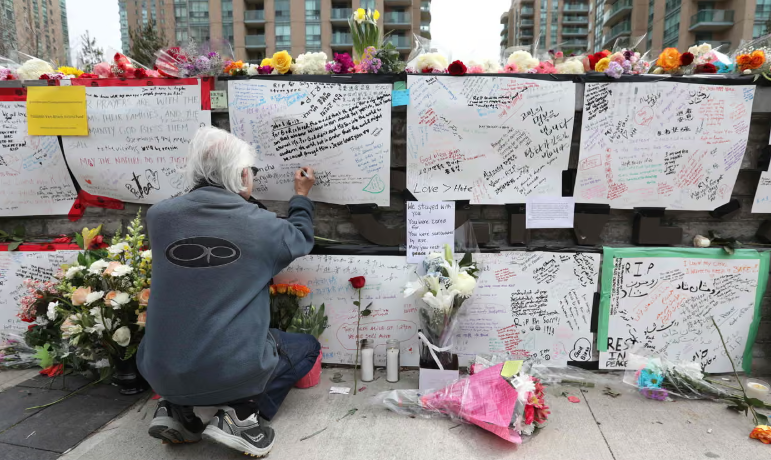
Vigils were held along Yonge Street. Flowers and handwritten notes piled up at makeshift memorials. Meanwhile, strangers hugged each other on the sidewalks where people had died.
A diverse city, with all its different cultures and languages, mourned together under the hashtag #TorontoStrong.
Prime Minister Justin Trudeau, Mayor John Tory, and Ontario Premier Kathleen Wynne all expressed condolences and pledged support for victims and families.
Security and Policy Changes
Security was tightened around a G7 security ministers meeting being held in Toronto in advance of the G7 summit in Quebec. Ministers received briefings on the attack, which prompted discussions on soft targets, terrorism, social media, and online youth radicalization.
The incident appeared in the 2018 Public Report on the Terrorism Threat to Canada.
The Broader Conversation
The attack sparked a global conversation about incel ideology, online radicalization, and misogynist violence.
In June 2023, authorities deemed a separate Toronto attack the first incel-related incident formally classified as a terrorism offence in Canada. A 17-year-old stabbed a massage parlour receptionist, Ashley Arzaga, to death. The judge ruled the attack was motivated by incel ideology and constituted terrorism under Canadian Criminal Code.
In contrast, Minassian’s attack, while clearly motivated by similar ideology, did not result in terrorism charges.
FAQ
What was the motive behind the Toronto van attack?
Alek Minassian initially claimed he was motivated by incel ideology and hatred of women. However, Justice Anne Molloy concluded his primary motive was likely the desire for notoriety rather than ideological commitment. Expert witnesses testified that Minassian lied about much of his incel motivation. Nevertheless, nine of the eleven victims were women, suggesting misogyny played a role.
How many people died in the Toronto van attack?
Eleven people died as a result of the attack. Ten died on April 23, 2018, or shortly after. Amaresh Tesfamariam, who was paralyzed from the neck down, died in October 2021 after more than three years in hospital. Justice Anne Molloy recognized her as the eleventh victim. In addition, another 16 people suffered injuries.
Was Alek Minassian found not criminally responsible?
No. Although Minassian’s defence argued he was not criminally responsible due to autism spectrum disorder, Justice Anne Molloy rejected this defence. On March 3, 2021, Minassian was found guilty on all 26 counts: 10 counts of first-degree murder and 16 counts of attempted murder. As a result, he received a sentence of life in prison with no possibility of parole for 25 years.
What is the incel movement and how is it related to this attack?
The incel movement consists of predominantly male online communities centred on involuntary celibacy and resentment toward women. Members blame women for their social and romantic failures. Alek Minassian posted to Facebook moments before the attack, declaring an “Incel Rebellion” and praising Elliot Rodger, who killed six people in California in 2014. However, Justice Molloy concluded Minassian likely exaggerated his incel motivation, and his primary desire was for notoriety.
Watch the Full Story on Crime and Psyche
For a deeper psychological dive into the Toronto van attack, including expert analysis of Minassian’s mindset and the dark world of online radicalization, watch the full episode on the Crime and Psyche YouTube channel. We explore the warning signs, the trial, and what this case teaches us about isolation, extremism, and violence.
Sources
- Wikipedia: 2018 Toronto van attack
- BBC News: Toronto van attacker sentenced to life in prison
- BBC News: Terrorism ruling first for Canada ‘incel’ attack
- The Canadian Encyclopedia: 2018 Toronto Van Attack
- The Guardian: ‘Incel’ who killed 11 in Toronto van murders sentenced to life in prison
Reflection: What the Toronto Van Attack Teaches Us
Eleven people. Eleven lives. Eleven families forever changed.
Betty Forsyth was 94 years old. She had lived through nearly a century of history. So He Chung was 22, with her whole life ahead of her. She chose to walk that day because the weather was beautiful. Renuka Amarasingha was a single mother. At sentencing, her nine-year-old son submitted a crayon drawing, showing himself with his mom.
These weren’t statistics. Instead, they were real people who deserved ordinary Monday afternoons they could go home from.
The Toronto van attack forces us to confront uncomfortable truths. Online radicalization is real. Furthermore, it doesn’t always look like we expect. Sometimes it’s a quiet young man who disappears into the internet and emerges believing his suffering justifies the suffering of others.
The incel movement, while perhaps exaggerated in Minassian’s case, represents a genuine threat. After the attack, these forums celebrated him. They called him a saint. In fact, they worshipped his violence.
Autism spectrum disorder is not an excuse for violence. People with ASD are far more likely to be victims than perpetrators. Justice Molloy’s verdict made this clear. Therefore, lack of empathy, regardless of cause, does not constitute a legal defence.
What remains most disturbing is the possibility that Minassian’s primary motivation was simply to be remembered. To matter. To be known.
If that’s true, then eleven people died for one man’s desperate need for significance.
Recognizing these patterns in ourselves, in our communities, and in the people around us matters. Isolation breeds extremism. Meanwhile, extremism breeds violence. Breaking that cycle requires vigilance, compassion, and a willingness to intervene before tragedy strikes.
The victims of the Toronto van attack deserved better. They deserved to live. Therefore, the best way to honour their memory is to ensure we learn from this horror and work to prevent the next one.