
American Mother’s Death in Irish Tourist Town Sparks International Investigation
A New Yorker found dead in Ireland has triggered an international manhunt after the murder suspect fled to Jordan and was arrested. Jamey Carney, a 43-year-old mother originally from Westchester County, New York, was discovered dead in her Killarney home on July 7, 2026. Meanwhile, her 13-year-old daughter found her body. The primary suspect, Ahmad Al Saqar, allegedly fled Ireland hours before the discovery, traveling from Dublin to Turkey and ultimately to his home country of Jordan.
Irish police, An Garda Síochána, immediately launched a murder investigation. However, Al Saqar had already boarded a Turkish Airlines flight by the time authorities received the initial report. In addition, the State Pathologist later determined that Carney died by suffocation. She had also suffered severe head and neck injuries, with evidence suggesting she fought to defend herself.
The case has raised questions about international cooperation, extradition treaties, and how authorities handle persons of interest who cross borders before investigations begin. As a result, Jordan and Ireland lack a bilateral extradition agreement, complicating efforts to bring the suspect back for questioning.
What Happened to Jamey Carney in Killarney?

Jamey Carney moved from New York to Ireland in 2021 with her teenage daughter. According to The Irish Times, she settled in the picturesque town of Killarney in County Kerry, working for a healthcare outsourcing company after previous careers in insurance and real estate.
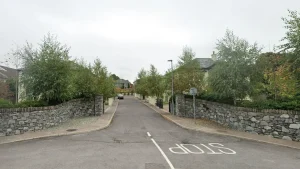
On the morning of July 7, 2026, Carney’s daughter discovered her mother’s body in an upstairs room at their rented home on Muckross Road in the Homeland housing estate. Despite the family’s attempts to create a peaceful life, the room showed signs of a violent struggle with heavy bloodstaining. In addition, bedclothes partially covered the victim’s body. Authorities received reports of her death at approximately 1:00 PM that day.
The investigation quickly identified Ahmad Al Saqar as the person of significant interest. Sources describe him as Carney’s boyfriend, a 28-year-old Jordanian national. Although Irish authorities have not officially released his name or photograph, multiple Irish publications have identified him based on police sources and social media evidence.
How Did the Suspect Escape Ireland?
Ahmad Al Saqar executed what appears to have been a planned escape in the hours immediately following Carney’s death. According to investigators, he caught a Green Coach bus from Mission Road in Killarney at 4:30 AM on July 7. After arriving in Dublin, the bus took him to Bachelors Walk, where he then took a taxi to Dublin Airport.
Al Saqar boarded a Turkish Airlines flight departing at 10:40 AM bound for Istanbul. At the time of his departure, Carney’s body had not yet been discovered. When police received the report at 1:00 PM, the suspect was already in the air or had landed in Turkey. Subsequently, from Istanbul, he traveled onward to Jordan, his country of origin.
The timing raises critical questions. Why did Al Saqar leave Killarney in the predawn hours? Moreover, did he book his flight before or after Carney’s death? Because of these uncertainties, Garda technical experts are analyzing his phone activity to establish his precise location when he purchased the airline ticket and during the estimated time of the murder.
Timeline: From Murder to International Arrest
Early Morning, July 7, 2026
Ahmad Al Saqar boards a Green Coach bus in Killarney at 4:30 AM, beginning his journey out of Ireland.
Late Morning, July 7, 2026
Al Saqar catches a 10:40 AM Turkish Airlines flight from Dublin Airport to Istanbul. Meanwhile, Jamey Carney’s body remains undiscovered in her Killarney home.
Afternoon, July 7, 2026
At approximately 1:00 PM, Carney’s 13-year-old daughter discovers her mother’s body. Immediately afterward, she alerts authorities. In response, An Garda Síochána responds to the scene and begins a preliminary investigation.
July 7-9, 2026
The State Pathologist conducts a postmortem examination. After completing the autopsy, results confirm Carney died by suffocation and sustained severe head and neck injuries. Furthermore, evidence suggests defensive wounds, indicating she fought her attacker.
July 9, 2026
Irish police publicly announce they are seeking a person of interest who has already fled the country. However, they do not release his name, photograph, or detailed description. As a result, the decision sparks controversy and criticism from crime analysts.
July 13, 2026
Jordanian authorities arrest a man believed to be Ahmad Al Saqar. Surprisingly, the arrest occurs without any formal request from Irish authorities. Although the specific charges or reasons remain unclear, sources indicate Jordan’s Public Security Directorate detained him.
July 14, 2026
People Magazine and other international outlets confirm the arrest. In addition, the U.S. State Department releases a statement offering consular assistance to Carney’s family. Meanwhile, the FBI, through its Legal Attaché in London, indicates it stands ready to assist Irish authorities.
July 15, 2026
A requiem mass takes place at St. Mary’s Cathedral in Killarney at noon, followed by a private cremation. During this service, family, friends, and community members gather to mourn Carney’s loss.
Who Are the Key Figures in This Case?
Jamey Carney (Victim)
Jamey Carney, age 43, grew up in Westchester County, New York, just north of New York City. In addition, she also had ties to Rockland County and northern New Jersey. Despite her suburban upbringing, friends knew her as a familiar face along Yonkers’ McLean Avenue, a neighborhood with a large Irish American community.
In 2021, Carney made the bold decision to relocate to Ireland with her 13-year-old daughter. After considering several locations, she chose Killarney, a gateway town to Killarney National Park and the famous Ring of Kerry scenic route. Because of its natural beauty, these destinations attract thousands of American tourists annually.
Carney worked for a healthcare outsourcing company after building a career in insurance and real estate in the New York metropolitan area. Her LinkedIn profile documented her professional journey. In addition, social media posts showed a devoted mother who loved her new life in Ireland. Moreover, she described herself as a “New Yorker in Ireland” and frequently posted selfies with her daughter and partner.
Local councillor Martin Grady told the Irish Independent that Carney was “a loving, caring mother” who was “always happy and smiling.” During her five years there, she became well-liked and respected in the close-knit Killarney community.
Ahmad Al Saqar (Suspect)
Ahmad Al Saqar, believed to be 28 years old, is a Jordanian national identified as Carney’s boyfriend. Multiple sources and social media posts confirm their relationship. Furthermore, Carney herself referred to them as a “mixed couple” in recent Facebook posts.
According to reports, Al Saqar previously lived in both France and the United Kingdom before arriving in Ireland in 2024. As part of their investigation, the Garda National Immigration Bureau established this timeline. After arriving in Ireland, he settled in Killarney, where he reportedly stayed frequently at Carney’s home.
The Irish Mirror reported that Al Saqar was an asylum seeker living in state-run accommodations in Killarney. Moreover, authorities had denied him asylum and he was appealing that decision at the time of Carney’s death. However, these details have not been officially confirmed by An Garda Síochána due to Irish privacy laws regarding asylum seekers.
After fleeing to Jordan, authorities there arrested him. In response, the Jordanians in Ireland Forum, a community organization, posted a statement on social media commending “the swift response and efficiency of the Public Security Directorate in Jordan which led to the arrest of the suspect.”
What Are the Legal Challenges in This Case?
The international nature of this investigation presents significant legal obstacles. Most critically, Jordan and Ireland do not have a bilateral extradition treaty. As a result, this absence creates complications for Irish authorities seeking to question or charge Al Saqar.
Under Irish extradition law, authorities can only request extradition for two specific purposes. First, they can seek to return someone already convicted and sentenced to serve their time. Second, they can request extradition if formal charges have been approved against a suspect. However, Irish police cannot seek extradition merely to question someone as part of an ongoing investigation.
At this stage, the murder investigation remains in its early phases. Therefore, Gardaí have not yet gathered sufficient evidence to seek approval for charges from the Director of Public Prosecutions (DPP). Because of this limitation, they cannot legally request Al Saqar’s extradition from Jordan. This procedural requirement explains why Irish authorities made no arrest request to Jordanian officials.
The 1965 Extradition Act governs any potential extradition arrangements between Ireland and Jordan. According to this legislation, extradition can only occur for offenses carrying more than a one-year prison sentence. Although murder certainly qualifies, without approved charges, the legal mechanism cannot activate.
Tánaiste (Deputy Prime Minister) Simon Harris addressed the situation publicly. During his statement, he indicated that Ireland would engage “intensively” with international partners to ensure justice. “Obviously, the Irish authorities will be working hand in glove with any and all international authorities that may be required to ensure justice for Jamey and the apprehension of her killer,” Harris said.
Why Didn’t Irish Police Release the Suspect’s Identity Earlier?
Irish authorities faced sharp criticism for their decision not to publicly identify Ahmad Al Saqar or release his photograph after determining he had fled the country. Allison Weiner, senior producer at NewsNation and author of “Murder and the Media,” questioned this approach during an interview with Katie Pavlich.
“The thing that jumps out at me here is the fact that the Irish police did not put out any kind of a photo or name him as a person of interest so that the public could have assisted before he got to Jordan,” Weiner stated. “I find that to be particularly troubling.”
An Garda Síochána told media outlets they were “not in a position to comment on his age, name or nationality for legal reasons,” according to RTÉ reporting. However, critics argue this silence allowed a murder suspect to escape without public awareness or intervention.
Weiner suggested the decision might reflect broader European concerns about immigration politics. “They don’t want people to be xenophobic, racist or anti-immigrant,” she explained, referencing similar patterns she has observed in United Kingdom cases. As a result, this reluctance to identify suspects who are asylum seekers or immigrants has sparked debate across Europe.
The controversy intensified when details emerged about Al Saqar’s asylum status. Specifically, his pending appeal and his use of state-run accommodations became focal points in Irish media coverage. Despite privacy concerns, some argue authorities should prioritize public safety and justice over concerns about immigration politics.
What Evidence Are Investigators Analyzing?
Garda technical experts continue working on multiple evidence streams. For example, forensic analysis of the crime scene remains critical. Because of the violent nature of the attack, substantial physical evidence was left behind, including bloodstains and signs of struggle throughout the room where authorities found Carney’s body.
Phone activity analysis represents another crucial investigation component. In particular, detectives are attempting to establish Al Saqar’s precise location through cellular data at the time they believe the murder occurred. If successful, this digital forensics work could prove whether he was present at Carney’s home during the estimated time of death.
Additionally, investigators are working to determine when and where Al Saqar booked his flight to Turkey. For example, did he purchase the ticket days in advance, suggesting premeditation? Or did he book it in a panic after Carney’s death? Because of their significance, these details could substantially impact potential charges and legal strategy.
Transportation records provide another evidence layer. Specifically, Gardaí have confirmed Al Saqar’s movements from Killarney to Dublin via Green Coach, then by taxi to the airport. Meanwhile, security footage from these locations may yield additional information about his demeanor and actions.
Witness Testimony and Family Statements
Witness statements from neighbors, friends, and family members are also being collected. For instance, Carney’s cousin spoke publicly, urging awareness around domestic abuse. “I don’t want my cousin to have died in vain,” he told reporters. In fact, his comments suggest the family believes this was a domestic violence incident.
How Is the International Community Responding?
The United States government has taken an active interest because Carney was an American citizen. For example, the State Department confirmed it is providing consular assistance to her family. “The Trump administration has no higher priority than the safety and security of Americans,” a spokesperson stated.
The FBI also offered support through its Legal Attaché office in London. “We stand ready to assist in any way that the Irish government may request,” the Bureau told RTÉ News. This cooperation reflects strong established relationships between American and Irish law enforcement.
On July 14, 2026, U.S. Secretary of State Marco Rubio met with Jordanian Foreign Minister Ayman Safadi at the State Department in Washington. When asked by RTÉ News about Carney’s murder and how the person of interest traveled to Jordan, Rubio declined to comment. However, the meeting focused primarily on regional security and foreign policy cooperation.
Irish authorities have engaged with Europol and Interpol as part of their investigation. Because these organizations facilitate information sharing, they enable coordination across international borders. However, neither organization has arrest powers. Instead, they serve as clearinghouses for intelligence rather than enforcement bodies.
Jordan’s Public Security Directorate detained Al Saqar without any formal request from Ireland. Therefore, the motivation behind this arrest remains unclear. Some speculate Jordanian authorities acted on their own initiative after learning of the murder allegations. In contrast, others suggest informal communications between law enforcement agencies may have occurred outside official channels.
What Happens Next in the Investigation?
Irish detectives continue gathering and assessing evidence. In particular, they must build a case strong enough for the Director of Public Prosecutions to approve formal charges. Because of legal requirements, only after charges are approved can they request Al Saqar’s extradition from Jordan.
Even with approved charges, significant obstacles remain. Specifically, the absence of a comprehensive extradition treaty complicates matters. As a result, Irish authorities may need to negotiate directly with Jordanian officials for cooperation. Unfortunately, such negotiations can take months or even years.
Another possibility involves Irish investigators traveling to Jordan to interview Al Saqar. According to The Irish Times, Gardaí were considering this option. However, any such interview would occur under Jordanian jurisdiction and rules. Therefore, the suspect would have no obligation to cooperate.
Alternatively, Jordanian authorities might pursue their own charges against Al Saqar. If he faces criminal proceedings in Jordan, he could potentially serve a sentence there. Although this outcome might satisfy some justice concerns, it would deny Ireland the opportunity for a domestic trial.
The forensic evidence and phone data analysis will likely determine the investigation’s trajectory. For instance, strong physical evidence linking Al Saqar to the crime scene could provide the foundation for charges. In addition, digital evidence placing him at Carney’s home during the murder window would further strengthen the case.
How Has the Killarney Community Reacted?
The murder shocked the picturesque tourist town of Killarney. Because the community rarely experiences violent crime, known for its natural beauty and welcoming atmosphere, the incident was particularly jarring. During her five years there, Carney had integrated well into local life.
Her requiem mass on July 15, 2026, drew family members, friends, and community members to St. Mary’s Cathedral. During the noon service, those gathered honored her memory before a private cremation. In their tributes, those who knew her described a vibrant woman who embraced her adopted Irish home while maintaining her New York identity.
Councillor Martin Grady’s comments reflected the community’s grief. In particular, his description of Carney as “always happy and smiling” paints a picture of someone who brought positivity to those around her. In stark contrast, her sudden, violent death stands against the life she was building in Ireland.
Her cousin’s public statements emphasized the broader issue of domestic violence. By urging awareness and recognition of warning signs, he hopes to create meaning from tragedy. Despite increased attention, domestic abuse remains a persistent problem across Ireland and internationally. Moreover, statistics show that women are most at risk from intimate partners or former partners.
The case has also reignited debates about asylum policy and immigration in Ireland. For example, some commentators have used Al Saqar’s asylum-seeker status to argue for stricter immigration controls. However, others caution against exploiting an individual tragedy to advance political agendas. Therefore, these tensions reflect broader European struggles with migration policy.
What Does This Case Tell Us About Domestic Violence?
Although charges have not been filed, the circumstances suggest a domestic violence incident. In fact, Carney’s cousin specifically referenced this issue in his public comments. Because suffocation is often personal, the intimate nature of this cause of death often indicates a close relationship between victim and perpetrator.
Statistics reveal disturbing patterns. According to domestic violence research, the act of leaving an abusive relationship represents the most dangerous time for victims. Therefore, if Carney was attempting to end her relationship with Al Saqar, this could have triggered the fatal violence.
Warning signs often precede domestic homicides. For example, these may include increasing control, isolation from friends and family, escalating verbal abuse, and threats. However, many victims hide these signs from others, making intervention difficult. As a result, friends and family often report they “never saw it coming” after domestic violence murders.
The international dimension adds complexity. When couples come from different countries or cultures, additional barriers may exist. For instance, language differences, immigration status concerns, and unfamiliarity with local resources can trap victims. In this case, Carney’s status as an American in Ireland and Al Saqar’s status as an asylum seeker may have created unique dynamics.
Support services exist for domestic violence victims in Ireland. For example, Women’s Aid operates a 24-hour national freephone helpline at 1800 341 900. Similarly, organizations throughout the United States provide assistance. However, reaching out requires recognition of danger and overcoming fear, shame, or hope that situations will improve.
Why Does This Case Matter Beyond Killarney?
The murder of Jamey Carney raises questions that extend far beyond one Irish town. Because international mobility means relationships increasingly cross borders, when violence occurs, jurisdictional challenges can impede justice.
Extradition treaties vary widely between countries. For example, some nations refuse to extradite their citizens under any circumstances. In contrast, others require extensive evidence before considering requests. As a result, these legal patchworks create opportunities for suspects to evade accountability by fleeing across borders.
The case also highlights tensions between privacy rights and public safety. For instance, Irish authorities cited legal reasons for not releasing Al Saqar’s identity earlier. However, this decision arguably allowed him to escape without public assistance in locating him. Therefore, balancing these competing interests challenges law enforcement worldwide.
Immigration and asylum policies face scrutiny as well. In particular, Al Saqar’s denied asylum application and pending appeal raise questions about screening processes. Should countries conduct more extensive background checks? Moreover, what about mental health assessments? Because these debates involve complex considerations, they balance humanitarian obligations versus security concerns.
Social media’s role presents another dimension. Although Carney’s public posts about her relationship provided investigators with valuable information, the same platforms that document our lives can also expose vulnerabilities. Therefore, the intersection of technology, privacy, and safety continues evolving.
For American expats considering moves abroad, the case serves as a sobering reminder. Before relocating, research destination countries’ laws, available support services, and legal protections. In addition, maintain connections with family and friends. Most importantly, trust instincts when something feels wrong in relationships.
Latest Developments and Current Status
As of mid-July 2026, Ahmad Al Saqar remains detained in Jordan. However, Jordanian authorities have not publicly disclosed the specific charges or legal basis for his detention. Meanwhile, Irish investigators continue building their case with the hope of eventually securing his return for trial.
The Director of Public Prosecutions has not yet received a complete file from An Garda Síochána. Until investigators finish gathering evidence and prosecutors review the case, no charges can be formally approved. Because of the complexity involved, this process typically takes months in cases with international elements.
Diplomatic channels between Ireland and Jordan remain active. Although no formal extradition request has been submitted, communications continue regarding the investigation. In addition, U.S. officials have also maintained contact with both countries given Carney’s American citizenship.
Carney’s family has established a private fund in her memory. However, they have not widely publicized details out of respect for their privacy during this difficult time. Meanwhile, her 13-year-old daughter is receiving support from family members and counseling services.
The investigation has generated significant media attention in Ireland, the United States, and Jordan. Although this coverage keeps pressure on authorities to pursue justice, it also risks influencing potential jury pools if the case eventually reaches trial.
Stay Informed About True Crime Cases
Cases like the murder of Jamey Carney remind us that tragedy can strike anywhere, crossing international borders and affecting families across continents. By understanding these stories, we can recognize warning signs, support survivors, and advocate for justice.
If you want to stay updated on this case and others like it, consider subscribing to our coverage. Because we provide factual, respectful analysis, we honor victims while examining the psychological and social factors behind crimes. Follow the Crime and Psyche YouTube channel for video updates, case analyses, and discussions about the intersection of criminal behavior and psychology.
Your engagement helps ensure these stories receive the attention they deserve. In fact, justice for Jamey Carney depends partly on continued public awareness and pressure on authorities to pursue accountability across borders.
Sources
- People Magazine: Man Sought for Questioning After American Woman’s Slaying in Ireland Is Arrested in Jordan
- The Irish Times: Jamey Carney murder – Gardaí believe man arrested in Jordan is victim’s boyfriend
- NewsNation: Irish police didn’t name Jamey Carney murder suspect before he fled
- Fox News: NY woman Jamey Carney killed in Killarney
- BBC News: Man wanted in connection with murder arrested in Jordan
- RTÉ News: Man sought by gardaí over Kerry murder arrested in Jordan
Conclusion: Justice Delayed Across Borders
The murder of Jamey Carney represents more than one woman’s tragic death. Instead, it exposes the gaps in international justice systems when suspects cross borders. In addition, it highlights ongoing debates about immigration, asylum policies, and public safety. Most importantly, it reminds us that behind every headline are real people whose lives have been shattered.
Carney moved to Ireland seeking a better life for herself and her daughter. After arriving, she found a welcoming community in Killarney and built a new home thousands of miles from where she grew up. Unfortunately, that dream ended violently in an upstairs bedroom on Muckross Road.
Whether Ahmad Al Saqar will ever face trial in Ireland remains uncertain. Because the legal obstacles are substantial, the path forward is unclear. Nevertheless, investigators continue working to build a case strong enough to overcome these barriers. Through their efforts, they honor Carney’s memory and pursue accountability for her death.
As this case unfolds, we must remember the human cost of violence and the ripple effects that extend through families, communities, and nations. Although justice may be complicated by international boundaries, the moral imperative remains clear. Therefore, Jamey Carney deserves truth, her daughter deserves answers, and society deserves accountability.