
When a Serial Killer Hid Behind a Dating App
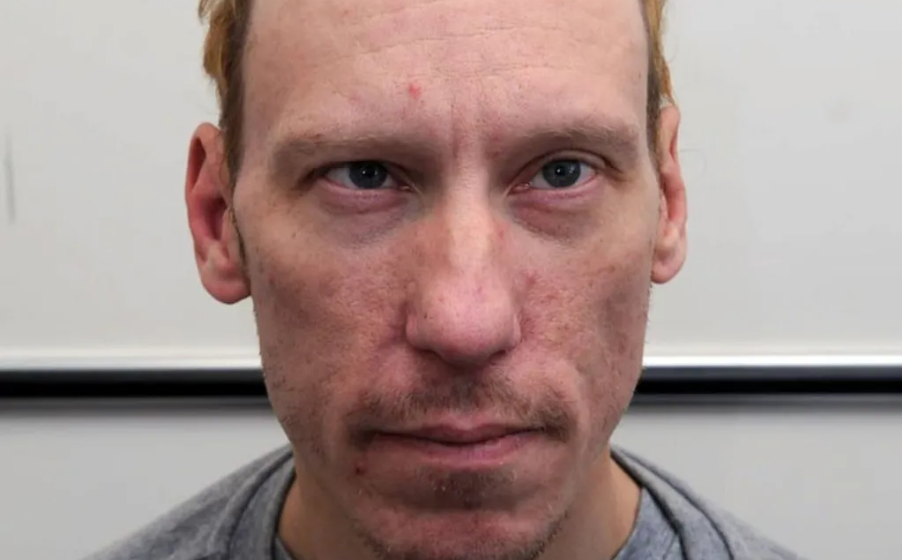
Between June 2014 and September 2015, the Grindr killer Stephen Port stole four lives in the quiet streets of Barking, East London. Anthony Walgate, 23, died first. Just weeks later, Gabriel Kovari, 22, followed. Then came Daniel Whitworth, 21, and finally Jack Taylor, 25. All four young men met the same quiet chef through dating apps, while all four received fatal doses of GHB. Moreover, all four turned up dead within a few hundred metres of Stephen Port’s flat.
Yet for over a year, police treated each death as an isolated incident. They accepted overdoses and even a forged suicide note at face value, despite families begging investigators to look closer. However, officers dismissed their concerns. By the time authorities finally arrested Port in November 2015, four preventable deaths had occurred. As a result, the case would expose not just a predator’s cruelty, but also systemic failures and prejudice within the Metropolitan Police that allowed him to kill again and again.
This is the story of how Stephen Port weaponised technology, exploited vulnerable young men, and slipped through gaps in a system that should have stopped him after his first victim.
Who Was Stephen Port?
Stephen John Port entered the world on 22 February 1975 in Southend-on-Sea, Essex. When he turned one, his family moved to Dagenham in East London, where he subsequently grew up. Childhood acquaintances described him as a loner, while teachers noted his quiet demeanour. Meanwhile, classmates bullied him regularly.
After leaving school at 16, Port briefly attended art college before his parents could no longer afford it. He then trained as a chef, a profession he would maintain throughout his adult life. However, colleagues found him odd and uncomfortable in social situations. In addition, Port often fabricated stories about his background, falsely claiming that he had served in the Royal Navy or attended Oxford University.
Port came out as gay in his mid-twenties. Although he lived with his parents until his early thirties, he then moved into a modest one-bedroom flat in Barking. Neighbours rarely interacted with him, yet when they did, they often walked away with an uneasy feeling that something seemed off. For example, one neighbour described his personality as peculiar and childlike, noting he sometimes played with children’s toys despite being a grown man.
Port’s Dark Online World
Behind closed doors, Port spent hours online immersed in pornography featuring unconscious men and non-consensual encounters. This wasn’t passive consumption; rather, it reinforced fantasies that increasingly blurred with his real desires. In public, Port wore a professionally fastened blond toupée over his bald head, which he believed increased his confidence when meeting other men.
By 2014, Port had created multiple fake profiles on dating apps and websites including Grindr, Sleepyboy, Hornet, Fitlads, Gaydar, and CouchSurfing. Online, he could be whoever he wanted, whereas in the real world, he remained awkward and overlooked. However, when men came to his flat, he held ultimate control through his weapon of choice: gamma-hydroxybutyric acid, or GHB.
What Happened to Anthony Walgate?

On 17 June 2014, Anthony Walgate arranged to meet a client for escort work. The 23-year-old fashion student from Hull had moved to London to pursue his dreams in design. Because Anthony needed to make ends meet, he occasionally did part-time escort work, although friends described him as bright, optimistic, and constantly bubbling with creative ideas.
That evening, Anthony went to Port’s flat in Barking, where Port administered a lethal dose of GHB. Instead of calling for medical help when Anthony collapsed, Port waited. Afterwards, he dragged Anthony’s lifeless body down the stairs and left him outside the building, staging the scene to look like a street overdose. In addition, Port placed a small bottle of GHB in Anthony’s pocket.
The following morning, Port made an anonymous call to emergency services. His voice remained calm as he claimed to have just discovered an unconscious young man. When paramedics arrived shortly after 8:00 a.m., they pronounced Anthony dead at the scene.
Police took Port’s statement, during which he insisted he didn’t know Anthony and had simply stumbled across him by chance. Initially, officers accepted this story because the scene appeared to support an accidental overdose narrative. There appeared no struggle, while a bottle of GHB suggested self-administration. As a result, police treated Port as a helpful witness rather than a suspect.
Inconsistencies Emerge
Over the following weeks, inconsistencies emerged. Port changed parts of his account, eventually admitting that Anthony had been inside his flat before turning up outside. Although investigators noticed the discrepancies, they charged him only with perverting the course of justice for lying in his statements.
In March 2015, nearly a year after Anthony’s murder, a court convicted Port of perverting the course of justice. The court sentenced him to just eight months in prison, and he walked free within weeks, wearing an electronic tag. By then, however, three more men had already died.
How Did Gabriel Kovari Die?

Gabriel Kovari had left Slovakia for London with dreams of independence and adventure. The 22-year-old loved books and art, while friends described him as gentle, thoughtful, and curious about the world. When Gabriel met Stephen Port in August 2014, Port offered him a place to stay for a few days. Because Gabriel still felt new to London, he accepted.
Gabriel moved into Port’s flat on 25 August 2014. Just three days later, on 28 August, a dog walker discovered Gabriel’s body in St Margaret’s churchyard in Barking, less than half a mile from Port’s flat. Someone had propped his body against a wall in an eerie staging, while a lethal dose of GHB caused his death.
Despite the similarities to Anthony’s case just two months earlier, police failed to connect the deaths. To investigators, Gabriel appeared to be another young gay man who had overdosed. Although Gabriel’s friends raised concerns, telling police he wasn’t the type to use hard drugs, officers ignored their warnings.
In addition, Gabriel’s friends pointed out the strange coincidence: two young men, dead in the same small area, just months apart, with the same drug in their system. However, Barking and Dagenham Police dismissed these observations. Because they saw no pattern, the investigation went nowhere, and Port remained free.
What Happened to Daniel Whitworth?

On 18 September 2014, just weeks after Gabriel’s death, Daniel Whitworth met Port after connecting online. Daniel worked as a 21-year-old chef, and loved ones described him as warm, funny, and naturally charismatic, since he had a way of lighting up any room he entered.
Following the same chilling pattern, Port administered a fatal dose of GHB to Daniel. The next day, Port deleted his dating profile and carried Daniel’s body to St Margaret’s churchyard in Barking, the exact location where someone had found Gabriel.
On the morning of 20 September, the same dog walker who had discovered Gabriel’s body stumbled upon Daniel’s. This time, however, someone had left a handwritten suicide note nearby. The note claimed Daniel had accidentally killed Gabriel during a “sex game gone wrong” and had taken his own life out of guilt.
Police Accept the Forged Note
Police accepted the note at face value. They consulted no handwriting expert, while they carried out no forensic testing of the paper or ink. Moreover, no one questioned why Daniel had no known connection to Gabriel or any reason to confess to his death.
For Daniel’s family, the suicide ruling felt unbearable. Not only were they grieving his death, but they also had to carry the weight of a false confession that suggested their son played both victim and perpetrator. In fact, his stepmother reported that police led the family to believe Daniel had overdosed on drugs, despite no investigation having taken place.
The couple asked police whether they had investigated who the note meant by “the guy I was with last night.” However, officers responded that it would never be possible to find all the answers. When the family asked about challenging the open verdict or continuing the investigation, Daniel’s stepmother encountered what she described as an attitude of “it is what it is, deal with it.”
The truth only emerged after Port’s arrest in 2015. Daniel turned out to be another of Port’s victims, while the note amounted to nothing more than a cruel piece of theatre, staged to mislead investigators and frame a dead man for murder.
How Was Jack Taylor Killed?
Jack Taylor had reached 25 years old when he died. A forklift driver who lived with his parents in Dagenham, Jack maintained extremely close relationships with his sisters, Donna, Jenny, and Danielle, who described him as loyal, caring, and dependable. Jack wasn’t reckless, nor did he use heavy drugs. That’s why his family immediately knew something seemed wrong when authorities found his body.
On the night of 12 September 2015, Jack and Stephen Port arranged to meet through Grindr. CCTV cameras captured them walking together towards Port’s flat at around 3:00 a.m. on 13 September. By 7:30 that same morning, someone discovered Jack’s body near St Margaret’s churchyard in Barking, just steps from where Gabriel and Daniel had turned up the year before.
Once again, police treated it as an accidental overdose,another young gay man who had taken drugs. However, Jack’s family refused to accept this explanation because his sisters knew his habits and personality. Therefore, they knew he wouldn’t have injected or ingested large doses of GHB on his own.
The Family Investigates
Eleven days after his death, Jack’s sisters contacted Barking and Dagenham Police for an update on their investigation. They felt astonished to discover none was taking place. The sisters then researched for themselves and came across the three previous cases. When they raised these connections with police, however, officers denied any link existed.
The family demanded that CCTV be reviewed. When police finally checked the footage, it revealed the truth: Jack had been with Stephen Port. The killer wasn’t a faceless shadow; instead, cameras had captured him walking alongside his victim just hours before Jack’s death.
Jack’s sisters felt shocked they hadn’t heard about the CCTV footage immediately. Moreover, they grew even more surprised when police said they weren’t attempting to identify the other man in the video. In fact, one sister described the attitude of the police as “shocking.”
After the family requested that images of the other man be made public to identify him, police initially showed reluctance. They claimed they didn’t normally release CCTV images. Eventually, they relented, and two days later, people identified Port from the images and police arrested him.
Unlike Anthony, Gabriel, and Daniel, whose deaths officers had explained away, Jack’s case finally exposed the pattern. The evidence proved irrefutable, and as a result, the Metropolitan Police could no longer deny the connections.
When Was Stephen Port Arrested?
In November 2015, after 15 months and four deaths, authorities finally arrested Stephen Port. The double life he had maintained for years lay exposed. When police seized his laptop and devices, they found internet searches that raised immediate red flags, since Port had been obsessing over GHB, unconscious men, and how to cover up deaths.
Forensic work tied him to the fake suicide note found with Daniel’s body, while his online profiles revealed a web of deception. In addition, investigators recovered messages he had crafted to throw them off course. As a result, the evidence piled up quickly once police actually looked.
The case went to trial at the Old Bailey in October 2016. For weeks, jurors listened as prosecutors laid out the horrifying pattern: Port had lured young men through dating apps, plied them with drinks spiked with lethal doses of GHB, raped them while unconscious, and then staged their deaths to look like overdoses or suicides.
The Trial and Verdict
Anthony, Gabriel, Daniel, and Jack,their names echoed through the courtroom as families sat through every detail, reliving the nightmare. For Daniel’s loved ones, vindication finally came when prosecutors exposed the suicide note as a forgery. Meanwhile, for Jack’s family, CCTV footage provided irrefutable proof.
The defence tried to argue that the men had taken the drugs willingly. However, the sheer consistency of Port’s method, combined with his lies and manipulations, told a different story.
On 23 November 2016, a jury found Stephen Port guilty on every charge prosecutors brought against him,a total of 22 offences. These included four murders, multiple rapes, assaults by penetration of all four victims, as well as rapes of three additional men he had drugged, ten counts of administering a substance with intent, and four sexual assaults.
In total, investigators confirmed 11 men as victims of Port’s predatory behaviour. However, authorities have long suspected there may have been more who never came forward or whom they never identified.
What Sentence Did Stephen Port Receive?
On 25 November 2016, Mr Justice Openshaw sentenced Stephen Port to life imprisonment with a whole life order. This means Port will never walk free from prison; instead, he will die behind bars.
The judge described Port as a “dangerous and devious sexual predator.” In fact, Port joins only approximately 70 people in England and Wales serving a whole life order, which courts reserve for the most serious offenders whose crimes are so grave that they must spend the rest of their natural lives in custody.
Port currently serves his sentence at HM Prison Belmarsh in Thamesmead, south London. In August 2018, reports revealed that Port had lodged an appeal against his murder convictions. However, in November 2018, courts rejected his appeal.
For the families, the verdict brought relief but not closure. Although justice had been served, it came only after years of pain. As Jack Taylor’s sisters put it, “We had to fight to get them to listen. Our brother paid the price.”
How Did Police Fail the Victims?
Looking back, perhaps the most shocking aspect of this case is not just the murders themselves, but how long Stephen Port was able to continue killing. Four young men died within 15 months, all within a few hundred metres of each other, all under identical suspicious circumstances. Yet time after time, police failed to connect the dots.
When Anthony Walgate died, Port lied to officers. However, police accepted his story without questioning why Anthony had been at his flat or checking Port’s phone records. Moreover, they never considered that the man reporting the body might have been involved.
Just two months later, when someone found Gabriel Kovari dead in the same neighbourhood, the similarities proved impossible to ignore: same drug, same type of staging, same location. Yet detectives brushed it aside as coincidence.
The Forged Suicide Note
Then Daniel Whitworth turned up in the very same churchyard with a suspicious “suicide note.” Instead of analysing the handwriting or considering the implausibility of the story, police closed the case. As a result, they not only missed the murder but allowed a forged confession to tarnish Daniel’s reputation.
John Pape, Gabriel’s previous landlord, searched on the internet for other unexplained deaths in the Barking area. He felt astonished at the similarities in Anthony Walgate’s case, especially the locations where people found the bodies. However, Barking and Dagenham Police did not link the two cases.
Upon learning of Whitworth’s death, Pape called the detective at Barking and Dagenham Police and demanded to know whether they thought the three cases were linked or could be murder, since he feared for his own personal safety. Despite this, officers assured him the cases were not linked and were not under investigation as suspicious.
Although Pape offered to be interviewed because he felt he might have relevant information regarding Gabriel’s last movements, no one contacted him in response, even after he had organisations such as PinkNews contact the police on his behalf.
The woman who found Gabriel’s body and found Daniel’s body two weeks later in the same location and almost exactly the same position reported thinking that police “had no idea what they were doing” not to connect the two cases.
Jack’s Family Forces Action
The façade didn’t crumble until Jack Taylor’s family pushed back. His sisters insisted Jack was not a reckless drug user and begged police to check the CCTV. When officers finally did, the footage revealed Jack walking with Stephen Port on the night of his death. Only then did investigators begin to unravel the truth.
The Independent Office for Police Conduct (IOPC) opened investigations into 17 police officers for potential misconduct. As of November 2023, the IOPC continues investigating eight former and current police officers for gross misconduct regarding the cases.
Eventually, the families of Port’s victims received compensation from the Metropolitan Police over their handling of the investigation. The parties settled the civil claim for undisclosed amounts in 2022.
Why Didn’t Investigators Examine the Deaths Properly?
Critics, including LGBTQ+ advocates and members of the victims’ families, pointed to systemic bias. All four victims were young gay men. Although some lived openly while others more privately, all belonged to a community that has historically faced marginalisation.
Families and activists argued that if the victims had been heterosexual women or from different backgrounds, perhaps the urgency would have been greater. In that case, perhaps police would have asked harder questions, pressed further, and spotted the pattern sooner. Instead, officers too easily accepted the narrative of “drug overdoses.”
Peter Tatchell, the gay rights activist, drew attention to the importance of social class as well as sexuality in this case. “If four young middle-class men had been murdered in Chelsea, police would have probably made a public appeal much sooner and mounted a far more comprehensive investigation,” he said. “In contrast, police treated the murder of low-income gay men in working-class Barking very differently.”
Hierarchies of Victimisation
This concept is what criminologists call hierarchies of victimisation. In other words, people do not receive equal treatment when they become victims of crime based on assumptions others make about them because of their socio-demographic characteristics like gender, sexuality, social class, age, and ethnicity.
The case echoes other failures in serial killer investigations targeting gay men. For example, courts convicted Dennis Nilsen of killing six men between 1978 and 1983 but suspected him of killing at least twelve. He too came within police grasp early in his killing cycle. When one victim, Douglas Stewart, escaped and went to police showing red marks on his neck, officers lost interest the moment Nilsen mentioned they’d had a “lover’s tiff.”
Similarly, in the USA, one of Jeffrey Dahmer’s victims escaped, only for police to return him to Dahmer’s apartment. In fact, a transcript of Milwaukee Police Communications from that night includes laughter as officers described the incident.
Port’s victims differed from many serial killer victims targeting gay men. They had not run away; instead, they had jobs, families, and friends. Because people noticed their absence and reported them missing, yet still, the system failed them.
What Does Psychology Tell Us About Stephen Port?
Behind Stephen Port’s unassuming exterior lay a dark and escalating obsession. Understanding his psychology helps us recognise warning signs and prevent future tragedies.
A Compulsion for Control
Port’s weapon of choice was not a knife or gun, but a chemical. GHB gave him control, since it rendered his victims helpless, unable to resist, unable even to recall what had happened. For Port, that control was intoxicating because it allowed him to dominate, to manipulate, to play God with another person’s life.
This craving for control also explained the elaborate lies he spun: the forged suicide note, the staged bodies. Port didn’t just want to kill; instead, he wanted to orchestrate the narrative and dictate what the world believed about his victims.
Isolation and Fantasy
Psychologists who studied the case noted Port’s profound social isolation. Because he struggled to form healthy adult relationships, he retreated into fantasy worlds online. Moreover, his internet searches revealed obsessions with pornography involving unconscious men, rape, and drug use.
Over time, those fantasies blurred with reality. Dating apps like Grindr became his hunting ground because they offered anonymity and access to vulnerable young men who might not always receive belief from police or family if something went wrong. As a result, Port exploited that dynamic ruthlessly.
Escalation Over Time
Like many serial offenders, Port escalated. Anthony’s death began with panic and clumsy staging. However, by the time he killed Gabriel and Daniel, he had grown bolder, even crueller. In fact, he crafted a suicide note to frame one victim for another’s death. With Jack, he repeated the same methods, almost daring police to notice.
This escalation suggests that Port drew confidence from each police failure. In other words, each time investigators dismissed a case as an overdose, his belief in his own invincibility grew stronger.
The Psychology of Deception
Port’s lies extended beyond avoiding capture; instead, they reflected performance. He thrived on creating illusions: pretending to “discover” Anthony’s body, inventing backstories about his life, even the suicide note,all reveal a man who craved attention and control, but from behind a mask.
Port wanted to manipulate not only his victims but also their families, police, and the wider public. Therefore, this need for control extended beyond the physical act of murder into how others understood and remembered the deaths.
A Dangerous Archetype
Criminologists have noted that Port fits into a disturbing archetype: the sexual predator who uses drugs as weapons. In this sense, he’s part of a broader pattern seen globally, where offenders exploit substances to incapacitate, control, and ultimately silence victims.
What made Port unusual was his persistence, his ability to hide in plain sight, and the way he weaponised society’s prejudices against gay men to cover his tracks. In the end, Stephen Port was more than just a killer; instead, he operated as a manipulator, a fantasist, and a predator who relied on silence, both his own and the silence of institutions that failed to listen until it was too late.
Frequently Asked Questions
How did Stephen Port meet his victims?
Stephen Port met his victims primarily through dating apps and websites including Grindr, Sleepyboy, Hornet, Fitlads, Gaydar, and other platforms. He created fake profiles with false biographical information, falsely claiming to have attended Oxford University or served in the Royal Navy. As a result, Port used these fabricated personas to appear more confident and attractive than he seemed in real life.
What drug did Stephen Port use to kill his victims?
Port used gamma-hydroxybutyric acid (GHB) or the similar substance gamma-butyrolactone (GBL) to drug his victims. These are powerful sedatives sometimes known as “date rape drugs.” Port administered lethal doses of GHB to render his victims unconscious so he could rape them. In four cases, the doses proved fatal. After their deaths, Port typically placed bottles of GHB in his victims’ pockets to make their deaths appear to be accidental overdoses.
Why didn’t police connect the murders sooner?
Despite four bodies turning up within 500 metres of Port’s flat over 15 months, police failed to connect the deaths until after the fourth victim. Instead, investigators treated each case as an isolated accidental overdose rather than suspicious deaths. Although families and community members raised concerns about the similarities, officers dismissed these warnings. Critics have argued that systemic bias and prejudice against young gay men led police to make assumptions about drug use and risky behaviour, causing them to miss the obvious pattern.
How many victims did Stephen Port have in total?
Courts convicted Port of murdering four men: Anthony Walgate, Gabriel Kovari, Daniel Whitworth, and Jack Taylor. However, a jury found him guilty of 22 offences in total, including the rapes of three additional men he had drugged but who survived. In total, investigators confirmed 11 men as victims of Port’s crimes. However, investigators have long suspected there may have been more victims who never came forward or whom they never identified.
Watch the Full Documentary
For a deeper exploration of this case and the psychology behind Stephen Port’s crimes, watch the full documentary on the Crime and Psyche YouTube channel. The channel examines true crime through a psychological lens, helping viewers understand not just what happened, but why.
Remembering the Victims
Before we close, we must remember the four young men whose lives were stolen. Because they weren’t just victims of a crime, they were sons, brothers, and friends with dreams and futures waiting to be lived.
Anthony Walgate moved to London with big dreams. The 23-year-old possessed a creative soul who wanted to make a name for himself in fashion and design. In fact, those who knew him described him as ambitious, funny, and endlessly supportive of his friends. Moreover, both his family and classmates saw him as someone destined for greatness.
Gabriel Kovari embodied gentleness, intelligence, and curiosity about the world. The 22-year-old loved art and literature, while London seemed like the perfect place for new and exciting opportunities. Instead of a fresh start, however, his life ended after just a few weeks in the city. As a result, Gabriel’s death left not only his family in grief but also a community of friends who had only just begun to know him.
Daniel Whitworth radiated a warmth and humour that made him a favourite amongst his friends. The 21-year-old had a way of making any room lighter, a natural charisma that drew others to him. Therefore, people who knew Daniel envisioned a future full of promise, both in his career as a chef and in life.
Jack Taylor earned recognition as dependable and loyal, the kind of man his family and friends could always count on. The 25-year-old maintained incredibly close bonds with his sisters, who later became his fiercest advocates. Although Jack wasn’t caught up in the fast pace of city life, he remained grounded, steady, and caring.
Anthony. Gabriel. Daniel. Jack. Each was unique, while each had a life worth remembering. Moreover, each suffered failure not just by Stephen Port, but by the very system that should have protected them.
Current Status and Latest Developments
Stephen Port remains imprisoned at HM Prison Belmarsh, serving his whole life order. He will never walk free.
In June 2022, the Independent Office of Police Conduct reopened investigations into the way authorities handled the deaths due to alleged “material flaws” in its previous investigation. As of 2023, eight former and current police officers face investigation for gross misconduct.
The case has led to significant changes in how police approach similar investigations. For example, the Metropolitan Police introduced special training on LGBTQ+ issues and “chemsex” crime following Port’s conviction. However, advocates continue to push for more systemic reforms to prevent similar failures.
Meanwhile, the families of Port’s victims continue to speak out, ensuring people remember their loved ones and that lessons emerge from the devastating failures that allowed Port to kill repeatedly.
Conclusion: A System That Failed
The story of Stephen Port extends beyond one predator’s cruelty; instead, it reveals a system that repeatedly failed to protect vulnerable people. Four young men died preventable deaths because investigators deemed their lives less worthy of thorough investigation.
The Grindr killer Stephen Port stole four lives that mattered. Anthony, Gabriel, Daniel, and Jack deserved better, while their families deserved better. Moreover, the LGBTQ+ community deserved better.
As we reflect on this case, we must ask ourselves difficult questions. For example, what prejudices still exist within our institutions? In addition, how can we ensure that all victims receive equal justice, regardless of their sexuality, class, or background? Furthermore, what warning signs did we miss, and how can we recognise them in the future?
Port’s crimes exposed cracks in the system that remain incompletely repaired. Until meaningful change occurs, the risk remains that another predator could exploit the same vulnerabilities, the same prejudices, the same institutional failures.
We remember Anthony, Gabriel, Daniel, and Jack not for how they died, but for how they lived. Therefore, their memories demand that we do better, that we fight harder, and that we never allow their deaths to be in vain.
Sources
- BBC Three: How Police Missed the Grindr Killer
- The Guardian: Stephen Port found guilty of murders of four men
- Wikipedia: Stephen Port
- Birmingham City University: The Grindr Killer – Professor Elizabeth Yardley
- Independent Office for Police Conduct reports and investigations
- Metropolitan Police statements and court documents from the Old Bailey trial
Further Reading
If this case sparked your curiosity, these books explore direct or similar themes in depth.

by John Douglas
The FBI profiler who pioneered criminal psychology tells the stories behind his most notorious cases.
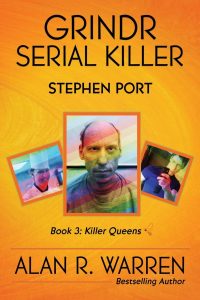
by Alan R. Warren
It is based on the case of Stephen Port, a serial murderer in London, U.K., who was convicted of drugging, raping, and murdering four young men. He was also convicted of drugging and raping several other men.


Disclosure: This post contains affiliate links. If you purchase a product through one of these links, Crime and Psyche may earn a small commission at no extra cost to you. Thank you for supporting the channel.