

When Justice Meets Mental Illness: The Iryna Zarutska Murder Case
On August 22, 2025, 23-year-old Iryna Zarutska was murdered on a Charlotte light rail train. Her killer, Decarlos Brown Jr., stabbed the Ukrainian refugee in the neck without warning. Nearly a year later, in June 2026, federal authorities deemed Iryna’s Zarutska’s killer incompetent to stand trial, creating a complex intersection of mental health law and criminal justice that continues to evolve.
Iryna had survived Russia’s invasion of Ukraine, fled a war zone with her family, and rebuilt her life in North Carolina. She worked as a line cook, saved money for her first car, and dreamed of becoming a veterinary assistant. However, her life ended in sixty seconds of senseless violence that shocked two nations and exposed critical failures in America’s mental health system.
Brown’s case has become a lightning rod for national debate. President Donald Trump called for his execution. In addition, North Carolina passed legislation in Iryna’s name. Yet psychiatric evaluations concluded that Brown cannot understand the proceedings against him or assist in his own defense, creating a legal standoff that raises profound questions about competency, accountability, and justice.
Who Was Iryna Zarutska?

Iryna Zarutska was born in 2002 in Kyiv, Ukraine, a city known for its golden-domed cathedrals and vibrant arts scene. From an early age, she demonstrated artistic talent and a gentle spirit. Eventually, she earned a degree in art and restoration from a Kyiv college, creating paintings that reflected beauty and tranquility.
When Russia launched its full-scale invasion in February 2022, Iryna’s world collapsed. For weeks, she and her family sheltered in a basement while air-raid sirens wailed overhead. They survived on rationed food and bottled water, listening to explosions shake the city above them. Meanwhile, her father remained behind due to martial law, while Iryna, her mother, younger sister, and brother fled to safety.
Her uncle and his wife in North Carolina sponsored their relocation to the United States. Upon arrival, Iryna was determined to rebuild. She immediately enrolled in English classes, watching television with subtitles to accelerate her learning. As soon as she was legally permitted, she found work at a sandwich shop, then later at Zeppedie’s Pizzeria in Charlotte’s LoSo neighborhood, where supervisors promoted her from cashier to line cook.
Friends and coworkers remembered her as warm and hardworking. Despite her modest income, she saved diligently for her first car, an old Cadillac, and was learning to drive with her boyfriend, Stanislav “Stas” Nikulytsia, 21. They shared an apartment near the 36th Street Light Rail Station in NoDa, Charlotte’s artistic district filled with murals and music venues.
A week before her death, Iryna texted her uncle: “Everything is great. In October, I have an appointment for my driving test. Soon, I’ll be able to come visit you on my own. I miss you guys so much.” He replied, “Very proud of you.” In response, she said, “Without your help, I would not have been able to achieve this. I’m very grateful.”
Those were her final words to him.
What Happened on August 22, 2025?

The Night Everything Changed
On Friday evening, August 22, 2025, Iryna boarded the Charlotte Light Rail train at 9:55 p.m. Surveillance footage shows her entering the car, phone in hand, wearing casual clothes after her shift. After boarding, she chose a seat and settled in, scrolling through her phone like any other commuter ending a long day.
Decarlos Brown Jr., then 34 years old, sat one row behind her. He wore a dark hoodie and appeared calm, blending into the scattered crowd of evening passengers. However, nothing in his demeanor suggested the violence about to unfold.
Four minutes after Iryna boarded, Brown stood up with deliberate slowness. He reached into his hoodie pocket and pulled out a pocketknife. Without warning or provocation, he lunged forward and stabbed Iryna three times, with one devastating blow piercing her neck.
The attack lasted less than sixty seconds. Initially, Iryna appeared shocked, unable to comprehend what had just happened. Then she fell forward as blood spread across the floor. Meanwhile, her phone clattered away from her hand.
Passengers froze in disbelief before panic erupted. Some screamed while others fumbled for their phones to call 911. Meanwhile, Brown calmly walked off the train when the doors opened at the next station, disappearing down the platform.
Emergency calls flooded dispatch: “A woman’s been stabbed on the light rail!” “There’s blood everywhere, please hurry!”
Paramedics arrived within minutes, but Iryna’s injuries were catastrophic. Medical personnel pronounced her dead at the scene. The young woman who had survived Russian artillery strikes in Kyiv died on public transit in America, a country she believed would keep her safe.
The Arrest
Police apprehended Brown less than two blocks from the station within minutes of the attack. When officers arrived, they found him still clutching the knife. He complied with arrest orders without resistance, staring blankly ahead as if disconnected from reality.
During booking at the county jail, officers noted that Brown appeared disoriented. He spoke in fragmented sentences about “people reading his mind” and “foreign substances controlling him.” As a result, these statements immediately triggered a psychiatric evaluation, although his cooperation was minimal.
Who Is Decarlos Brown Jr.?
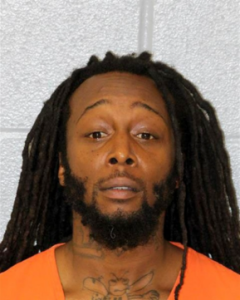
Decarlos Brown Jr., now 35 years old, is a Charlotte native with a lengthy criminal history and documented severe mental illness. His background reveals a pattern of violence, instability, and repeated system failures that created the conditions for tragedy.
Criminal History
Public records show Brown’s criminal activity began in his early twenties and continued for over a decade. Over the years, his arrests included armed robbery, assault, larceny, and property crimes. Each offense moved him through the revolving door of Mecklenburg County Jail, with brief stays followed by predictable releases.
However, Brown’s instability did not exist in isolation. According to court records, violence ran through multiple generations of his family, creating what psychologists call intergenerational conditioning.
His older brother, Stacey Dejon Brown, is currently serving 27 to 36 years for the 2012 shotgun killing of 65-year-old Robert Heym during a robbery in Charlotte. After that crime, Stacey fled the scene using the same light rail system where Iryna would later die. While incarcerated, Stacey accumulated more than 40 disciplinary violations, including assault with a deadly weapon, arson, and theft.
Their sister, Tracey Vontrea Brown, has faced repeated arrests for shoplifting, larceny, felony conspiracy, and vehicle theft. In fact, her most recent arrests occurred in 2024.
Even their father, Decarlos Brown Sr., has been arrested for breaking and entering, felony conspiracy, larceny, and possession of a weapon on a university campus.
This family history suggests more than coincidence. Instead, it reveals a cycle of dysfunction where violence, criminality, and instability became normalized across generations.
Mental Illness and System Failures
What distinguishes Decarlos Brown Jr. from his siblings is his documented struggle with schizophrenia. According to his family, symptoms emerged in his twenties. For a period, medication stabilized him, making him calmer and more grounded.
After one prison sentence, however, everything changed. His mother described him returning home different, increasingly paranoid and volatile. Over time, he became convinced that people were plotting against him. He heard voices that no one else could perceive.
After his release, Brown stopped taking his medication, insisting he didn’t need it. This decision marked the beginning of his steep decline. As his condition worsened, paranoia intensified. He paced the house, talked to himself, and lashed out at family members who tried to help.
“He didn’t get the right care,” his mother told reporters. “Every time he got violent, we tried to get him help, and they’d send him home.”
The pattern repeated itself for years. Brown would have violent outbursts, prompting police calls. Officers would take him to a hospital where staff would medicate him briefly, then release him back into the same destructive cycle.
In January 2025, seven months before Iryna’s murder, Brown called 911 from a hospital claiming that people were “controlling him with foreign substances.” Medical staff documented his statements as delusional. Although he was taken in for observation, his evaluation was delayed. Within days, hospital staff released him into the public without sustained treatment.
By summer 2025, his behavior had grown more erratic. Neighbors reported seeing him outside at night, pacing and muttering. Although police responded multiple times, each encounter ended without arrest or meaningful intervention.
The Legal Proceedings and Incompetency Ruling
Initial Charges and Political Firestorm
Prosecutors initially charged Brown with first-degree murder at the state level, a capital offense in North Carolina. Within a week, the case drew national attention. As a result, the U.S. Justice Department filed federal charges alongside state charges, citing the international significance of the crime and its impact on a foreign national.
President Trump publicly called for Brown’s execution, labeling the attack “an act of pure evil.” His statement ignited fierce debate. While supporters viewed it as righteous outrage over a heinous crime, critics argued it politicized an active case and risked compromising the legal process.
Ukrainian officials urged transparency. In Kyiv, the foreign ministry called Iryna’s death “a tragedy that strikes at the heart of every refugee family seeking peace.”
Both state and federal prosecutors announced they would seek the death penalty. In response, Brown’s defense attorneys immediately signaled they would pursue a mental health defense, citing years of documented schizophrenia and delusional episodes.
What Does It Mean to Be Incompetent to Stand Trial?
The June 9, 2026 competency hearing represented a critical juncture. U.S. Attorney Russ Ferguson addressed reporters outside the courthouse after the brief proceeding, confirming that authorities had found Brown “incompetent to proceed to trial at this time.”
Under both North Carolina state law and federal law, a defendant must meet two criteria to stand trial:
1. They must understand the nature of the proceedings against them
2. They must be capable of meaningfully assisting in their own defense
During the June 2026 hearing, Brown reportedly had an outburst, yelling about having a “body emergency” and references to materials that “control him.” Ferguson later explained, “Under the law he has to be able to understand the proceedings against him and be able to assist in his defense. I think you saw from his actions today,he’s not quite there yet.”
The ruling came after a December 2025 psychiatric evaluation at Central Regional Hospital determined Brown was incapable of participating in court proceedings. In April 2026, defense attorneys shared these results, creating the foundation for the June hearing.
What Happens Next?
Despite the incompetency ruling, Ferguson expressed confidence that Brown would eventually face trial. “The court found that his prognosis is ‘good’ to be made competent and set a four-month deadline to have that process go forward,” he told reporters.
Authorities ordered Brown to undergo psychiatric treatment and medication while remaining in federal custody. A doctor will provide individualized care with regular evaluations to assess whether his competency can be restored.
Ferguson emphasized: “Our number one goal here is justice for Iryna Zarutska and Iryna Zarutska’s family. This is a step in that process. We have to make sure that we have a case that is airtight on appeal, airtight on post-conviction litigation.”
The defense has requested postponement of state proceedings for six months while Brown remains under federal jurisdiction. However, a judge has not yet ruled on this motion.
Both state and federal prosecutors continue seeking the death penalty, although that outcome depends entirely on Brown being deemed competent to stand trial.
The Impact: Iryna’s Law and Public Reaction
A City in Mourning
News of Iryna’s death reverberated across Charlotte and around the world. Community members held vigils at the light rail station where she died. Meanwhile, flowers, candles, and Ukrainian flags lined the platform. Despite never meeting Iryna, community members stood in silence, united in grief and disbelief.
In Ukraine, her death struck a devastating chord. A refugee who escaped war only to die in peacetime America became a symbol of shattered hope. As a result, vigils were held in Kyiv and Lviv. Iryna’s father, unable to leave Ukraine due to martial law, mourned from thousands of miles away, unable even to attend his daughter’s funeral.
Stas, Iryna’s boyfriend, has remained largely silent since the tragedy. He posted a single photo on Instagram showing them together in bathing suits, smiling with their arms around each other. The only caption was a broken heart emoji. In addition, he added a mushroom emoji in his bio, one of Iryna’s favorite symbols, followed by another broken heart.
Legislative Response: Iryna’s Law
The following month, North Carolina Governor Josh Stein signed House Bill 307, known as “Iryna’s Law.” Although the sweeping criminal justice legislation passed with bipartisan support, it was not without controversy.
The law includes several major provisions:
- Accelerated death penalty appeals: Long-pending death penalty cases must move to hearings within two years
- Restricted cashless bail: Violent offenders face tighter restrictions on pre-trial release
- Mandatory mental health evaluations: Defendants with a history of involuntary commitment must undergo psychiatric assessment
- Alternative execution methods: The law controversially added firing squad as an execution option, a provision added late in the process without full bipartisan consensus
Supporters view Iryna’s Law as a necessary response to systemic failures. They argue it honors Iryna’s memory by addressing gaps that allowed a dangerous individual to remain free despite documented mental illness and violent history.
Critics, however, question whether tougher penalties alone can prevent future tragedies. Mental health advocates point out that the law emphasizes punishment over prevention. As a result, they ask: Will mandatory evaluations lead to early intervention, or simply become bureaucratic checkboxes? Can true safety emerge from punishment alone, or does it require broader investment in community mental health infrastructure?
The inclusion of firing squad execution has drawn particular condemnation from human rights organizations, who call it archaic and inhumane.
How Could This Have Been Prevented?
The Psychology of Untreated Schizophrenia
Mental illness alone does not cause violence. Experts emphasize this point repeatedly. In fact, the vast majority of people living with schizophrenia never harm anyone. With proper treatment, family support, and medical intervention, most individuals manage symptoms successfully and lead fulfilling lives.
However, Brown’s case represents what criminologists call compound risk: the dangerous convergence of untreated psychosis, prior criminal behavior, and absence of structured supervision after release.
Schizophrenia is characterized by delusions, hallucinations, disorganized thinking, and impaired reality testing. When untreated, these symptoms can create what psychiatrists describe as a feedback loop. For example, paranoid beliefs fuel stress while stress amplifies paranoia. Then paranoia triggers aggression. Without intervention, the cycle intensifies until the boundary between perception and reality collapses entirely.
In Brown’s case, his delusions reportedly grew darker over time. He believed strangers could read his thoughts. Moreover, he was convinced people were “controlling” his body with foreign substances. Every glance felt like a threat while every sound became a sign of danger.
Within that distorted mindset, violence can erupt suddenly and appear random to outside observers. Yet to the person experiencing psychosis, their actions follow an internal logic only they can perceive.
System Failures and the Revolving Door
The tragedy here extends beyond what Brown did. Instead, it encompasses the systemic failures that allowed him to deteriorate unchecked for years.
His family repeatedly sought help. They called hospitals, contacted police, and watched him spiral while begging for intervention. Each time, the pattern repeated: brief hospitalization, temporary medication, rapid release.
Mental health experts call this the “revolving door effect.” It is common in states like North Carolina, where limited psychiatric beds and strict involuntary commitment laws make long-term hospitalization difficult unless someone poses an immediate, visible threat.
By the time that threshold is met, it is often too late.
North Carolina law requires clear and convincing evidence that a person is dangerous to themselves or others before involuntary commitment can extend beyond a few days. While this standard protects civil liberties, it also creates gaps where seriously ill individuals fall through.
Seven months before Iryna’s murder, Brown’s delusional 911 call should have triggered sustained intervention. Instead, after a brief evaluation delay, staff released him. No follow-up care was mandated while no outpatient treatment was enforced.
Neighbors reported his erratic behavior throughout the summer. Although police responded, officers made no arrests. Without a crime in progress, officers had limited options.
This is the bitter reality of America’s fragmented mental health system: families watch loved ones deteriorate, knowing tragedy is building, yet unable to access the sustained treatment that could prevent it.
Warning Signs That Were Missed
Looking back, Brown displayed numerous warning signs that mental health professionals recognize as red flags for potential violence in individuals with untreated psychosis:
- Medication non-compliance: Stopping psychiatric medication dramatically increases risk of symptom escalation
- Escalating paranoia: Beliefs that others are plotting or controlling him indicated worsening psychosis
- Social isolation: Withdrawal from family and increasingly erratic behavior
- Prior violence: A documented history of aggressive acts combined with mental illness creates compound risk
- Lack of insight: Inability or refusal to recognize his own mental illness (a symptom called anosognosia)
- Repeated crisis contacts: Multiple 911 calls, police encounters, and brief hospitalizations without sustained treatment
Each of these factors alone may not predict violence. However, when they converge in a single individual with untreated schizophrenia and a violent background, the risk increases substantially.
Brown’s family recognized these signs. In addition, mental health professionals who briefly encountered him recognized them. Yet the system lacked mechanisms to provide sustained intervention before tragedy occurred.
Frequently Asked Questions
Why was Decarlos Brown Jr. found incompetent to stand trial?
Federal psychiatric evaluators determined that Brown cannot understand the nature of the legal proceedings against him and is incapable of assisting in his own defense due to untreated schizophrenia and ongoing psychotic symptoms. During his June 2026 competency hearing, he had an outburst referencing delusions about materials “controlling” him. However, U.S. attorneys stated his prognosis for competency restoration is “good,” and authorities have ordered him to undergo psychiatric treatment for at least four months while remaining in federal custody.
What happens if Decarlos Brown’s competency cannot be restored?
If Brown cannot be restored to competency after reasonable treatment efforts, he cannot be tried or convicted. However, authorities would not release him. Instead, he would likely be confined indefinitely to a secure psychiatric facility. This civil commitment would continue as long as he is deemed dangerous to himself or others due to mental illness. Meanwhile, both state and federal charges would remain pending, and periodic re-evaluations would assess whether competency could be restored in the future.
What is Iryna’s Law and what does it do?
North Carolina’s House Bill 307, known as “Iryna’s Law,” was signed in 2025 following Iryna Zarutska’s murder. The legislation accelerates death penalty appeals by requiring long-pending capital cases to move to hearings within two years. In addition, it restricts pre-trial cashless bail release for violent offenders. The law also mandates mental health evaluations for defendants with histories of involuntary psychiatric commitment. Controversially, it also adds firing squad as an alternative execution method, a provision critics have condemned as inhumane.
Did Decarlos Brown have prior mental health interventions before killing Iryna Zarutska?
Yes, Brown had documented schizophrenia and multiple prior mental health contacts. His family reported he had been on medication that helped stabilize him, but he stopped taking it after a prison release. In January 2025, seven months before Iryna’s murder, Brown called 911 with delusional claims about being “controlled by foreign substances.” Although he was briefly hospitalized, staff released him without sustained treatment. His family repeatedly sought help for his escalating paranoia and violent outbursts, but each intervention ended with quick release, creating what experts call a “revolving door” pattern.
Watch the Full Story
For a deeper exploration of Iryna Zarutska’s life, the circumstances surrounding her tragic death, and the psychological factors behind this case, watch the complete documentary-style analysis on the Crime and Psyche YouTube channel. The video includes never-before-seen timeline reconstructions, expert psychological commentary, and a thoughtful examination of the systemic failures that made this tragedy possible.
Sources
- Sky TG24 – Iryna Zarutska Killer Deemed Unfit for Trial
- WBTV News – Iryna Zarutska’s Alleged Killer Found Incompetent
- Ukrainska Pravda – Iryna Zarutska’s Accused Killer Deemed Mentally Unfit
Reflection: When Systems Fail, People Die
The story of Iryna Zarutska forces us to confront uncomfortable truths about mental health, justice, and public safety in modern America.
Iryna survived a war zone. She fled Russian artillery strikes, lived in basement shelters for weeks, and rebuilt her life from nothing in a foreign country. Despite these challenges, she learned a new language, worked multiple jobs, saved money, and dreamed of helping animals as a veterinary assistant. She represented resilience, hope, and the belief that peace was possible.
Her death on that Charlotte train represents a catastrophic convergence of failures. Not just one person’s untreated illness, but a system stretched so thin that warning signs were visible yet ignored. A family begging for help. Meanwhile, a man cycling through jails and hospitals without sustained care. A society that treats crisis instead of investing in prevention.
Decarlos Brown Jr.’s incompetency ruling adds another layer of complexity. Justice demands accountability, yet the law recognizes that punishment without comprehension is not justice at all. Brown’s mind may be so fractured that he cannot understand why authorities are holding him or what he has done.
Where does that leave Iryna’s family? Her mother, who attended President Trump’s State of the Union address, seeking answers and justice for her daughter. Her father in Ukraine, unable even to attend the funeral. Meanwhile, Stas, her boyfriend, whose Instagram profile remains a quiet memorial to love cut short.
Iryna’s Law attempts to address these failures through tougher penalties and mandatory evaluations. However, we must ask whether punishment alone can prevent the next tragedy. Will accelerated death penalty appeals honor Iryna’s memory, or will they simply process cases faster through a system still lacking adequate mental health resources?
True prevention requires investment in community mental health infrastructure. It requires laws that allow families to access sustained treatment for loved ones spiraling into psychosis. In addition, it requires training for police, judges, and hospital staff to recognize compound risk factors before violence erupts.
Iryna Zarutska deserved to live. She deserved safety, opportunity, and the chance to fulfill her dreams. As a result, her death should not be reduced to a political talking point or a justification for policies that fail to address root causes.
Instead, her story should remind us that every system failure has a human cost. Behind every statistic about untreated mental illness or recidivism is a person whose life could have been saved with intervention, compassion, and adequate resources.
As we wait to see whether Brown’s competency can be restored and whether he will face trial, one truth remains unchanged: Iryna’s light was extinguished far too soon. Therefore, the question we must answer is whether we will truly learn from her death, or simply repeat the same patterns until the next tragedy unfolds.
Further Reading
If this case sparked your curiosity, these books explore similar themes in depth.

by Michael H. Stone MD
Stone has created a 22-level hierarchy of evil behavior, which loosely reflects the structure of Dante’s Inferno. Basing his analysis on the detailed biographies of more than 600 violent criminals, he traces two salient personality traits that run the gamut from those who commit crimes of passion to perpetrators of sadistic torture and murder.

Disclosure: This post contains affiliate links. If you purchase a product through one of these links, Crime and Psyche may earn a small commission at no extra cost to you. Thank you for supporting the channel.