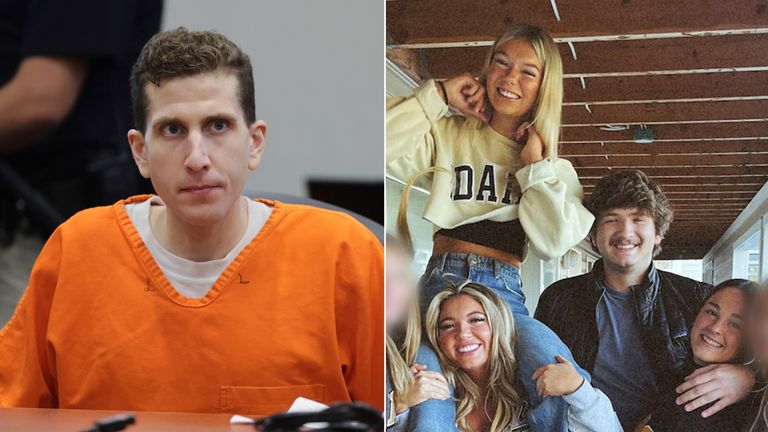

University of Idaho Murders: 4 College Students Killed
A Quiet Town Shattered: The Night Four Lives Were Stolen
On November 13, 2022, the university of idaho murders 4 college students killed in a shocking attack that devastated the small town of Moscow, Idaho. Kaylee Goncalves, 21, Madison Mogen, 21, Xana Kernodle, 20, and Ethan Chapin, 20, were brutally stabbed to death in their off-campus rental home at 1122 King Road. Although roommates realized something was wrong when their friends weren’t responding to calls or texts, the crime scene wasn’t discovered until late that morning.
Bryan Christopher Kohberger, then a 28-year-old PhD student in criminology at nearby Washington State University, was arrested 47 days later in Pennsylvania. After more than two years of legal proceedings, Kohberger pleaded guilty on July 2, 2025, accepting four consecutive life sentences without parole to avoid the death penalty. However, the question that haunts everyone remains unanswered: why did he do it?
Moscow had not experienced a single murder in seven years before that terrible night. Because of the brutality of the crime and the randomness of its victims, shockwaves spread far beyond Idaho’s borders, captivating national attention and sparking widespread fear among college students across America.
Who Were the Victims of the University of Idaho Murders?
Kaylee Goncalves: A Life Cut Short Just Before It Began
Kaylee Jade Goncalves was 21 years old and weeks away from starting her dream job. Despite having already graduated early from the University of Idaho with a degree in general studies, she remained in Moscow while preparing for her move. Meanwhile, she had accepted a position with an IT firm in Austin, Texas. In addition to her academic achievements, Kaylee was a member of the Alpha Phi sorority and had been planning her move to Texas when her life was stolen.
She grew up in Coeur d’Alene, Idaho, alongside her best friend Madison. Although they met in sixth grade, their friendship spanned all the way through college, and the two were inseparable. On the night they died, Kaylee and Madison were sleeping in the same bed in Madison’s third-floor bedroom, just as they had countless times before.
Madison Mogen: The Best Friend Who Never Left Her Side
Madison May Mogen, also 21, was a senior majoring in marketing and a member of the Pi Beta Phi sorority. In addition to her studies, she worked part-time at the Mad Greek restaurant in downtown Moscow alongside Xana. Madison and Kaylee had shared an unbreakable bond since childhood, attending the same schools, choosing the same university, and even working together.
At Kaylee’s vigil, her father Steve Goncalves said the two friends “died together in the same room, in the same bed.” That heartbreaking detail captured the depth of their friendship and the senselessness of losing both young women simultaneously.
Xana Kernodle: She Fought Back
Xana Alexia Kernodle was 20 years old, a junior studying marketing who grew up in Avondale, Arizona, before moving to Post Falls, Idaho. Like Madison, she was a Pi Beta Phi sorority member and worked at the Mad Greek restaurant. Although Xana lived on the second floor of the King Road house, her boyfriend Ethan was staying over that night.
Unsealed court documents later revealed that Xana had more than 50 stab wounds, many of them defensive. Despite being outmatched, she fought her attacker with everything she had. One wound between her thumb and index finger suggested “an intense struggle had occurred,” according to investigators. Because Xana had just received a DoorDash order at 4:00 a.m., she was awake when Kohberger entered the house.
Ethan Chapin: The Boyfriend Who Wasn’t Supposed to Be There
Ethan James Chapin was 20 years old, a sophomore studying recreation, sport, and tourism management. As a triplet from Mount Vernon, Washington, he was extremely close to his siblings and parents. In addition to his family connections, Ethan was a member of the Sigma Chi fraternity and had attended a fraternity event with Xana earlier that night.
Prosecutors later stated that Ethan likely wasn’t part of Kohberger’s original plan. Instead, he was simply staying overnight with his girlfriend, as couples do. Unfortunately, his presence in the house that night was chance, not design. Tragically, being in the wrong place at the wrong time cost him his life.
What Happened on the Night of November 12-13, 2022?
The Hours Before: A Normal Saturday Night
On Saturday evening, November 12, 2022, all six housemates went their separate ways for typical college weekend activities. For example, Kaylee and Madison went downtown to the Corner Club sports bar, then stopped at the Grub Truck food truck before heading home. Eventually, they arrived back at 1122 King Road at 1:56 a.m.
Meanwhile, Xana and Ethan attended an event at Ethan’s Sigma Chi fraternity house on campus. After the event concluded, they returned home at 1:45 a.m. The two other roommates, Dylan Mortensen and Bethany Funke, also went out in Moscow that night and returned home safely.
Between 2:26 and 2:52 a.m., Kaylee’s phone made several unanswered calls to her ex-boyfriend. Although this detail generated significant speculation early in the investigation, he was quickly ruled out as a suspect.
4:00 a.m.: When Everything Changed
At approximately 4:00 a.m., Xana received her DoorDash food delivery. Because her phone showed TikTok activity at 4:12 a.m., investigators confirmed she was still awake. Just after 4:00 a.m., according to prosecutors, Bryan Kohberger entered the house through a sliding glass door on the second floor.
Surveillance footage showed Kohberger’s white Hyundai Elantra passing by the house three times between 3:29 and 4:00 a.m. At 4:04 a.m., the vehicle entered the area for a fourth time. Meanwhile, at 4:20 a.m., cameras captured the car speeding away from the neighborhood.
Inside the House: Terror Unfolding in Silence
Kohberger went directly to the third floor, where he attacked Madison and Kaylee in Madison’s bedroom. Although the exact sequence remains unclear, Prosecutor Bill Thompson stated at sentencing that Kohberger likely targeted one of the women on the third floor. Court documents revealed that Kaylee suffered more than 20 stab wounds and her face was “disfigured” from the attack.
At approximately 4:17 a.m., a security camera near the house picked up sounds of whimpering, a loud thud, and Kaylee’s dog barking repeatedly. Despite being on the second floor, Dylan Mortensen was awakened by noises from above. Through her closed door, she heard what sounded like someone saying, “There’s someone here.”
Dylan opened her bedroom door but saw nothing. However, she then heard crying that seemed to come from Xana’s room. When she opened her door again, she heard a male voice say, “It’s okay. I’m going to help you.”
The Witness Who Saw the Killer
The third time Dylan opened her door, she saw him. Instead of an expected housemate, a figure dressed in black clothing and wearing a mask covering his nose and mouth walked directly toward her. Based on her observation, he was at least 5-foot-10, “not very muscular, but athletically built with bushy eyebrows,” according to her description.
But instead of attacking her, he walked right past and exited through the sliding glass door in the kitchen. Although Dylan stood frozen in what she later described as a “frozen shock phase,” she managed to process what was happening. She told investigators she had been drinking and “didn’t want to believe what was going on.”
Dylan went downstairs to the first floor, passing Xana’s room on the way. In the dim light, she saw Xana on the floor but assumed she had passed out from drinking. Consequently, she joined Bethany Funke on the first floor, and they locked themselves in Bethany’s room.
Hours of Uncertainty Before the 911 Call
Between 4:22 and 4:24 a.m., Dylan texted Bethany: “No one is answering. I’m rlly confused rn.” Simultaneously, she texted Kaylee: “What’s going on.” Then to Bethany: “I’m freaking out rn.”
Dylan made reference to seeing someone “like in a ski mask almost.” Despite the alarming statement, Bethany responded, “Stfu.” Dylan insisted, “I’m not kidding. I’m so freaked out.” Finally, Bethany told her, “Come to my room. Run.”
The two surviving roommates spent hours trying to contact their housemates, but no one responded. When morning arrived and they still heard nothing, they called friends over for help. After one friend went upstairs, he discovered Ethan and Xana with no pulse.
At 11:58 a.m. on November 13, 2022, someone placed a 911 call requesting help for an “unconscious person.” When officers responded, they found all four victims deceased. Kaylee and Madison were together in Madison’s bed on the third floor. In contrast, Xana was on the floor of her second-floor bedroom, with Ethan in her bed.
How Did Investigators Identify Bryan Kohberger?
The Knife Sheath: A Critical Piece of Evidence
Investigators found a tan leather Ka-Bar knife sheath on Madison’s bed next to the victims’ bodies. Although the military-style sheath contained male DNA, it didn’t match anyone in the national law enforcement CODIS database.
Despite extensive searches, the murder weapon itself, a large military-style Ka-Bar knife, was never recovered.
Tracing the White Hyundai Elantra
On December 7, 2022, Moscow police publicly announced they were looking for a white 2011-2013 Hyundai Elantra seen near the victims’ house around the time of the murders. Because surveillance cameras had captured the vehicle making multiple passes near 1122 King Road, investigators knew it was significant.
As a result, officers at Washington State University in Pullman, just eight miles from Moscow, began investigating white Elantras on campus. On November 29, they identified one registered to Bryan Kohberger, a first-semester PhD student in the criminology department. Although Kohberger’s 2015 model was newer than the initial police description, it matched the general appearance.
Cell Phone Records Told a Damning Story
Investigators obtained cell phone records showing Kohberger’s phone had pinged off towers near the victims’ house at least 12 times between June and November 2022. Moreover, these visits almost always occurred late at night or in the early morning hours.
On the night of November 12-13, Kohberger’s phone stopped connecting to the network at 2:47 a.m. and didn’t reconnect until 4:48 a.m. near Blaine, Idaho, south of Moscow. Therefore, this gap is “consistent with Kohberger attempting to conceal his location during the quadruple homicide,” according to court documents.
Most chillingly, phone records showed Kohberger returned to the area around the King Road house at approximately 9:00 a.m. on November 13. Remarkably, he came back to the scene about five hours after committing the murders.
Genetic Genealogy: The DNA Breakthrough
Because the DNA from the knife sheath wasn’t in CODIS, investigators turned to forensic genetic genealogy. Initially, they worked with the company Othram, which found only distant relatives sharing about 70.7 centimorgans of DNA with the suspect.
The FBI then took over, using genealogical websites GEDmatch and MyHeritage. Although this approach was legally controversial because it included samples from people who hadn’t opted into law enforcement searches, it identified a much closer match: a relative sharing 250 centimorgans.
Surveillance in Pennsylvania Led to Arrest
After his semester ended in December 2022, Kohberger drove cross-country with his father from Washington to the family home in Albrightsville, Pennsylvania. During the drive, Indiana State Police stopped them twice on December 15 for traffic violations.
Once at his parents’ home, investigators began surveillance. Over several days, they observed Kohberger wearing surgical gloves multiple times, placing trash bags in a neighbor’s garbage can. Because authorities needed confirmatory DNA evidence, they retrieved the trash and sent it to the Idaho State Lab for testing.
On December 27, 2022, DNA testing confirmed that the trash samples belonged to the biological father of the male who left DNA on the knife sheath. As a result, the net was closing.
Who Is Bryan Christopher Kohberger?
Background and Education
Bryan Christopher Kohberger was born on November 21, 1994, in Pennsylvania. After graduating from Pleasant Valley High School in Brodheadsville in 2013, he attended Monroe Career and Technical Institute but dropped out after a year. Subsequently, in 2015, he worked as a security officer for the Pleasant Valley School District.
Kohberger later attended Northampton Community College, earning an associate degree in psychology in 2018. Following that achievement, he then enrolled at DeSales University in Center Valley, Pennsylvania, where he earned a bachelor’s degree in psychology in 2020 and a master’s degree in criminal justice in 2022.
In summer 2022, Kohberger moved to Pullman, Washington, to pursue a PhD in criminology at Washington State University. During his first semester, he worked as a teaching assistant in the criminal justice department while completing his coursework.
The Criminology Student Who Became a Killer
The irony wasn’t lost on anyone: Bryan Kohberger was studying the very crimes he would commit. Because he was a criminology PhD student, he was academically immersed in criminal behavior, investigative techniques, and the psychology of offenders.
Court documents revealed Kohberger had previously created online surveys asking people about their criminal thinking patterns and experiences with crime. Disturbingly, he was researching the minds of criminals while apparently cultivating his own dark plans.
Connections to the Victims Remain Unclear
Despite extensive investigation, Moscow police stated they found “no connection” between Kohberger and his four victims. However, prosecutors noted that both Madison and Xana worked at the Mad Greek restaurant in downtown Moscow, and that Kohberger, a strict vegan, had visited the restaurant at least twice to order vegan pizza.
One FBI profiler found it striking that someone with such rigid dietary restrictions would repeatedly choose a restaurant whose menu centered on lamb and beef. Therefore, the implication was clear: he wasn’t going for the food.
Lead prosecutor Bill Thompson stated his belief that Kohberger targeted one of the women on the third floor, either Kaylee or Madison. “It’s more likely than not that he did not expect to encounter Xana and the others up and about,” Thompson said. In contrast, Ethan’s presence was purely circumstantial. Unfortunately, he was simply staying overnight with his girlfriend.
Fellow Students Noticed Disturbing Behavior
A fellow doctoral student who saw Kohberger daily during an entire semester provided police with a chilling assessment. According to her evaluation, she believed he committed the murders because “he wanted to know what it felt like” and whether he could get away with it. Furthermore, she described his motivation as driven by a need for control and a belief that he was more intelligent than everyone around him.
Most disturbingly, she told investigators that in all their time together, she never once saw Kohberger display empathy toward another person. Not once.
December 30, 2022: The Arrest That Brought Relief
Taken Into Custody
At approximately 3:00 a.m. on December 30, 2022, Pennsylvania State Police SERT (Special Emergency Response Team) and FBI agents surrounded the Kohberger family home in Monroe County, Pennsylvania. When they entered, they found Bryan Kohberger in the kitchen wearing a shirt, shorts, and examination gloves. Moreover, he was placing trash into separate zip-lock baggies.
Authorities arrested Kohberger on four counts of first-degree murder and one count of felony burglary. Subsequently, on January 4, 2023, he was extradited to Idaho to face charges.
Evidence Found at His Parents’ Home
A search of the Pennsylvania home revealed a knife, a pistol, a black face mask, and ID cards inside a glove in a box. In addition, authorities noted that Kohberger had been observed “cleaning his car, inside and outside, not missing an inch” in the days before his arrest.
Fellow Inmates Noticed Strange Habits
After his arrest, Kohberger was housed in jail pending trial. When unsealed documents later revealed inmates’ observations, fellow prisoners found him “weird.” For example, one inmate reported that Kohberger washed his hands “dozens of times each day” and spent “45 minutes to an hour in the shower.”
Reportedly, he stayed awake most nights, only napping during the day. Furthermore, Kohberger video-chatted with his mother “for hours each day,” according to other inmates’ observations.
Injuries After the Murders
A teaching assistant who worked with Kohberger at Washington State University told police she noticed injuries on him around October and November 2022. Specifically, Kohberger had a scratch on his face and wounds on his knuckles. When asked, he claimed he’d been in a car accident.
The Long Road to Justice: Legal Proceedings
January 2023: Classes Resume Under a Cloud
On January 11, 2023, classes resumed at the University of Idaho for the first time since Kohberger’s arrest. Among the students returning were Ethan Chapin’s brother Hunter and sister Maizie, his triplet siblings.
Their mother Stacy Chapin wrote on Facebook that “Hunter was very glad to be back at the fraternity and Maizie was warming up to the idea but it was so good to hear all of the girls squeal with delight upon seeing her. It did this momma’s heart good to hear it!”
May 2023: Standing Silent at Arraignment
On May 22, 2023, Kohberger appeared for his arraignment on four counts of first-degree murder and one count of burglary. When asked how he pleaded, he chose to “stand silent.” Because he didn’t respond, Judge John Judge entered a not guilty plea on his behalf.
Under Idaho law, the charges made Kohberger eligible for the death penalty.
August 2023: The Alibi That Explained Nothing
A court filing submitted on August 2, 2023, revealed Kohberger’s alibi for the night of the murders. According to the filing, he claimed he was “driving alone” during the hours in question. However, the alibi offered no specifics about where he drove or why, and it directly contradicted the extensive cell phone and surveillance evidence placing him at the crime scene.
December 2023: The House Is Demolished
On December 28, 2023, the house at 1122 King Road was demolished in less than two hours. Because the property owner had donated the home to the University of Idaho, the institution decided to remove it.
Kaylee Goncalves’ family strongly opposed the demolition, arguing it would “destroy one of the most critical pieces of evidence in the case” before trial. However, University President Scott Green stated, “While we appreciate the emotional connection some family members of the victims may have to this house, it is time for its removal and to allow the collective healing of our community to continue.”
September 2024: Trial Moves to Boise
On September 12, 2024, Judge John Judge ruled that the trial would be moved from Latah County, where the crime occurred, to Ada County in Boise, Idaho’s capital city. Because the defense had argued that Latah County’s jury pool was tainted by pretrial publicity, the judge agreed.
October 2024: Trial Delayed Again
In October 2024, Kohberger’s trial date was pushed back from June 2025 to August 2025. As the case inched forward, defense attorneys filed motions to exclude the death penalty and suppress DNA evidence. However, both motions were denied.
June 30, 2025: The Guilty Plea That Changed Everything
A Deal to Avoid Death Row
On June 30, 2025, just weeks before his August trial was scheduled to begin, Bryan Kohberger accepted a plea agreement with prosecutors. According to the agreement, he agreed to plead guilty to all charges: four counts of first-degree murder and one count of burglary.
In exchange, the death penalty was removed. Instead, Kohberger would be sentenced to four consecutive life sentences without the possibility of parole on the murder counts, plus the maximum penalty of 10 years for burglary. In addition, he waived nearly all rights to appeal.
Families Split on the Decision
Prosecutors met with the victims’ families three days before the plea was signed. Despite the controversial nature of plea deals, they called the agreement a “sincere attempt to seek justice” for the families.
Madison Mogen’s family, speaking through a spokesperson, fully supported the plea agreement and called it the “best outcome possible.” Similarly, Ethan Chapin’s family also supported the plea bargain.
However, Kaylee Goncalves’ parents, Steve and Kristi Goncalves, were furious. After learning of the agreement, they contacted prosecutors the day after the plea was signed, asking for the terms to be amended to require two additional conditions: a full confession from Kohberger and disclosure of the murder weapon’s location.
Prosecutors declined, explaining that an offer already accepted by the defendant could not ethically be changed. Although under Idaho law prosecutors must consult with victims’ families about plea offers, the ultimate decision rests solely with the prosecution.
July 2, 2025: Kohberger Admits His Guilt
Four Times, He Said “Guilty”
On July 2, 2025, Bryan Kohberger appeared at the Ada County Courthouse in Boise for his change of plea hearing. Notably, it was the first time since his arrest that he spoke during court proceedings.
Judge Steven Hippler methodically asked Kohberger if he “killed and murdered” each victim, naming them individually: Madison Mogen, Kaylee Goncalves, Xana Kernodle, and Ethan Chapin. Each time, Kohberger stoically responded “yes.”
Later, the judge asked how he pleaded to each count of murder, again naming the four students. Consequently, Kohberger quickly said “guilty” four times, showing no emotion while tears streamed down the faces of the victims’ families sitting in the gallery.
Defense attorneys later attributed Kohberger’s “flat affect” to autism spectrum disorder.
Still No Answers to the Biggest Question
Despite admitting his guilt, Kohberger offered no explanation for why he committed these murders. Because the plea agreement required only that he admit to the crimes, he was not obligated to explain his motivations.
Steve Goncalves, Kaylee’s father, expressed his frustration to reporters outside the courthouse. “The negotiation wasn’t justice,” he said. “It was a shortcut.”
July 23, 2025: Sentencing and Victim Impact Statements
Families Confront the Killer
At his sentencing hearing on July 23, 2025, surviving roommate Dylan Mortensen and the victims’ families delivered powerful victim impact statements directly to Kohberger.
Dylan Mortensen sobbed as she described her debilitating panic attacks. “Sometimes I drop to the floor with my heart racing, convinced something is very wrong. It’s my body reliving everything over and over again,” she said. “He took away my ability to trust the world around me and shattered me in places I didn’t know could break.”
Alivea Goncalves, Kaylee’s sister, spoke with forceful anger. “My sister Kaylee and her best friend Maddie were not yours to take. They were not yours to study, to stalk, or to silence,” she said. “They’re everything you could never be: loved, accepted, vibrant, accomplished, brave, and powerful.”
She concluded with memorable words that drew applause: “If you hadn’t attacked them in their sleep, Kaylee would’ve kicked your f,,, ass.”
Scott Laramie, Madison’s stepfather, spoke of the extraordinary life he and his wife Karen had because of their daughter. “This world was a better place with her in it. Karen and I are ordinary people, but we lived extraordinary lives because we had Maddie.”
Steve Goncalves, Kaylee’s father, taunted Kohberger for his carelessness. “You were that careless, that foolish, that stupid. Master’s degree? You’re a joke.”
One Family Member Offered Forgiveness
In a moment that stunned the courtroom, Kim Kernodle, Xana’s aunt, told Kohberger she had forgiven him. “Bryan, I’m here today to tell you I have forgiven you, because I could no longer live with that hate in my heart,” she said.
She then made an extraordinary offer: “Any time you want to talk and tell me what happened, get my number. I’m here. No judgment.”
Kohberger Declined to Speak
When Judge Hippler asked if Kohberger wished to make a statement, he replied, “I respectfully decline.” Those were the only words he uttered during the two-and-a-half-hour proceeding.
Life Without Parole: The Final Sentence
Judge Steven Hippler sentenced Bryan Kohberger to four consecutive life sentences without the possibility of parole on the four first-degree murder counts. In addition, he received an additional 10 years for burglary and was ordered to pay $270,000 in fines and restitution to the victims’ families.
Before imposing sentence, Judge Hippler acknowledged the question everyone wanted answered. “I share the desire expressed by others to understand the why,” he said. “But upon reflection, it seems to me that by continuing to focus on why, we continue to give Mr Kohberger relevance, we give him agency, and we give him power.”
The judge questioned whether anyone could ever be assured that whatever Kohberger might say would be the truth.
The Psychological Profile: Understanding a Criminology Student Turned Killer
The Paradox of Studying What You Plan to Do
Bryan Kohberger presents one of the most disturbing paradoxes in modern true crime. Because he was a doctoral student in criminology, he was someone academically immersed in understanding criminal behavior, investigative techniques, and the psychology of offenders. Yet while studying these subjects, he was simultaneously planning and executing a quadruple homicide.
This duality raises profound questions about criminal psychology. Was Kohberger using his education to plan the “perfect” crime? Was he studying investigative techniques to learn how to evade detection? Or was his academic interest in crime itself a manifestation of his dark obsessions?
The Need for Control and Intellectual Superiority
According to a fellow doctoral student who worked closely with Kohberger, he exhibited a profound need for control and believed he was more intelligent than everyone around him. Moreover, this combination is characteristic of certain types of organized offenders who view their crimes as intellectual challenges rather than moral transgressions.
Kohberger’s behavior after the murders supports this profile. For example, he attempted to replace his knife and sheath through online purchases. In addition, he changed his license plates. Furthermore, he meticulously cleaned his car. When driving cross-country to Pennsylvania, he took rural back roads rather than major highways.
These aren’t the actions of someone acting on impulse. Instead, these are calculated moves by someone who understood how investigations work and believed he could outsmart law enforcement.
The Absence of Empathy
Perhaps most chilling was the observation from Kohberger’s fellow student that she never once saw him display empathy toward another person. Not once. Because this absence of empathy is a hallmark characteristic of psychopathy, it is often present in individuals who commit particularly brutal crimes.
The ability to stab four young people to death, multiple times each, requires a profound disconnect from normal human emotion. For instance, Kaylee suffered more than 20 wounds. Similarly, Xana had more than 50, many defensive. These attacks weren’t quick or clinical. Instead, they required sustained violence against people who were suffering and dying.
A Targeted Psychosexual Fantasy
A forensic psychologist who reviewed the case described it as likely involving a targeted psychosexual fantasy fixated on one individual in the house. Several factors support this assessment:
- Kohberger went directly to the third floor upon entering, suggesting he knew the house layout and had a specific target
- He had visited the area around the house at least 12 times in the months before the murders, almost always late at night
- The pattern of the attack and the path he took through the house suggested rehearsal, at least mentally
- Prosecutors believe he targeted one of the women on the third floor, likely either Kaylee or Madison
The fact that both Madison and Xana worked at a restaurant Kohberger repeatedly visited, despite it not catering to his vegan diet, suggests he may have been surveilling or fixating on one or both of them.
Why He Failed Despite His Education
Ironically, despite all his criminology training, Kohberger made a critical mistake: he left his DNA on the knife sheath at the crime scene. As a result, this single error unraveled everything.
For someone studying criminal justice, this oversight is remarkable. However, it suggests that regardless of intellectual understanding, the reality of committing violence introduces variables that cannot be fully controlled or anticipated. Because of adrenaline, chaos, darkness, and the unexpected presence of awake victims like Xana, all contributed to his failure.
Steve Goncalves captured this perfectly when he mocked Kohberger at sentencing: “You were that careless, that foolish, that stupid. Master’s degree? You’re a joke.”
The Question That Remains Unanswered
The most frustrating aspect of this case for families, investigators, and the public is that we still don’t know why. Why these four people? Why that house? What was the specific trigger or motivation?
Judge Hippler’s observation at sentencing was profound. By continuing to focus on “why,” we continue giving Kohberger relevance, agency, and power. Even if he were to offer an explanation, how could anyone be assured it was the truth?
Some offenders lie about their motivations to maintain control or craft a more palatable narrative. In contrast, others genuinely don’t understand their own motivations because they’re driven by compulsions and fantasies that defy rational explanation.
In the end, perhaps the “why” matters less than the “what” and the “who.” What happened was a tragedy. Who it happened to were four beloved young people with their whole lives ahead of them. Therefore, that is the story that deserves to be remembered.
Frequently Asked Questions About the University of Idaho Murders
How did police identify Bryan Kohberger as the suspect?
Police identified Bryan Kohberger through a combination of surveillance footage showing his white Hyundai Elantra near the crime scene, DNA found on a knife sheath left at the scene, cell phone records placing him in the area multiple times including the night of the murders, and forensic genetic genealogy that traced the DNA to his family. In addition, his unusual pattern of visiting the area at least 12 times before the murders, always late at night, further solidified investigators’ focus on him.
Why didn’t the surviving roommates call 911 immediately?
Dylan Mortensen, who saw a masked man leaving the house, told investigators she was in a “frozen shock phase” and had been drinking that night. Because of her state, she said she “didn’t want to believe what was going on.” Additionally, when she saw Xana on the floor, she assumed Xana had passed out from drinking rather than recognizing the true horror of the situation. As a result, the surviving roommates spent hours trying to contact their housemates before calling friends over for help the next morning.
Was there a connection between Bryan Kohberger and the victims?
Investigators have stated they found “no connection” between Kohberger and the victims. However, both Madison Mogen and Xana Kernodle worked at the Mad Greek restaurant in Moscow, which Kohberger visited at least twice despite being a strict vegan and the restaurant specializing in meat dishes. Although prosecutors believe he likely targeted one of the women on the third floor, no prior relationship, communication, or direct connection has been established.
What was Bryan Kohberger’s motive for the murders?
The motive remains unknown. Because Kohberger has never explained why he committed these murders, his guilty plea did not require him to provide a motive. However, a fellow PhD student believed he did it to “know what it felt like” and to see if he could get away with it, driven by a need for control and intellectual superiority. Although a forensic psychologist suggested it may have been a psychosexual fantasy fixated on one individual, without Kohberger’s cooperation, the true motive may never be known.
The Lasting Impact on Moscow and Beyond
A Community Forever Changed
Moscow, Idaho, was a town where people didn’t lock their doors. It was a place where the last murder had occurred seven years earlier. When the university of idaho murders 4 college students killed in a single night, that sense of safety shattered permanently.
In the days and weeks following the murders, Moscow residents lived behind locked doors for the first time. Because of the fear that gripped the community, many students left early for Thanksgiving break and didn’t return. As a result, the town’s collective innocence was stolen along with four young lives.