
A Teenager’s Role in a Deadly Hate Crime Brings Murder Charges
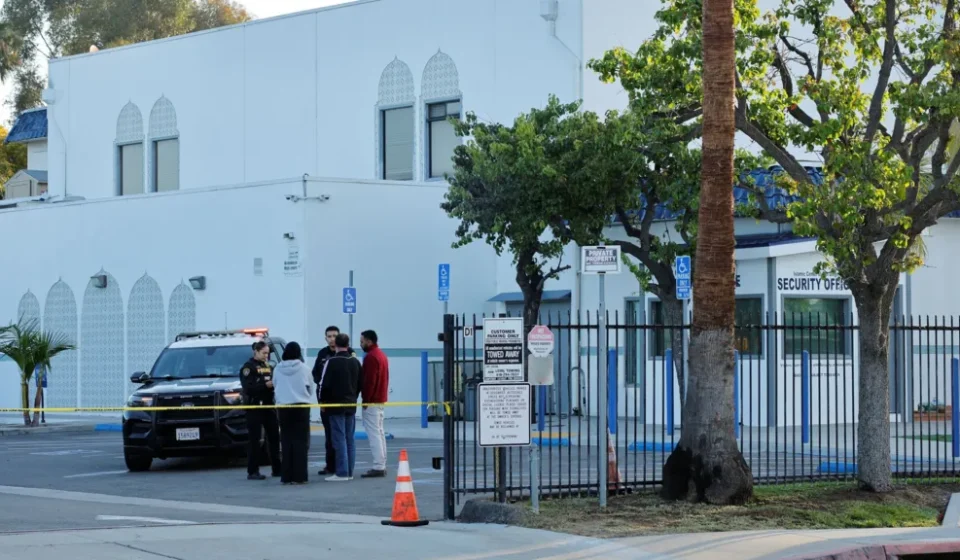
A 17 year old teen who livestreamed San Diego mosque shooting has been charged with murder by North Carolina prosecutors, marking a significant development in the deadly attack that claimed three lives at the Islamic Center of San Diego. Sarah Santiago, a Winston-Salem teenager, faces three counts of murder and one count of conspiracy for her alleged role in helping orchestrate and broadcast the May 18, 2026 shooting carried out by Cain Clark, 17, and Caleb Vazquez, 18.
Forsyth County District Attorney Jim O’Neill announced the charges at a Monday news conference, emphasizing that Santiago recorded the livestream of the attack, disseminated the footage, and published the shooters’ white supremacist manifesto. Under North Carolina law, those who aid and abet crimes face the same penalties as the perpetrators themselves. However, the indictment alleges Santiago went beyond passive observation. According to prosecutors, she purchased a Sonnenrad patch, a Nazi and white supremacist symbol, for Vazquez to wear during the attack.
The arrest came just days before Santiago was scheduled to return to school. In fact, O’Neill expressed concern about the timing: “The thought of her going back to school, or with the weekend approaching, holy days approaching, we didn’t know what she was capable of.” Despite the severity of the charges, Santiago’s attorney Alan Doorasamy maintains his client is “innocent of all these charges.”
What Happened During the Islamic Center of San Diego Attack?
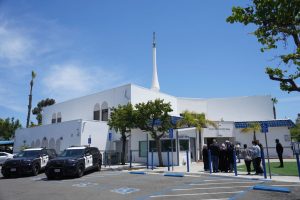
On May 18, 2026, Clark and Vazquez stormed the Islamic Center of San Diego armed with weapons from an arsenal authorities later discovered included approximately 30 guns and a crossbow. The attackers had taken the weapons from one of the shooter’s parents. In addition, both attackers wore GoPro-style helmet cameras to record their assault, which they intended to livestream to an online audience.
The two gunmen entered the mosque with clear intentions. According to District Attorney O’Neill, they had “two aims that day: Number one, to kill as many people as possible on that day. Secondly, they wanted this carnage and destruction recorded, livestreamed.”
Inside the building, approximately 140 children were present. As a result, the attack could have resulted in catastrophic loss of life. However, security guard Amin Abdullah immediately engaged the shooters in gunfire and initiated a lockdown. Because of his quick response, Abdullah drove Clark and Vazquez back outside before they could reach the children.
Who Were the Victims of This Hate Crime?
Three men lost their lives in the attack, each demonstrating extraordinary courage in the face of violence:
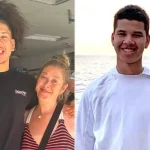
Amin Abdullah served as the mosque’s security guard. Despite the danger, he exchanged gunfire with the attackers while initiating the lockdown protocol. As a result, his actions created a barrier between the gunmen and the 140 children inside. San Diego Police Chief Scott Wahl described Abdullah’s response as “heroic,” stating his actions had “undoubtedly” saved lives. Tragically, Abdullah paid for his bravery with his life.
Mansour Kaziha and Nader Awad, both worshippers, drew the attention of the shooters in the parking lot. Because of their actions, they diverted Clark and Vazquez away from other potential victims. Unfortunately, both men were fatally shot as a result.
These three individuals transformed what could have been a massacre into a tragedy with limited casualties. Through their sacrifice, they prevented the attackers from reaching their primary targets.
Who Were the Attackers and What Motivated Them?
Cain Clark, 17, and Caleb Vazquez, 18, met online through white supremacist communities. After carrying out their attack on the Islamic Center of San Diego, they took their own lives in a vehicle nearby. Before their deaths, the pair left behind extensive writings revealing the depth of their hatred.
Their manifesto contained racist and antisemitic views alongside references to white supremacist ideologies. According to documents reviewed by CBS News, the attackers cited the gunman who murdered 51 people at two mosques in Christchurch, New Zealand, in 2019, as one of their models for violence.
Investigators discovered the attack on the mosque was only the beginning of their planned rampage. In fact, the teenagers had plotted additional attacks “at a local Jewish temple and finally at a predominantly African American high school,” O’Neill revealed. Meanwhile, their arsenal of approximately 30 guns and a crossbow suggested preparation for sustained violence across multiple locations.
What Role Did Sarah Santiago Play in the Attack?
Prosecutors allege Santiago’s involvement went far beyond passive observation. In their view, she served as the bridge between the attackers and their desired audience. Although physically located in North Carolina, thousands of miles from San Diego, Santiago allegedly performed several critical functions.
First, authorities say she recorded the livestream as it played out. As a result, this allowed the footage to be preserved and redistributed even if the original stream was taken down. Additionally, she published the attackers’ manifesto, ensuring their hateful ideology reached the widest possible audience.
The indictment also alleges Santiago helped plan the attack. For example, she allegedly purchased Nazi symbolism for Vazquez to wear, specifically a Sonnenrad patch. Because of this level of involvement, prosecutors argue she demonstrated coordination and preparation rather than spontaneous participation.
District Attorney O’Neill emphasized the significance of her alleged role: “The individual here, locally, was the person who was recording the livestream. She disseminated that information and she published their manifesto.” Therefore, in the prosecutor’s view, Santiago enabled the attackers to achieve their second primary goal: broadcasting their violence to inspire others.
How Did Investigators Connect a North Carolina Teen to a California Attack?
Initially, investigators only knew that someone in the Eastern time zone had watched the livestream. Unfortunately, this limited information provided few leads. However, the investigation gained momentum last week when additional evidence emerged.
The Forsyth County Sheriff contacted O’Neill’s office with new information linking Santiago to the attack. Although the exact nature of this evidence has not been publicly disclosed, it proved sufficient for authorities to move quickly.
Authorities arrested Santiago last week, before the grand jury returned an indictment. Subsequently, on Monday, August 31, 2026, the grand jury formally indicted her on three counts of murder and one count of conspiracy. In addition, the timing of the arrest reflected law enforcement’s concern about potential danger. Because of Santiago’s imminent return to school coinciding with approaching holy days, O’Neill explained their urgency.
Why Can Someone Who Didn’t Pull the Trigger Face Murder Charges?
North Carolina law allows prosecutors to charge individuals who aid and abet crimes with the same offenses as the primary perpetrators. In essence, this legal principle recognizes that crimes often require support networks and that those who enable violence bear responsibility for its consequences.
Under this framework, prosecutors argue Santiago’s actions made her criminally liable for the three deaths. For example, recording and disseminating the livestream fulfilled the attackers’ stated objectives. In addition, publishing their manifesto amplified their message. Meanwhile, purchasing Nazi symbolism for them to wear demonstrated active participation in planning.
Therefore, although Santiago never traveled to California or held a weapon, prosecutors contend she functioned as an essential member of the conspiracy. As a result, the murder charges carry the same potential penalties as if she had fired the shots herself.
O’Neill emphasized this point at the news conference: “Under North Carolina law, a person accused of aiding and abetting a crime can be held criminally responsible in the same way as the person who carried it out.”
What Does This Case Reveal About Online Extremism?
This attack highlights the transnational nature of modern extremist violence. For instance, Clark and Vazquez met online. Meanwhile, Santiago allegedly participated from thousands of miles away. In fact, the entire operation relied on digital infrastructure for planning, execution, and dissemination.
O’Neill addressed this phenomenon directly: “There exists in our world an underground subculture. It’s an echo chamber of intense hate against different cultures and religions.” Because of these digital spaces, geographically dispersed individuals can reinforce each other’s extremist views, plan coordinated actions, and broadcast violence to inspire future attacks.
During his news conference, the district attorney appealed to parents, urging them to “know what our children are watching.” In fact, his comments reflect growing recognition that online radicalization represents a significant threat requiring community-level intervention.
The Christchurch connection further illustrates this pattern. For example, the 2019 New Zealand mosque attacks, which killed 51 people, were livestreamed by the perpetrator. Subsequently, that attack inspired numerous subsequent plots and attacks. In addition, Clark and Vazquez explicitly cited the Christchurch shooter as a model, demonstrating how documented violence circulates within extremist communities to inspire imitation.
What Is the Current Status of the Case Against Sarah Santiago?
Santiago remains in custody following her arrest and indictment. Currently, she faces three counts of murder and one count of conspiracy. As a result, if convicted on all charges, she could face life imprisonment under North Carolina’s aiding and abetting statutes.
Her defense attorney, Alan Doorasamy, has stated his client is “innocent of all these charges.” Meanwhile, the case will proceed through North Carolina’s court system. Because Santiago is 17, questions about whether she will be tried as a juvenile or adult may arise, although the severity of the charges suggests adult prosecution is likely.
Prosecutors have not disclosed the full extent of evidence connecting Santiago to the attack. However, as the case moves forward, additional details about her alleged involvement will likely emerge through court proceedings.
Meanwhile, the broader implications of the case continue to resonate. In fact, legal experts are watching closely to see how courts apply aiding and abetting statutes to online behavior. As a result, the outcome could establish precedent for prosecuting individuals who facilitate violence through digital means without physical presence at the crime scene.
Stay Informed About True Crime Cases and the Psychology Behind Them
Cases like this remind us that understanding criminal behavior requires examining not just individual actors but the networks and ideologies that enable violence. Therefore, if you want to explore the psychological dimensions of true crime and stay updated on developing cases, consider subscribing to the Crime and Psyche YouTube channel for thoughtful analysis that goes beyond headlines.
Sources
- BBC News Coverage of San Diego Mosque Shooting Charges
- PBS NewsHour Report on North Carolina Teen Indictment
- Washington Post Coverage of Sarah Santiago Charges
- ABC7NY Report on Winston-Salem Teen Indictment
- San Diego Police Department
The Uncomfortable Truth About Hate in Digital Spaces
Three men died protecting others because two teenagers embraced an ideology of hate they found online. As a result, Amin Abdullah, Mansour Kaziha, and Nader Awad deserve to be remembered not as victims but as heroes who stood between violence and innocence.
Their deaths, and the charges now facing Sarah Santiago, force us to confront difficult questions about responsibility in the digital age. For example, when does watching become enabling? In addition, where is the line between free speech and conspiracy to commit murder? Furthermore, how do we identify and intervene when young people disappear into online echo chambers that celebrate violence?
These questions lack easy answers. However, one thing remains clear: the underground networks promoting white supremacist violence continue to radicalize vulnerable individuals and coordinate attacks across vast distances. In fact, O’Neill’s appeal to parents resonates because it acknowledges that prevention begins long before someone picks up a weapon.
The Islamic Center of San Diego survived an attack intended to create maximum casualties because of quick thinking and extraordinary courage. Despite this survival, the ideology that motivated Clark and Vazquez persists in online spaces, waiting to inspire the next attack. Therefore, until we address the root causes of radicalization, more communities will face similar threats, and more families will mourn preventable losses.