

A teen found not guilty in fatal stabbing of 9-year-old Aria Thorpe has sparked outrage among the victim’s family, who say the verdict leaves them questioning what justice truly means. After a jury cleared him of both murder and manslaughter charges, the 16-year-old boy walked free from Bristol Crown Court on Thursday, June 25, 2026. Aria Thorpe died from a single stab wound to her chest at her home in Weston-super-Mare, Somerset, on December 15, 2025.
Because of his age, the defendant’s identity remains protected, despite testimony that he was “playfighting” with Aria when the fatal incident occurred. However, the nine-year-old’s family has vowed to never stop fighting for justice. Following the verdict, Katie Thorpe, Aria’s aunt, released a powerful statement expressing the family’s devastation and calling attention to what she described as an “epidemic of knife crime” in the UK.
The case has raised profound questions about accountability, youth violence, and the boundaries between tragic accident and criminal responsibility.
What Happened to Aria Thorpe on December 15, 2025?
On the evening of December 15, 2025, Aria Thorpe was at her home on Lime Close in the Mead Vale area of Weston-super-Mare. After a normal day attending school and her dance class, she returned home. When her mother, Tori Hull, collected her around 4:30 p.m., they made mini-pizzas together before Hull left for an evening work shift.
Although the 16-year-old defendant was also present at the property that evening, tensions were high. According to his testimony, authorities had expelled him from school earlier that day. Additionally, his mother had confiscated his phone. As prosecutors suggested, these circumstances may have contributed to his emotional state.
At approximately 6:00 p.m., the teenager retrieved a knife from the kitchen and entered the living room where Aria was sitting. According to his court testimony, he told the court he intended to “scare her” and “make her flinch” by waving the knife in what he described as a “ninja-style” manner. While performing fencing-like motions toward the child, the blade plunged into her chest.
“The knife went into her. Then I pulled it out,” the defendant testified. “I didn’t know what to do. She put her hand to her chest.”
However, instead of calling for help, the boy placed the knife back in the sink and fled the scene. Without checking her condition, contacting neighbors, or calling emergency services, he left Aria bleeding on the floor.
Timeline: From Stabbing to Acquittal
December 15, 2025: The Fatal Incident
Early Evening: Around 6:00 p.m., Aria’s mother, Tori Hull, left for work after spending time with her daughter.
Approximately 6:00 p.m.: After picking up a knife from the kitchen, the defendant entered the living room where Aria was present.
6:00-6:10 p.m.: While making jabbing motions with the knife, the defendant stabbed Aria once in the chest. As a result, the wound pierced her heart and punctured her lung.
Shortly After 6:00 p.m.: Following the incident, the teenager fled the property and walked to Worle Railway Station, approximately a short distance away.
6:10 p.m.: When a family friend, Ollie Sheppard, who was temporarily lodging at the house, returned home, he discovered Aria lying face down on the floor. Emergency services then received a 999 call.
6:13 p.m.: Just three minutes after the emergency call, the first police officer arrived at the scene.
6:58 p.m.: Despite attempts at CPR by Sheppard and emergency responders, doctors pronounced Aria dead at the scene.
December 15, 2025: The Defendant’s Flight and Arrest
While Aria lay dying, the teenager reached Worle Railway Station. Meanwhile, CCTV footage captured him speaking with a group of young people waiting on the platform for approximately 12 minutes.
According to witnesses who later testified, he appeared agitated and was shaking. “He was in a rush, he was shaking a lot and saying ‘I need to get away, I need to get away,'” one witness recalled. When asked what he was running from, the defendant replied: “Everything. Police, family. Everything.”
During this encounter, the boy unbuttoned his coat so others could feel his elevated heart rate. Even more disturbing, CCTV footage showed him appearing to re-enact the stabbing motion to the group of youths.
Before boarding a train, he borrowed someone’s phone and searched: “what happens if you kill…” As a result, a girl in the group called 999 to report the incident.
Before the train could depart, police halted it and arrested the defendant onboard. Later, he told officers he felt “horrible” about what had happened.
December 2025: Post-Mortem and Charges
After conducting a post-mortem examination on Aria’s body, Dr. Amanda Jeffery, a Home Office pathologist, determined that the child died from a single stab wound measuring between 7.5 and 8 centimeters deep. Because the wound pierced Aria’s heart and punctured her lung, she died “very swiftly.”
Subsequently, authorities charged the 16-year-old boy with murder and manslaughter. Because of his age at the time of Aria’s death (he was 15), the law protected his identity and it cannot be publicly disclosed.
June 2026: The Trial at Bristol Crown Court
In June 2026, the trial began at Bristol Crown Court. Throughout the proceedings, the defendant maintained that Aria’s death was a tragic accident that occurred during playfighting.
June 16, 2026: When the defendant testified in his own defense, he described how he had picked up the knife intending to frighten Aria. “I leaned forward, acted like I was fencing,” he told the court. “She had almost taken a step forward but without taking a step forward because before she could, it happened.”
However, the prosecution challenged his account, pointing to his flight from the scene, his failure to seek help, and his internet search about killing someone as evidence of consciousness of guilt.
When Ollie Sheppard testified about discovering Aria, he recalled: “I called her name, and pretty much I had put two and two together and I saw blood on her arm. She was tucked in by the door, face down. Her school top was covered in blood.”
Ashley Mansell, a neighbor, testified that he heard shouting at the time of the incident. “I heard shouting, three ‘no, no, nos.’ It was said in a tone of disbelief,” he recalled.
June 25, 2026: Not Guilty Verdict
After deliberating, the jury returned not guilty verdicts on both the murder and manslaughter charges. Despite the emotional weight of the case, the judge instructed members of the public gallery, including Aria’s mother, not to show emotion during the reading of the verdicts.
When the verdicts were announced, some people quietly left the courtroom. As a result, the defendant was free to go.
Who Was Aria Thorpe?
Aria Thorpe was a vibrant nine-year-old girl from Weston-super-Mare, Somerset. Just two weeks before her death, she had celebrated her ninth birthday with a KPop Demon Hunters-themed party.
According to friends and neighbors, Aria was described as a “lovely little girl” with wide-ranging interests. While she loved styling her hair, she also had a passion for fashion and makeup. Beyond her creative pursuits, Aria was entrepreneurial for her age. For example, she had started a YouTube channel with a friend and earned money by cleaning cars in her neighborhood.
As a dedicated student, Aria attended school regularly and took dance classes. On the day she died, she had gone to both school and dance class before her mother picked her up.
The young girl’s life was filled with the ordinary joys of childhood. After making mini-pizzas with her mother, she pursued her hobbies and looked forward to the future. However, her life was cut tragically short at just nine years old.
Who Is the Defendant?
The defendant in this case is a 16-year-old boy whose identity the law protects because he was 15 at the time of Aria’s death. Under English law, juveniles accused of crimes cannot be publicly identified to protect their privacy and rehabilitation prospects.
Although limited information is available, what we know from court testimony paints a picture of a troubled teenager on a particularly difficult day. On December 15, 2025, authorities had expelled him from school. Furthermore, his mother had confiscated his mobile phone as a disciplinary measure.
During his testimony, the teenager stated that he did not intend to harm Aria. Instead, he claimed he only wanted to scare her by waving the knife around. His defense centered on the argument that the stabbing was an accident that occurred during what he characterized as playfighting.
However, his actions after the stabbing raised serious questions. Rather than immediately seeking help for the gravely injured child, he fled. Instead of calling emergency services or alerting neighbors, he walked to the train station, told strangers he needed to “get away,” and searched on a borrowed phone about the consequences of killing someone.
Despite these troubling circumstances, the jury ultimately concluded that the prosecution had not proven beyond reasonable doubt that the defendant was guilty of either murder or manslaughter.
How Did the Jury Reach a Not Guilty Verdict?
The jury’s decision to acquit the defendant on both murder and manslaughter charges reflects the high burden of proof required in criminal cases. For example, for a murder conviction, prosecutors must prove the defendant intended to kill or cause serious harm. For manslaughter, they must show the defendant acted with criminal negligence or recklessness.
Although the defendant acknowledged picking up the knife and making jabbing motions toward Aria, the defense successfully argued that the stabbing was an accident. According to his testimony, he maintained he never intended to actually stab her. Instead, he claimed Aria unexpectedly moved forward just as he was gesturing with the knife.
However, the prosecution faced challenges in proving intent. While the defendant’s post-incident behavior appeared suspicious, his flight and internet searches could be interpreted as panic rather than consciousness of guilt. In addition, his youth, recent expulsion from school, and confiscated phone may have generated some sympathy or understanding about his emotional state.
Ultimately, the jury determined that reasonable doubt existed about whether the defendant committed murder or manslaughter. Under English law, if reasonable doubt exists, the defendant must be acquitted.
What Has Been the Family’s Response?
Following the verdict, Aria’s family has responded with heartbreak and determination. Katie Thorpe, Aria’s aunt, released a powerful statement on social media expressing the family’s anguish and calling for change.
“What does it teach people when a child can lose her life in such a horrific and senseless way, yet nobody is held accountable?” Katie wrote. “The UK is facing an epidemic of knife crime, and cases like this only leave families wondering what consequences truly exist. Something has to change.”
According to the family, they described feeling as though they had “been handed a life sentence” while the person they hold responsible walks free. “We will carry this grief, heartbreak, and loss for the rest of our lives. Meanwhile, the person responsible walks free,” Katie stated.
Despite their pain, the family has pledged to keep Aria’s memory alive. “We will never stop speaking Aria’s name. We will never stop fighting for justice,” Katie promised.
The Thorpe family’s statement highlights the profound disconnect that can exist between legal outcomes and a family’s sense of justice. Although the legal system found insufficient evidence to convict, Aria’s loved ones remain convinced that accountability is lacking.
What Does This Case Reveal About Knife Crime in the UK?
This case has reignited discussions about knife crime in the United Kingdom, particularly involving young people. According to Avon and Somerset Police, knife-related incidents remain a serious concern across England.
Several troubling elements emerge from this case. First, a teenager felt comfortable picking up a knife and brandishing it toward a nine-year-old child, even if only to “scare” her. Second, the fatal consequences demonstrate how quickly a situation involving a knife can turn deadly. Third, the acquittal raises questions about how the justice system handles cases where harm was clearly caused but intent remains disputed.
Katie Thorpe’s reference to an “epidemic of knife crime” reflects broader public concern in the UK. As a result, parents and community members worry about youth access to knives and the normalization of carrying bladed weapons.
In addition, this case highlights the gap between causing death and being criminally responsible for it. While no one disputes that the defendant’s actions directly caused Aria’s death, the jury concluded that those actions did not meet the legal threshold for criminal conviction.
Current Status: Where Do Things Stand Now?
As of June 2026, the 16-year-old defendant is free after being acquitted of all charges. Because he was found not guilty, he faces no criminal penalties and can resume his life.
Meanwhile, Aria’s family continues to grieve and has vowed to keep fighting for what they view as justice. In order to raise awareness about knife crime and the impact it has on families, they have publicly shared their story.
In addition, the case has generated significant public discussion in the UK about knife crime, youth violence, and the justice system. Although many people have expressed sympathy for Aria’s family, debates continue about whether the verdict was appropriate given the circumstances.
Although no civil proceedings have been announced, families in England can sometimes pursue civil claims even after criminal acquittals. However, such cases are complex and emotionally taxing.
Despite the verdict, the broader conversation about knife crime continues in the UK. Therefore, policymakers, law enforcement, and community organizations are working to address the root causes of youth violence and reduce knife-related incidents.
Understanding the Psychology: How Could This Happen?
From a psychological perspective, this case raises several important questions about adolescent behavior, risk assessment, and decision-making.
Even if he genuinely intended only to scare Aria, the defendant’s choice to pick up a knife and brandish it toward a child reflects poor impulse control and risk assessment. In addition, his inability to foresee the potential consequences demonstrates immature judgment characteristic of some teenagers.
Because adolescent brain development research shows that the prefrontal cortex, responsible for impulse control and consequence evaluation, continues developing into the mid-20s, teenagers are more likely to engage in risky behavior without fully considering potential outcomes.
On December 15, the defendant’s emotional state may have further impaired his judgment. Having been expelled from school that day and having his phone confiscated, he may have been experiencing heightened stress, frustration, or anger. As a result, these emotions can compromise decision-making even further.
Post-Incident Behavior and Panic Response
Following the stabbing, his flight response demonstrates panic and fear rather than calculated behavior. Although his actions appear callous, they may reflect an overwhelmed teenager unable to process what had just occurred.
However, none of these psychological factors excuse the fatal outcome. Despite developmental considerations, regardless of intent or developmental stage, the defendant’s actions directly caused the death of a nine-year-old child. While understanding the psychology helps explain what happened, it does not diminish the tragedy or the loss suffered by Aria’s family.
Stay Informed About True Crime Cases
If you found this case analysis informative and want to stay updated on similar true crime stories with psychological insights, consider subscribing to our Crime and Psyche YouTube channel. We provide in-depth coverage of significant criminal cases, examining not just what happened but why, exploring the psychological factors that drive human behavior in extreme circumstances.
In addition, our channel offers thoughtful analysis that respects victims and their families while helping viewers understand the complex factors behind criminal cases. Therefore, subscribe today to join our community of informed true crime followers who value factual reporting combined with psychological perspective.
Sources
- BBC News: Family ‘fight for justice’ after murder acquittal
- BBC News: Teen said he ‘needed to get away’ after stabbing
- GB News: Aria Thorpe case coverage
- Yahoo News: Family fight for justice after murder acquittal
- Avon and Somerset Police official statements
Reflection: The Boundaries of Justice
The acquittal of the teen in the fatal stabbing of 9-year-old Aria Thorpe leaves us grappling with uncomfortable questions about justice, accountability, and tragedy. Although a child is dead and a family is shattered, the legal system has determined that no crime was committed.
This case forces us to confront the difference between causing harm and being criminally culpable. While the defendant undeniably caused Aria’s death, the jury concluded that the prosecution failed to prove criminal intent or negligence beyond reasonable doubt.
For Aria’s family, this verdict feels like an injustice. Despite the legal outcome, their pain is valid and profound. In addition, Katie Thorpe’s words echo the frustration many feel when legal outcomes diverge from moral intuitions about responsibility.
Meanwhile, the verdict raises broader societal questions. How do we prevent tragedies like this? What consequences should exist when someone’s reckless behavior, even without criminal intent, destroys a life? Furthermore, how do we balance holding young people accountable with recognizing their developmental limitations?
Perhaps the most important takeaway is that knives and children are a deadly combination. Whether in play, anger, or foolishness, brandishing bladed weapons near others creates unacceptable risks. As this case demonstrates, Aria Thorpe paid the ultimate price for someone else’s catastrophically poor judgment.
As we reflect on this heartbreaking case, we must honor Aria’s memory by working toward a society where fewer children lose their lives to knife violence, where young people understand the deadly serious nature of weapons, and where families like the Thorpes never have to experience such devastating loss.
Further Reading
If this case sparked your curiosity, these books explore similar themes in depth.
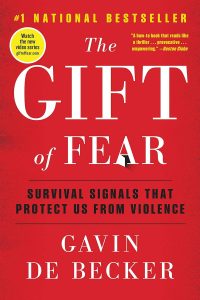
by Gavin de Becker
How to recognize the warning signs of violence before it happens.
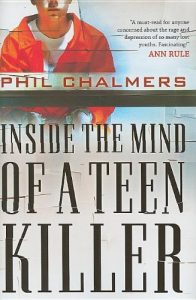
by Phil Chambers
Peers into the minds of teen killers like Pearl, Mississippi school shooterLuke Woodham with researcher Phil Chalmers as your guide to understand the motives behind, and possibly prevent, their horrifying violence.
Disclosure: This post contains affiliate links. If you purchase a product through one of these links, Crime and Psyche may earn a small commission at no extra cost to you. Thank you for supporting the channel.